
The revitalization of the public health sector has reached a critical turning point as the Institute for Social Security and Social Services for Government Employees (ISSSTE) launches an expansive MX$298 million initiative to modernize infrastructure across its national network. Under the leadership of General Director Martí Batres Guadarrama, this strategic infusion of capital represents a decisive effort to move away from outdated legacy systems and toward a technologically integrated healthcare model. By targeting every level of clinical care, the project seeks to eliminate the disparities between local family medicine units and high-complexity regional hospitals. This modernization is not merely about replacing physical hardware; it is a fundamental shift in how the government manages public health resources to ensure that every citizen, regardless of their location, has access to the highest standards of medical safety and comfort. This investment addresses long-overdue maintenance needs while setting a benchmark for future institutional growth.
Upgrading Patient Care Environments with Digital Solutions
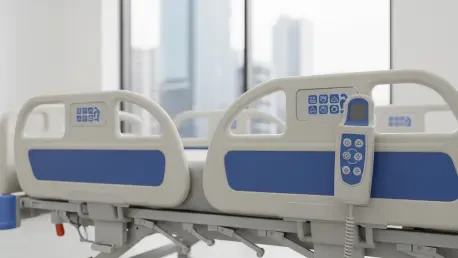
A substantial portion of the allocated budget, totaling approximately MX$205 million, was specifically designated for the total replacement of manual patient beds with 2,275 state-of-the-art electric units. These new installations are engineered with antibacterial and fire-retardant materials, providing a significant upgrade in hygiene standards and patient safety. Integrated controls allow patients to adjust their positions autonomously, which not only improves their physical comfort during recovery but also alleviates the strenuous physical labor previously required of nursing staff. By automating these adjustments, the institute has successfully reduced the risk of occupational injuries among healthcare workers while simultaneously lowering the incidence of patient falls. To date, nearly half of these sophisticated units have already been deployed across 33 different medical centers, marking a rapid transition toward a more dignified and efficient patient experience.
The strategic deployment of this new equipment follows a tiered approach designed to maximize the impact across various demographics and geographic regions. High-complexity regional hospitals in states such as Yucatan and Oaxaca received the largest initial allocations due to their high patient volumes and the intensity of care required. However, the initiative also extended its reach to general hospitals and primary care units in more remote areas, ensuring that the benefits of modernization are not localized solely within major urban centers. This geographic inclusivity demonstrates a commitment to uniform healthcare quality, providing rural clinics with the same technological advantages found in flagship facilities in the capital. By bridging the gap between urban and rural medical services, the institute is establishing a more equitable healthcare landscape. This systematic distribution ensures that the national health system remains resilient and capable of handling diverse medical challenges.
Expanding Surgical Capabilities and Operational Standards
Beyond the general patient wards, a significant MX$93 million investment was directed toward the comprehensive overhaul of surgical infrastructure, specifically at the Hospital Constitution Clinic in Monterrey. This project involved the complete reconstruction of three specialized operating rooms and the acquisition of 85 high-end medical devices, including advanced anesthesia units and specialized surgical tables. These upgrades have fundamentally transformed the facility’s ability to perform high-precision procedures with greater efficiency. By integrating modern imaging and monitoring technologies directly into the surgical environment, the clinic can now handle a higher volume of complex cases while significantly reducing patient wait times. This specific modernization serves as a proof of concept for the scalability of high-tech medical solutions within the public sector, ensuring that clinical outcomes are consistently improved across a wide array of medical disciplines.
The surgical renovation at the Monterrey clinic is a cornerstone of a national vision to modernize over 250 operating rooms throughout Mexico’s public health networks by the end of 2026. Beyond the physical upgrades, the institute established a protocol for the continuous lifecycle management of these new assets. This included a mandatory technical training certification for all surgical staff and the implementation of a centralized digital registry to track equipment performance. By integrating these actionable administrative measures with high-tech hardware, the institute ensured that the initial investment provided a sustainable foundation for future growth. Healthcare administrators moved toward a model of predictive maintenance, utilizing data from the new anesthesia units to anticipate service needs before they impacted patient care. This transition to a proactive management style, supported by the MX$298 million infusion, successfully transformed the operational culture of the health system.