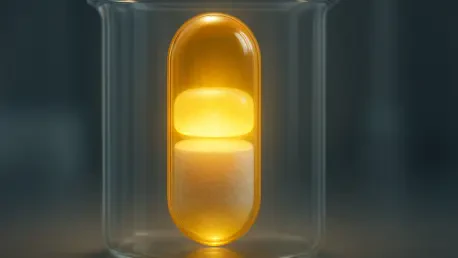

The shift toward retrieval-free medical platforms represents a significant evolution in how doctors can monitor internal health and deliver targeted electrical stimulation. This transformation is currently fueled by a groundbreaking development in materials science: the creation of a fully bioresorbable, edible battery. For years, the integration of electronics within the human digestive tract was hampered by the inherent risks of traditional power sources. Conventional lithium-ion or alkaline cells, while efficient, carry the threat of leaking corrosive electrolytes or toxic heavy metals if their protective casing fails. Moreover, the inability of these components to break down naturally meant they often required surgical intervention or raised concerns about long-term accumulation. The arrival of energy storage devices constructed entirely from food-safe ingredients marks a departure from these hazards, ensuring that diagnostic capsules can perform their duties and then simply dissolve safely into the body’s metabolic pathways.
Engineering the Composition of Bioresorbable Power Cells
Sustainable Materials for Internal Energy Storage
The engineering behind these bioresorbable batteries relies on a sophisticated selection of components that prioritize both conductivity and biological compatibility. Researchers at the Massachusetts Institute of Technology utilize a magnesium anode paired with a molybdenum trioxide cathode, a combination that provides the necessary electrochemical gradient to power modern integrated circuits. To maintain structural integrity without resorting to toxic binders, the team incorporates plant-derived cellulose fibers that hold the layers together while ensuring consistent electrical contact. Perhaps the most significant advancement is the electrolyte, which deviates from standard liquid bases. Instead of potentially irritating water-based solutions, the system employs a unique mixture of choline chloride and lactic acid. This deep eutectic solvent serves as a food-safe liquid that delivers a stable voltage and high energy density, allowing the battery to support complex diagnostic functions that were previously impossible for small-scale edible power sources.
Longevity Control via Natural Encapsulation
Longevity is a critical factor for ingestible devices, as they must survive the harsh environment of the stomach long enough to complete their mission. To manage this functional window, the battery is encapsulated in a protective shell of natural waxes, specifically beeswax and carnauba wax. These materials provide a moisture-resistant barrier that delays the onset of dissolution, allowing the device to operate for several days before the gastrointestinal fluids begin to break down the casing. Testing within simulated gastric acid environments has confirmed that once the protective layer is breached, the battery degrades progressively over a predictable timeframe. Crucially, the design accounts for the chemical footprint of the dissolving components. The thickness of the electrodes is meticulously calibrated to ensure that even during total dissolution, the levels of magnesium and molybdenum released into the system remain significantly below the daily tolerable intake limits established for human safety.
Practical Applications and Therapeutic Innovations
Validating Performance in Biological Systems
Empirical evidence from recent trials in porcine models has validated the practical utility of these self-dissolving batteries across multiple medical use cases. In one instance, the battery successfully powered a tracking tag capable of signaling precisely when a capsule had been swallowed, providing real-time data on medication adherence. More impressively, the power source was applied to “electroceutical” devices designed to deliver continuous electrical stimulation directly to the stomach wall. This application demonstrated that the battery could provide enough current to influence biological processes, such as raising the levels of the hunger-regulating hormone ghrelin. Throughout these tests, the devices remained functional for at least three days, proving they can withstand the rigors of the digestive tract while performing high-level tasks. Because the stimulation did not cause tissue damage or irritation, the technology proved itself as a viable alternative to more invasive monitoring or therapeutic methods.
Future Perspectives: Moving Toward Seamless Medicine
The development of these edible power sources has established a new standard for the integration of materials science and clinical medicine. By moving toward a model where diagnostic and therapeutic tools simply vanish after use, healthcare providers can mitigate the long-term risks associated with internal electronic waste. This approach offered a more patient-friendly alternative to traditional methods, as it eliminated the psychological and physical burden of retrieval procedures. Looking ahead, the focus must shift toward scaling the manufacturing of these organic components and refining the wireless communication protocols used by the pills. Establishing clear regulatory frameworks for “vanishing” electronics will be essential for their widespread adoption in clinics and hospitals. The success of these bioresorbable systems indicated that the next generation of smart pills will not only be more capable but also fundamentally safer, marking a definitive shift toward non-invasive, autonomous internal healthcare.