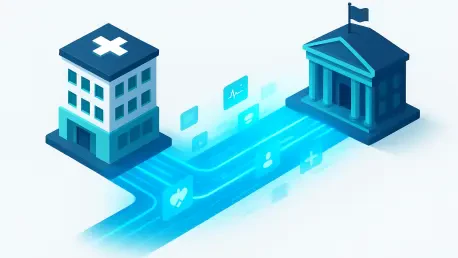

Healthcare providers can now utilize existing digital connections to transmit patient data to the Social Security Administration without negotiating individual legal agreements. This shift represents a monumental advancement for millions of Americans who previously languished in administrative limbo while awaiting life-sustaining benefits. Historically, the process of determining disability eligibility was hindered by the manual retrieval of paper records, a labor-intensive method that frequently stretched for months as agency staff waited for mail or faxed documents to arrive from various clinics. By leveraging the Trusted Exchange Framework and Common Agreement, known as TEFCA, the Social Security Administration has effectively created a unified health data sharing superhighway. This technological infrastructure allows for the near-instantaneous transfer of comprehensive medical histories, turning what was once a multi-week bureaucratic ordeal into a digital transaction that takes only minutes to complete for the average applicant.
Streamlining Claims: The Impact Of Digital Infrastructure
A primary driver behind this systemic modernization is the integration of the Social Security Administration with Epic, the largest electronic health record vendor across the nation. This strategic connection permits thousands of hospitals and specialized clinics to transmit medical data directly to federal investigators through a highly simplified digital conduit. Unlike previous iterations of health data sharing, the TEFCA framework eliminates the cumbersome requirement for individual legal contracts between the government and every single medical practice. It utilizes sophisticated automated directories to identify healthcare facilities instantly, ensuring that a claimant’s entire medical history is compiled with unprecedented speed. Early data from 2026 suggests that these automated queries have already enabled some applicants to see their processing times cut by as much as 50 percent, providing a crucial safety net much faster than the old manual system allowed for those in need.
The operational efficiency of this new digital paradigm is clearly showcased by the experiences of Baptist Health in Jacksonville, Florida. Since adopting the federal data framework, this specific healthcare provider has successfully transmitted thousands of digital records, drastically reducing the reliance on archaic fax machines and manual paper sorting. In the recent past, the hospital required three full-time employees just to manage the constant flow of record requests coming from the Social Security Administration. Today, that administrative workload has dropped to the equivalent of a single part-time role, allowing the facility to reallocate resources toward direct patient care. This shift does more than just save significant administrative costs for the hospital; it also increases the overall accuracy of the claims process. By ensuring that no medical documents are lost or misplaced during the transfer, the system protects the integrity of the applicant’s health narrative effectively.
Navigating Barriers: The Rural And Behavioral Health Divide
Despite these technological leaps, a significant digital divide remains a major obstacle for many claimants, particularly those residing in rural areas. While large, urban hospital systems are quickly integrating with the Social Security Administration, many rural providers still rely on traditional paper-based charts and manual filing systems due to budget constraints. Thousands of smaller clinics do not yet utilize modern electronic health record software that is compatible with the TEFCA framework, meaning their vital data must still be processed through the same slow-moving channels that have existed for decades. For applicants whose medical histories are primarily tied to these under-resourced facilities, the digital superhighway offers very little immediate benefit. This disparity threatens to create a two-tiered system where the speed of a disability claim depends more on a provider’s geographic location and financial resources than on the patient’s medical urgency.
Furthermore, specialized facilities such as substance use recovery centers and community mental health clinics face unique hurdles in joining the digital revolution. Many behavioral health centers operate with limited technical staff and legacy software that does not support the automated data directories required by federal agencies. This results in a persistent bottleneck for disability applicants whose claims rely heavily on psychiatric evaluations and ongoing counseling records. Disability advocates have expressed concern that the push toward automation might inadvertently create new barriers for these vulnerable populations. There is a specific worry that an increased reliance on automated portals could alienate individuals with cognitive impairments who require human assistance to navigate complex legal requirements. Ensuring that these specific medical domains are not left behind is essential for maintaining an equitable disability determination process that serves everyone.
Evolving Standards: Strategic Goals For Systemic Efficiency
The Social Security Administration is moving aggressively to expand its digital footprint, having already processed over 60,000 data requests through this modernized framework. Moving forward from 2026 through 2028, the agency expects thousands of additional hospitals and clinics to join the network, further broadening its data-gathering capabilities. To ensure broad accessibility, federal officials are working with various software networks so that disparate medical platforms can communicate seamlessly regardless of the specific vendor being used. By maintaining a permanent seat on the national governing council for health information technology, the agency intends to stay at the forefront of digital record strategy. This proactive involvement is designed to continue reducing the initial pending backlog of claims, which has historically been a major source of frustration for the American public. The goal is to create a frictionless data environment that spans every state.
The transition toward a fully digital health record environment required a concerted effort between federal agencies and private healthcare vendors. Stakeholders discovered that while the implementation of TEFCA significantly accelerated claim processing times, the human element remained indispensable for complex cases. Decision-makers implemented new training programs for administrative staff to ensure that digital efficiency did not come at the expense of claimant rights. To further improve the system, the government prioritized funding for rural health clinics to upgrade their electronic systems, effectively narrowing the digital divide. It was determined that the most successful outcomes occurred when technological speed was paired with robust advocacy for those with specialized health needs. By evaluating the initial successes of 2026, the agency established a roadmap for a more responsive and inclusive disability benefits system that leveraged data for the public good.