
A significant gap exists between the physical infrastructure provided by the state and the evolving daily requirements of the elderly population living in high-value urban areas. As one of the world’s most rapidly graying metropolises, Shanghai provides a unique vantage point into the challenges of an aging society, having officially reached this demographic milestone as early as 1979. This transition, occurring decades ahead of other regions in mainland China, has necessitated a massive pivot from traditional, large-scale institutional nursing homes toward more integrated, community-based care models. Despite these efforts, the current landscape reveals a stark disconnect where physical assets—often constructed at great expense—fail to address the nuanced, subjective needs of the seniors they were designed to support. This misalignment suggests that the mere provision of space is insufficient without a deeper understanding of how the elderly interact with their local environment and what specific services they value most in their daily lives. By examining districts like Hongkou and Jing’an, researchers have begun to untangle the complexities of urban land scarcity, high resident density, and the evolving expectations of a generation that seeks both independence and comprehensive support within their own neighborhoods.
Analyzing the Three Spheres of Resident Demand
Daily Life Services: The Foundation of Community Care
Daily living assistance has emerged as the most fundamental requirement for elderly residents who wish to remain in their communities rather than move to isolated institutions. In many central urban facilities where physical expansion is restricted by high land values, seniors have expressed a clear preference for service-oriented assistance over the mere availability of specialized rooms. This includes a high demand for in-home domestic help, such as professional cleaning and laundry services, as well as assistance with daily errands like grocery shopping or pharmacy runs. When these services are easily accessible and reliably managed, they allow individuals to maintain a sense of autonomy while residing in their own homes. The focus, therefore, shifts from the architecture of the care center to the effectiveness of the support network it can coordinate throughout the surrounding neighborhood.
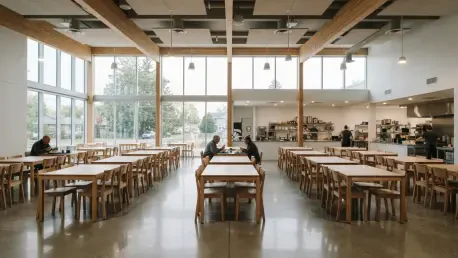
Beyond domestic assistance, the most frequently expressed need among the older adult population is the establishment of communal senior dining centers that provide nutritious, affordable meals in a social setting. These centers serve a dual purpose: they alleviate the physical burden of daily meal preparation—which can become increasingly difficult due to mobility issues or cognitive decline—and they act as vital social hubs. For many seniors living alone, a trip to a neighborhood dining hall represents their primary interaction with the outside world for the day. These spaces transform the act of dining into a communal experience, effectively combating the pervasive issue of social isolation. Planners have noted that facilities prioritizing these dining areas see significantly higher engagement rates than those focusing on more passive or specialized recreational spaces, proving that basic physiological and social needs remain the primary drivers of community-based demand.
Health and Medical Care: Moving Beyond the Superficial
While current regulations mandate that community elderly care facilities provide medical support, the actual implementation often remains superficial and fails to meet the complex health requirements of an aging population. Most facilities are currently limited to basic health monitoring, such as blood pressure checks or occasional wellness lectures, which many residents find insufficient for managing chronic conditions. There is a profound and growing demand for consistent medical counseling, on-site diagnostic services, and a more seamless integration with primary healthcare providers. Seniors are not looking for temporary check-ups but for a reliable medical presence that understands their long-term health history and can offer proactive guidance. Bridging this gap requires moving beyond “health-themed” activities toward legitimate clinical integration that brings professional medical expertise directly into the community space.
In parallel with medical needs, the spiritual and psychological well-being of the elderly represents a significant blind spot in current urban planning. While many facility managers provide passive entertainment options like television rooms or chess tables to meet government-mandated recreational quotas, these activities often fail to provide deep social engagement. Residents have expressed a desire for more active involvement, ranging from educational workshops to structured social clubs and, critically, professional psychological counseling. Feelings of loneliness and a lack of purpose are common among the urban elderly, yet emotional health is frequently treated as a secondary concern or a luxury. A holistic care model must recognize that spiritual comfort and mental health support are just as vital as physical care, necessitating the introduction of trained professionals who can offer emotional guidance and foster a truly inclusive community environment.
The Paradox of Resource Misallocation
The Respite Care Issue: Vacancy and Institutional Perception
A critical challenge identified in the current system is the paradoxical situation where essential services are undersupplied while high-value physical resources sit largely underutilized. This is most evident in the high vacancy rates observed in respite care centers, which are designed to provide short-term residential stays to give family caregivers a break. In some districts, these facilities maintain a vacancy rate as high as 71.4 percent, representing a significant waste of subsidized urban space in areas where land is at a premium. The underlying issue is not a lack of need for caregiver relief, but rather a cultural and psychological resistance to the “institutional” feel of these centers. Many older residents view these beds with suspicion, preferring the comfort and familiarity of their own homes over a sterile, dormitory-like environment that reminds them of a traditional hospital or nursing home.
The mismatch between the provision of respite beds and their actual usage highlights a fundamental misunderstanding of elderly lifestyle preferences. Instead of serving their intended purpose for overnight stays, these expensive beds are often used only for brief afternoon naps by daycare visitors. This suggests that the significant capital investment required to build and maintain residential quarters within community centers might be better redirected toward flexible, home-based care services. By shifting the focus from maintaining empty beds to deploying mobile care teams, the city could provide the same level of caregiver relief without forcing the elderly into an environment they find alienating. This transition requires a departure from traditional infrastructure-heavy planning toward a more agile service model that respects the desire for aging in place while still supporting the families who provide the bulk of daily care.
Space-Service Disconnect: The Quantitative Target Trap
Urban planning for elderly care in Shanghai has long been driven by quantitative targets, such as the municipal goal to provide specific square-meter allocations per resident. While this has led to a rapid increase in the gross floor area dedicated to seniors, it has also resulted in a space-service mismatch where large multimedia rooms, reading lounges, and specialized hobby areas remain largely empty. These spaces are often built to satisfy regulatory checklists rather than to address the actual daily routines of the local population. For instance, in some facilities, specialized reading rooms may see fewer than ten visitors a day, yet they occupy prime real estate that could have been used for more versatile community functions. This focus on physical square footage creates an illusion of progress while leaving the most urgent service needs, such as assisted bathing or specialized therapy, chronically underfunded.
Compounding this issue is a widespread failure in communication and community outreach, leaving many residents unaware of the services that actually exist within these spaces. In some neighborhoods, even when a facility offers high-quality programs like meal assistance or physical rehabilitation, participation rates remain low because the information does not reach the intended audience effectively. This creates a scenario where infrastructure is visible but the utility remains invisible. Planners and administrators must realize that building the space is only the first step; the “software” of the facility—its programming, its outreach, and its ability to adapt to resident feedback—is what ultimately determines its success. Moving forward, the industry must prioritize qualitative standards that measure actual engagement and resident satisfaction rather than simply counting the number of doors opened or the total square footage.
Administrative Philosophies and Policy Frameworks
Management Styles: Top-Down Compliance vs. Bottom-Up Reform
The effectiveness of community care is heavily influenced by the administrative philosophy of facility managers, with a notable divide between top-down and bottom-up approaches. Some administrators operate primarily through a lens of operational convenience and government compliance, focusing on meeting quotas for bed counts or square footage. This management style often overlooks the human element of care, leading to situations where managers might propose adding even more residential beds despite existing ones remaining empty. This rigid adherence to physical asset management fails to account for the shifting psychological needs of the residents. When a facility is managed solely to satisfy a balance sheet or a regulatory audit, it loses the flexibility required to provide the empathetic, personalized support that defines high-quality senior care in an urban setting.
Conversely, some managers have begun to advocate for a more responsive, bottom-up approach that prioritizes systemic reform and the professionalization of the workforce. These administrators recognize the limitations of their physical spaces and instead focus on improving the quality of human interaction within them. They emphasize the need to attract a younger, more qualified generation of professionals to the sector by establishing clear career paths and competitive salary scales. Currently, the perception of senior care as a low-skill, low-status job leads to high turnover and a lack of specialized expertise in areas like geriatric psychology or advanced rehabilitative therapy. By shifting the management focus from “managing a building” to “developing a professional service team,” these leaders are setting a new standard for how community centers can function as dynamic, life-enhancing hubs.
Policy Gaps: The Role of Statutory Ambiguity and Disparities
Current imbalances in senior care are frequently rooted in the ambiguity of national and municipal policies that struggle to keep pace with the rapid evolution of urban needs. While overarching directives encourage the expansion of care facilities, they often lack the specificity required to guide development in high-density, high-value metropolitan environments. For example, municipal goals that emphasize a target of 50 square meters of care space per 1,000 residents by 2028 are useful for ensuring a baseline of infrastructure, but they do not provide a framework for ensuring that this space is utilized effectively. This lack of qualitative guidance allows for the construction of facilities that look impressive on paper but offer little practical value to the seniors living nearby, who may be more concerned with the availability of a local nurse than the size of a community hobby room.
Furthermore, there is a significant disparity in how different urban districts interpret and fund these policies, leading to an uneven landscape in the quality of care. Some districts have established robust oversight mechanisms and detailed funding regulations, while others struggle with limited budgets and a lack of professional supervision. A major missing link in the current policy framework is a structured mechanism for public participation, which would allow seniors and their families to have a direct say in the design and management of local facilities. Without a formal way to integrate resident feedback, planners are essentially working in a vacuum, relying on outdated assumptions about what older adults need. Creating a more inclusive, participatory planning process is essential to ensure that future investments are directed toward the services that will actually improve the quality of life for the city’s aging population.
Strategies for Systemic Improvement
Data-Driven Planning: Implementing Dynamic Needs Assessments
To resolve the chronic imbalances in the elderly care landscape, authorities must transition toward a more dynamic, data-driven approach to needs assessment. Instead of relying on static, arbitrary square-footage targets, municipal planners should implement regular monitoring systems that track how residents actually use existing facilities. By utilizing digital check-ins, service usage logs, and frequent sentiment surveys, the city can gain a real-time understanding of which services are in high demand and which are being ignored. This would allow for the adaptive reuse of underutilized spaces, such as converting empty reading rooms into busy community cafeterias or mobile health clinics. This level of flexibility is essential in a fast-moving urban environment where the demographic profile of a single neighborhood can shift significantly over just a few years.
This shift toward evidence-based planning also involves moving beyond simple demographic counts to include more nuanced data on the socioeconomic and health status of local seniors. For instance, a neighborhood with a high concentration of relatively healthy, active seniors requires a vastly different infrastructure than one with a high percentage of residents suffering from cognitive decline or limited mobility. Dynamic assessments would allow the government to tailor its investments to the specific character of each subdistrict, ensuring that every dollar spent on senior care infrastructure is maximized for impact. Moving forward, the goal should be the creation of a “smart” care network that uses data to predict future needs, allowing the city to proactively adjust its service offerings before a supply-demand gap becomes a crisis for the local community.
Marketization: The Role of Third-Party and Private Involvement
The government should increasingly transition from being the sole provider of senior care to acting as a regulator and facilitator of a more diverse, market-driven ecosystem. By offering tax exemptions, subsidies, and clear regulatory guidance to nonprofits and private enterprises, the government can foster a competitive environment that encourages innovation and efficiency. Private companies are often better equipped than bureaucratic agencies to develop specialized services, such as high-tech home monitoring systems, personalized nutrition programs, or professional psychological support networks. This marketization would not only increase the diversity of services available to seniors but also help lower costs through competition and the entry of more providers into the sector. A robust third-party market allows for a level of specialization that is difficult to achieve through a one-size-fits-all government model.
Moreover, involving social organizations and nonprofits can help bridge the “trust gap” that often exists between the government and the elderly population. These organizations often have deeper roots in the local community and a better understanding of the cultural nuances that influence how seniors perceive care. By partnering with these groups, the government can ensure that services are delivered in a way that feels respectful and culturally appropriate. The state’s role would then evolve into overseeing quality control, setting safety standards, and providing financial support for low-income residents to ensure that the market-driven system remains accessible to all. This collaborative model leverages the strengths of both the public and private sectors, creating a more resilient and versatile care infrastructure that can adapt to the complex needs of a modern metropolis.
Workforce Development: Professionalizing the Senior Care Sector
There is a critical and urgent need to transform the field of senior care from a low-skill, high-turnover occupation into a respected and well-compensated profession. This transformation begins with the educational system, necessitating the creation of specialized university curricula that cover not only the physical aspects of geriatric care but also psychological support, ethical training, and social service management. By providing formal degrees and certifications, the city can signal that senior care is a vital career path that requires a high level of expertise and dedication. Without a qualified and motivated workforce, even the most technologically advanced and well-designed facilities will fail to provide the high-quality, empathetic care that is essential for the well-being of the aging population.
Establishing clear career advancement paths and significantly improving pay scales are essential for attracting and retaining young professionals in the field. In the current landscape, many caregivers leave the profession due to burnout and a lack of growth opportunities, leading to a loss of institutional knowledge and a decrease in service quality. A professionalized workforce would also be better equipped to handle the increasingly complex health needs of seniors, from managing multiple chronic conditions to providing specialized dementia care. By investing in the “human capital” of the care sector, Shanghai can ensure that its physical infrastructure is matched by a level of service excellence that meets the expectations of a modern, urban population. Ultimately, true progress in senior care will be measured not by the number of beds provided, but by the skill, compassion, and professional integrity of those who provide the care.
Future Outlook: A Holistic Model for Urban Aging
In summary, the comprehensive analysis of Shanghai’s community-based elderly care uncovered a system that was rich in infrastructure but often lacking in quality services. The study demonstrated that the massive physical expansion of the care network did not automatically lead to a corresponding increase in the quality of life for the city’s seniors. Research confirmed that the primary drivers of resident satisfaction were not the size of the facility or the number of specialized activity rooms, but rather the availability of reliable daily assistance, nutritious communal meals, and genuine emotional support. High vacancy rates in institutionalized respite centers served as a clear warning that the elderly population valued their independence and home environments far more than government-provided residential beds that felt disconnected from their daily lives.
To move forward, the city adopted strategies that prioritized flexibility, professionalization, and data-driven management. Planners began to move away from rigid, square-footage-based targets in favor of dynamic assessments that responded to the unique needs of each neighborhood. The professionalization of the workforce became a top priority, with new educational programs and improved career paths helping to attract a more dedicated generation of caregivers. By integrating medical, social, and psychological services into a holistic community model, the city started to bridge the gap between state provision and resident demand. The transition required a fundamental shift in perspective, recognizing that the future of urban aging depended on the seamless integration of high-quality services into the existing fabric of the community.