
The rhythmic tapping of fingers against a plastic keyboard has become the unintended soundtrack of the modern medical consultation, often drowning out the very dialogue it is meant to record. For many years, the patient-provider relationship has been under siege by a relentless tide of administrative requirements and digital documentation. This shift has forced clinicians to prioritize data entry over physical examination, leaving patients feeling like a collection of data points rather than human beings in need of healing. While the introduction of artificial intelligence is often viewed with suspicion, it is ironically becoming the most powerful tool available to dismantle these digital barriers and return the focus to the bedside.
The Paradox: Digital Tools and the Doctor’s Office
Healthcare has reached a critical tipping point where technology, originally promised as a labor-saving miracle, has instead acted as a mechanical burden. Physicians frequently find themselves trapped in a cycle of clicking through menus and managing electronic health records, a process that consumes the majority of their workday. This dynamic has fundamentally altered the atmosphere of the clinic, turning what should be a compassionate interaction into a transactional data exchange. The arrival of advanced algorithms offers a chance to reverse this trajectory by automating the mundane, thereby liberating the practitioner to engage in the high-value work of human connection.
This systemic friction is not merely an inconvenience; it represents a fundamental crisis in how care is delivered. When a doctor spends more time looking at a monitor than into a patient’s eyes, the therapeutic alliance begins to erode. However, the current wave of technological integration suggests that AI can act as a catalyst for a medical renaissance. By offloading the mechanical and repetitive burdens of the profession, these tools allow the medical community to prioritize the patient-provider relationship once again. The objective is to transition from a system of administrative compliance to one of genuine clinical care.
A Systemic Crisis: Why Medicine Needs a Technological Reset
The global healthcare infrastructure is currently navigating a perfect storm of rising demands and diminishing resources that cannot be solved by traditional hiring alone. The World Health Organization projects a shortage of nearly 10 million healthcare workers by 2030, a gap that threatens the stability of service delivery worldwide. This labor deficit is compounded by a burnout epidemic that has left the existing workforce exhausted and disillusioned. Administrative duties, including complex billing and documentation, currently swallow up to 70% of a clinician’s time, leaving precious little room for actual medicine.
Furthermore, the sheer volume of medical knowledge has outpaced human cognitive capacity, creating a daunting complexity gap. It is no longer possible for a single practitioner to remain current on every emerging study, rare drug interaction, or specialized diagnostic protocol. This information overload leads to decision fatigue and increased risk of error. Without a technological reset, the system risks collapse under the weight of its own data. AI provides the necessary infrastructure to manage this complexity, acting as a cognitive scaffold that supports the human professional rather than replacing them.
The Augmented Clinician: Merging Machine Precision with Human Empathy
The future of the medical profession lies in the concept of the augmented clinician, where machine intelligence serves as a second set of eyes to enhance human judgment. Predictive AI now allows teams to anticipate patient deteriorations and system-wide needs before they escalate into emergencies, shifting the focus from reactive to proactive care. By analyzing historical data and real-time vitals, these algorithms identify subtle warning signs that might be missed during a busy shift. This foresight provides a critical window for intervention, often saving lives through early prevention.
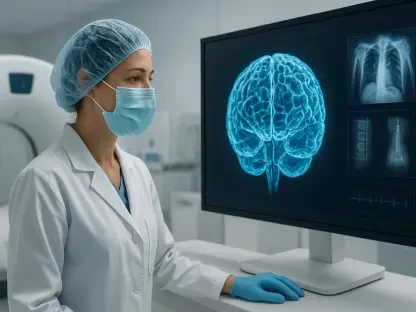
Generative and analytical AI further refine this partnership by handling the heavy lifting of information processing. Generative models can synthesize vast amounts of medical literature into actionable summaries and streamline the creation of clinical notes through natural language processing. Meanwhile, analytical AI excels at detecting patterns in medical imaging and genomic data with a level of precision that complements human expertise. By automating these data-intensive processes, technology restores the time necessary for doctors to exercise their unique human strengths: empathy, moral judgment, and the management of complex situational nuances.
Establishing Trust: Navigating the Ethics of Automated Care
For AI to successfully restore the human touch, it must first navigate significant cultural and structural hurdles regarding professional autonomy and trust. Many medical professionals harbor legitimate fears that “black box” decision-making could undermine their clinical judgment or lead to unaccountable errors. To address these concerns, transparency is non-negotiable; clinicians must be able to understand how an AI reached a conclusion to maintain legal and ethical responsibility. Establishing clear frameworks for accountability ensures that technology remains a tool for the expert, not a replacement for the authority.
Moreover, the integrity of the data used to train these systems is paramount to preventing healthcare disparities. If AI models are trained on narrow or biased datasets, they risk reinforcing existing inequities in medical outcomes. Ensuring that algorithms are representative of diverse populations is a foundational requirement for equitable care. Only through rigorous validation and a commitment to “explainability” can these systems gain the confidence of both the medical community and the public. Trust is built when technology is seen as a reliable partner in the pursuit of patient safety and health equity.
A Roadmap: The Future of the AI-Enabled Medical Practice
The transition toward an augmented model requires a structured evolution that begins with immediate administrative relief and ends with a holistic ecosystem. The initial phase involves automating the “back office” to handle scheduling, claims, and basic imaging analysis, providing instant relief from excessive screen time. As these systems mature, the focus shifts toward extending care beyond the clinic walls through remote monitoring and faster home-based interventions. This progression ensures that the technology is integrated thoughtfully, allowing the workforce to adapt to new workflows without being overwhelmed by sudden shifts.
Finally, the long-term success of this integration depends on a radical reform of medical education. Future practitioners must be trained in AI literacy, focusing on data governance, ethical reasoning, and the management of hybrid teams. New roles, such as clinical informaticians and data architects, were integrated into the healthcare fabric to bridge the gap between data science and patient care. The goal was to create a generation of healers who were as comfortable with algorithmic insights as they were with physical diagnosis. This evolution ensured that the healthcare system could scale to meet global demand while finally placing the patient back at the center of the clinical experience.