
Dr. Wachter contends that the inefficiencies of the modern healthcare system have reached a point where maintaining the current status quo is an immoral choice. This provocative stance served as the foundation for his keynote address at the American Academy of Ophthalmology 2026 Annual Meeting, where he characterized the rapid integration of artificial intelligence as the most significant clinical experiment in human history. The medical landscape currently stands at a crossroads where the mounting pressures of administrative burdens and data saturation threaten to compromise patient outcomes. By reframing AI not as an optional luxury but as a foundational requirement, Wachter highlighted a path forward that emphasizes ethical responsibility alongside technical innovation. This shift requires a departure from traditional cautious skepticism toward a proactive engagement with automated tools. The objective is to move beyond the experimental phase and establish a permanent infrastructure that supports both the practitioner and the patient through advanced computational logic.
Transitioning Toward Informed Optimism: The Path to Clinical Normalcy
A successful transition from viewing AI as a technological novelty to accepting it as a standard medical tool requires what Wachter calls informed optimism. This philosophical framework acknowledges the inherent risks of new technology while remaining focused on the undeniable benefits of improved diagnostic precision and operational efficiency. Public sentiment increasingly supports this direction, as evidenced by recent polling indicating that nearly half of the population views AI in healthcare as a positive force for good. Unlike other sectors that have faced significant public backlash, the medical field enjoys a unique window of opportunity where patients are largely receptive to automated assistance. This societal trust provides a smoother runway for implementation, but it also places a heavy burden on healthcare providers to maintain that confidence through transparent and effective applications. Cultivating this atmosphere of normalcy is essential for widespread adoption.
The restorative power of AI is perhaps most evident in its potential to liberate physicians from their current roles as data-entry clerks. Modern doctors are often overwhelmed by the sheer volume of electronic health records and the rapid expansion of medical literature, which makes staying current nearly impossible without digital assistance. By utilizing intelligent systems to summarize complex patient histories and highlight relevant research, clinicians can redirect their cognitive energy toward diagnostic synthesis and direct patient interaction. This shift is not merely about convenience; it is about reclaiming the essential human element of medicine that has been eroded by decades of increasing clerical demands. When machines handle the heavy lifting of data management, the physician can return to the primary role of a caregiver who possesses the time and mental clarity to address nuanced clinical challenges. This transformation is vital for the long-term sustainability of the profession.
Managing Technical Risks: The Necessity of Human Oversight
While technical risks such as algorithmic bias and the lack of transparency in black-box systems have seen significant improvements by 2026, new threats have emerged. Misinformation and security vulnerabilities now represent the most significant hurdles to the successful integration of automated systems in a clinical setting. Wachter drew a parallel between medical AI and autonomous vehicles, noting that a single high-profile failure can trigger a widespread crisis of public confidence. Just as a solitary accident involving a driverless taxi can stall progress for an entire industry, a catastrophic AI error in medicine could lead to a total withdrawal of support from both the public and regulatory bodies. The fragility of trust necessitates a cautious approach to deployment where safety is prioritized above all other considerations. Protecting patient data and ensuring the veracity of AI outputs must remain central to the ongoing development of these technologies to avoid such systemic setbacks.
Maintaining humans as the final safety bulwarks is a critical requirement for any automated clinical workflow, given that AI accuracy currently fluctuates. Since these systems are not yet infallible, the physician’s role has evolved into that of a critical interpreter and safeguard against potential machine errors. There is a significant psychological risk that providers may become overly reliant on these systems as they grow accustomed to high levels of performance, leading to a dangerous lapse in vigilance. Eternal vigilance is difficult to maintain when an automated tool consistently provides accurate results, yet it is exactly when the system fails that human intervention is most needed. Doctors must remain actively engaged in the diagnostic process, cross-referencing AI suggestions with their own clinical observations and the physical reality of the patient. This hybrid model ensures that the benefits of speed and data processing are balanced by the judgment and ethical oversight of a human expert.
Leading the Revolution: Strategic Governance in Ophthalmology
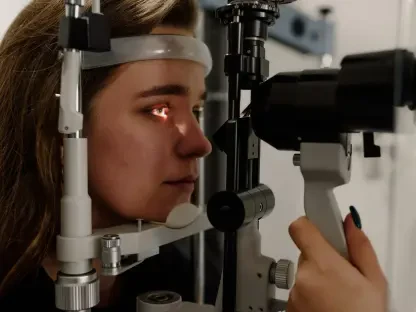
Ophthalmology serves as the natural leader for this technological revolution due to the unique anatomical characteristics of the eye as a see-through organ. The ability to capture high-resolution images of the retina and other ocular structures provides a rich dataset that is ideally suited for machine learning and computer vision applications. Current models have moved beyond basic image recognition and are now capable of integrating physical measurements, such as intraocular pressure and visual acuity, into unified management plans. This integration allows for a more holistic view of patient health, often identifying markers for systemic conditions like cardiovascular disease or neurodegenerative disorders through a simple eye exam. The precision afforded by these ocular datasets makes ophthalmology a testing ground for innovations that will eventually be adopted across other medical specialties. The field’s early adoption of digital imaging has paved the way for a more seamless transition into an AI-driven environment.
The keynote address concluded by reinforcing the idea that adopting advanced intelligence was a fundamental moral imperative for the entire medical community. Dr. Wachter emphasized that the historical reliance on inefficient and error-prone manual processes was no longer acceptable when superior technological solutions were available. By successfully balancing enthusiasm for innovation with a disciplined commitment to safety, practitioners moved toward a more accurate and humane healthcare system. The focus shifted toward actionable strategies, such as implementing real-time auditing of AI outputs and fostering interdisciplinary collaboration between technologists and clinicians. Ultimately, the medical field demonstrated that technology could be used to restore the dignity of the profession while simultaneously improving the quality of patient care. The transition from an outdated status quo to a modernized clinical environment proved that the greatest experiment in medicine was a necessary and successful evolution.