
Developing an open consensus standard for epilepsy data is essential for moving away from the proprietary systems that currently hinder collaborative medical research. As we look at the current landscape, the International League Against Epilepsy (ILAE) 2025 guidelines have successfully modernized the clinical definitions of seizures, yet a critical gap persists between medical theory and digital practice. The necessity for a standardized numerical encoding system has become apparent as healthcare providers attempt to integrate disparate electronic health records and diagnostic tools. Without a unified method to represent these classifications, the industry remains tethered to incompatible data formats that stifle the potential for large-scale epidemiological studies. The proposed bitfield encoding method addresses this by offering a consistent framework that translates neurological phenomena into precise integers. This advancement ensures that clinicians and researchers are using a shared technical vocabulary, the foundational step toward achieving a truly global and interoperable healthcare infrastructure.
Technical Architecture: Numerical Foundations of Seizure Data
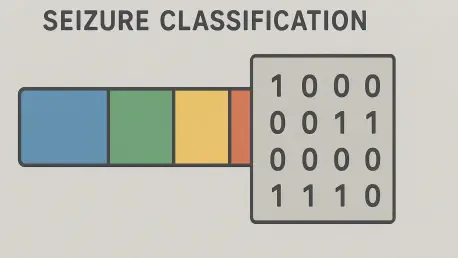
The shift toward a numerical taxonomy requires a robust architecture capable of handling the inherent complexity of neurological events without sacrificing computational performance. At the core of this technical solution is the bitfield, a data structure that assigns individual bits within an integer to represent specific, independent clinical concepts. For example, a single bit can indicate whether a seizure is focal in origin, while another bit signifies the presence of motor symptoms or impaired awareness. Because a seizure diagnosis is essentially a collection of these discrete observations, the entire core hierarchy of the ILAE 2025 framework can be represented as a single, compressed value. This method allows software to perform complex logical operations at the hardware level, making it far superior to traditional string-based storage. By treating medical diagnoses as mathematical entities, the healthcare sector can achieve a level of data integrity and processing speed that was previously impossible with legacy database systems.
JavaScript Compatibility: The 32-Bit Encoding Constraint
One of the most critical considerations in the development of this encoding standard was the technical limitation of modern web environments. Although high-level languages like C++ or Rust can handle massive integers, JavaScript remains the dominant language for browser-based medical interfaces and cloud applications. Because JavaScript restricts bitwise operations to a 32-bit range, the researchers intentionally compressed the primary seizure classification into a 32-bit unsigned integer. This strategic choice ensures that the system is compatible with nearly every existing medical software platform, from high-performance hospital servers to mobile tablets used at the bedside. By adhering to this constraint, the developers have guaranteed that data can be processed consistently across different devices without the risk of precision loss or software crashes. This universal compatibility is vital for the widespread adoption of the standard, as it removes the technical barriers that often prevent hospitals from upgrading their informatics systems.
Semiological Expansion: Handling Complex Clinical Descriptors
While the 32-bit core handles the primary classification, the ILAE 2025 guidelines also require detailed descriptors for phenomena like eye deviation or complex motor movements. To accommodate this level of detail, the system utilizes a 128-bit expansion based on BigInt structures, which provides ample space for specific semiological descriptors without cluttering the primary diagnosis. This tiered approach allows for a “layered” data model where the most essential information is stored in the 32-bit core, while more granular details are appended as needed. For clinicians, this means that a diagnosis can be as simple or as detailed as the evidence allows, while the software remains capable of indexing every individual feature. This flexibility is essential for research applications, where specific movements or postictal states may be the focus of a study. By separating the core taxonomy from the expanded descriptors, the system maintains a balance between high-level efficiency and the detailed documentation required for high-quality neurological care.
Clinical Implementation: Bridging Taxonomy and Real-World Workflow
The transition from clinical observation to a digital record must be as seamless as possible to ensure that medical professionals actually adopt the new standard. Current workflows often involve a period of uncertainty, where a seizure is initially described by a witness before being confirmed through video-EEG monitoring in a specialized unit. The bitfield system is uniquely suited for this evolving diagnostic process because it supports an additive model of data entry. Rather than forcing a clinician to choose a single, final label at the beginning of an encounter, the software allows for the incremental tagging of observed features. As more evidence is gathered, the numerical bitfield is updated to reflect the growing certainty of the diagnosis. This preserves the original observations—such as the presence of tonic movements—even if the ultimate classification changes from unknown to focal. This methodology ensures that the medical record reflects the true clinical history of the patient rather than just a static, retrospective conclusion.
Legacy Migration: Mapping Historical Data to the Current Framework
A major challenge for any new standard is the existence of decades of historical data stored under older classification models, such as the 2017 SCORE guidelines. To address this, the researchers developed a comprehensive mapping system that translates legacy codes into the 2025 bitfield format. This process revealed that while the new model is more streamlined, it requires careful handling of “lossless” data to ensure that no clinical nuance is discarded during migration. For example, certain motor subtypes from previous years now require a combination of a base classification and a specific descriptor bit to maintain their original meaning. By providing a validated mathematical map between the old and new systems, the bitfield approach allows research institutions to modernize their existing databases without losing the continuity of their longitudinal studies. This bridge between the past and the present is essential for maintaining the integrity of epilepsy research as the medical community transitions toward more advanced digital standards.
Universal Interoperability: Aligning with Global Healthcare Networks
For the proposed bitfield encoding to be effective, it must integrate with the existing global standards that govern electronic health records and observational research. The development team has prioritized mapping the system to major frameworks such as HL7 FHIR and the SNOMED CT clinical terminology. By aligning the bitfield standard with these international systems, the researchers have ensured that epilepsy data can be shared across different hospital networks and even across national borders without the need for manual translation. A proof-of-concept implementation successfully demonstrated this flow, where a seizure label was generated in a web browser, transmitted as a JSON object, and stored in a PostgreSQL database using native bit-string operators. This end-to-end technical reliability proves that the system is ready for large-scale deployment. When diagnostic data can move freely between different institutions while maintaining total precision, the speed of clinical discovery increases, leading to better-informed treatment decisions for patients.
Strategic Impact: Future Prospects in Epilepsy Informatics
The implementation of bitfield encoding represents a shift toward more intelligent and data-driven neurological care. As medical software continues to evolve, the ability to rapidly search and filter massive datasets becomes increasingly important for both clinicians and administrators. In a research setting, the efficiency of this numerical system allows for the instantaneous identification of specific patient cohorts across millions of records. Instead of relying on slow and error-prone text searches, an investigator can use simple arithmetic to find every instance of a specific seizure type combined with a particular motor symptom. This level of computational speed is not merely a matter of convenience; it is a fundamental requirement for the next generation of epidemiological research and clinical trials. By providing a rigorous, high-performance foundation for data management, the bitfield standard empowers the medical community to ask more complex questions and receive more accurate answers, ultimately improving our understanding of epilepsy on a global scale.
Open Source Validation: Using TypeScript for Clinical Accuracy
To ensure that the digital implementation of the ILAE 2025 guidelines remains scientifically accurate, the development team utilized TypeScript to create a reference library. This choice allows for static type-checking, which prevents common coding errors where incompatible clinical traits might be accidentally combined. For instance, the library includes validation functions that automatically flag a diagnosis if it incorrectly labels a seizure as both focal and generalized simultaneously. This built-in logic acts as a safety net for developers, ensuring that every software application built on this standard remains clinically sound. By releasing the library under a permissive MIT license, the researchers have invited the global developer community to audit, improve, and expand the code. This open-source approach fosters trust within the medical community and encourages the development of a wide range of compatible tools, from simple mobile apps to complex hospital informatics systems, all rooted in the same verified clinical logic.
Global Implementation: Advancing Epilepsy Care through Standards
The successful pilot of the bitfield encoding standard demonstrated that a unified numerical approach could effectively dissolve the technological barriers between clinical observation and data science. By the time this system reached its initial operational maturity, clinicians realized that the primary benefit was not just structured storage, but the ability to perform cross-institutional analysis with zero semantic loss. This transition shifted the focus from merely documenting events to proactively managing patient outcomes through high-velocity data queries. Looking ahead, the next phase of this initiative involved the integration of these bitfields into wearable diagnostic sensors, allowing for real-time, standardized reporting from a patient’s home directly into their medical record. The implementation proved that when medical professionals and software engineers collaborated on open standards, the resulting ecosystem became significantly more robust than any proprietary alternative. Consequently, the adoption of this framework served as a catalyst for a global movement toward fully interoperable neurological health data.