
A technical comparison between the lung cancer medications crizotinib and lorlatinib highlights how structural rigidity directly influences the effectiveness of a treatment. This fundamental principle of medicinal chemistry serves as the testing ground for Google DeepMind’s latest artificial intelligence agent, a tool designed to condense years of institutional knowledge and days of computational modeling into a single hour of processing. The agent, internal to the Science plugin, marks a departure from standard large language models by acting as an orchestrator for specialized cheminformatics tools. Instead of simply generating text, it navigates the vast landscape of molecular design to propose synthetic routes for new chemical entities. This advancement represents a significant shift toward autonomous scientific reasoning, where the initial phases of drug discovery—literature review, evidence gathering, and structural hypothesis—are handled by a system capable of maintaining data integrity across disparate sources. The speed of this process suggests a transformation in how oncology researchers prioritize targets.
Bridging Cheminformatics and Molecular Reasoning
The architecture of the DeepMind agent, often referred to as Antigravity, relies on the integration of established cheminformatics libraries like RDKit to ensure chemical validity. By grounding the reasoning capabilities of the model in rigorous mathematical and structural calculations, the system avoids the hallucinations common in general-purpose AI. The agent pulls historical data from foundational databases such as ChEMBL and PubChem, synthesizing information that was previously siloed across different publication formats. This integration allows the agent to perform complex evidence gathering by cross-referencing chemical potency with molecular properties in real time. The ability to autonomously query these databases means that a human researcher no longer needs to spend hours manually collating assay results from dozens of different scientific papers. Consequently, the preparation phase of a drug discovery project, which historically served as a significant bottleneck, is now compressed into a fraction of the time, allowing teams to focus on downstream validation.
Maintaining the identity of chemical compounds across varied research papers presents a persistent challenge in medicinal chemistry, as a single molecule might be identified by a IUPAC name, a common name, or a 2D skeletal structure. The DeepMind agent solves this through a sophisticated identification protocol that preserves compound identity across disparate sources, ensuring that data regarding potency and binding affinity are correctly attributed. This process of identity resolution is critical when building predictive models for lung cancer treatments, where minor structural variations can lead to vastly different biological outcomes. By successfully reconciling these inconsistencies, the agent builds a reliable foundation for its design proposals. This “evidence-gathering” phase is not merely about data retrieval; it is an active synthesis of knowledge that informs the generation of new molecular hypotheses. The system ensures that every proposed structure is backed by a logical chain of evidence derived from confirmed experimental results, bridging the gap between historical data and future chemical innovation.
Advanced Structural Strategies in Oncology
In the specific case of lung cancer research, the AI agent demonstrated its utility by analyzing the transition from flexible molecules to rigid ones. The agent was tasked with examining crizotinib, a drug with five major rotatable bonds, and lorlatinib, which utilizes a macrocyclic ring to lock the molecule into a specific orientation. This strategy, known as conformational restriction, is designed to increase the binding efficiency of a drug to its target protein. The AI successfully identified the relationship between the structural rigidity of lorlatinib and its superior potency, then applied this logic to propose entirely new molecular structures. This level of reasoning goes beyond simple pattern recognition; it demonstrates an understanding of the geometric requirements for effective drug-target interaction. By generating design hypotheses that adhere to sophisticated medicinal chemistry principles, the agent provides a roadmap for synthesizing the next generation of inhibitors. This capability allows researchers to explore a much broader chemical space than would be possible through manual design alone.
The commercial implementation of these AI-driven designs is currently being spearheaded by Isomorphic Labs, an Alphabet subsidiary. Through its Drug Design Engine, known as IsoDDE, and a specialized tool called Argon, the company is refining molecular designs for major industry partners, including Johnson & Johnson. These tools are not operating in a vacuum but are part of a broader competitive landscape where other tech leaders are developing similar capabilities. For instance, OpenAI is focusing on the logistical and reasoning aspects of drug programs through its GPT-Rosalind tools, while Anthropic has partnered with BigHat Biosciences to iterate on antibody designs. The key differentiator for the DeepMind approach is its focus on high-level orchestration, where the AI manages the entire workflow from initial literature analysis to the final proposal of synthetic routes. This comprehensive integration ensures that the resulting molecular designs are not only potent but also theoretically accessible via established laboratory synthesis methods, aligning the AI’s output with the practical needs of pharmaceutical manufacturing.
Validation Hurdles and the Necessity of Data Integrity
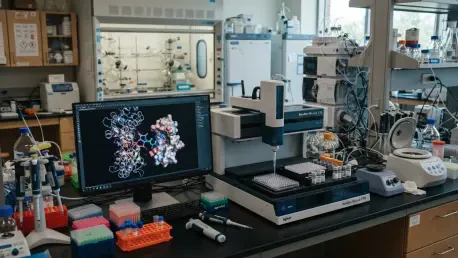
While the ability to design a new molecule in one hour is a landmark achievement, the transition from a digital hypothesis to a physical medication remains a complex and time-consuming process. Experts emphasize that the speed of the computational design phase does not eliminate the need for traditional laboratory validation. Once the AI proposes a promising structure, human chemists must still synthesize the compound in a physical lab, a process that can take weeks or even months. Furthermore, the resulting molecule must undergo rigorous testing to ensure it is safe and effective in biological systems. The AI acts as a force multiplier by narrowing down the field of potential candidates, but it cannot bypass the physical realities of clinical trials and safety testing. Therefore, the “one-hour” metric refers strictly to the digital reasoning and modeling phase. The broader impact of this technology will depend on how effectively these digital designs can be integrated into the physical workflow of a laboratory, where synthesis and assaying continue to dictate the overall timeline.
The accuracy of an AI agent is inherently limited by the quality of the data it consumes, and public scientific literature is often characterized by sparse or inconsistent reporting. If the underlying laboratory assays used to train the model are flawed or noisy, the AI’s predictive models will inevitably reflect those deficiencies. This necessitates a high degree of human oversight to evaluate the scientific soundness of the AI’s proposals. Current workflows require expert chemists to audit the agent’s output, ensuring that the suggested synthetic routes are practical and that the predicted properties align with known chemical behavior. This human-in-the-loop approach is essential for maintaining safety and reliability in drug discovery. As the industry moves forward, the focus will likely shift toward improving the standardization of laboratory data to provide a cleaner foundation for AI reasoning. By addressing the issues of data quality and validation bottlenecks, the pharmaceutical industry can better leverage the speed of AI to address the high failure rates that have historically plagued the development of new lung cancer therapies.
Strategic Paradigms for Autonomous Laboratory Systems
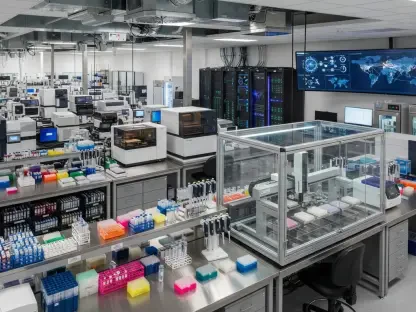
The emergence of AI agents like Antigravity marked a transition from simple data retrieval to active scientific synthesis within the pharmaceutical sector. This shift condensed days of literature review and structural analysis into a single hour, fundamentally altering the early-stage research workflow. By 2026, the industry moved toward a closed-loop system where AI-generated designs were immediately funneled into automated laboratories for physical synthesis. This rapid cycle of hypothesis and experimentation allowed researchers to iterate on molecular structures at an unprecedented pace. The technology functioned as a powerful bridge between published chemical knowledge and the practical requirements of drug manufacturing. Rather than replacing human expertise, these tools empowered scientists to manage a much larger volume of design proposals, effectively shifting the burden from manual data entry to high-level strategic evaluation. This evolution in methodology provided a scalable solution to the increasing complexity of molecular targets in oncology, ensuring that the most promising leads were prioritized for development.
To maximize the benefits of these advancements, organizations prioritized the standardization of chemical data and invested heavily in robotic laboratory infrastructure. These actions ensured that the high-speed outputs of the AI agent were matched by an equally efficient physical testing phase. Pharmaceutical companies adopted specialized software to track the provenance of every data point, which increased the reliability of the predictive models used for lung cancer research. Furthermore, the integration of real-time feedback from “wet labs” into the AI’s learning process allowed for the continuous refinement of design logic. This systematic approach reduced the astronomical costs and high failure rates associated with bringing new drugs to market. The successful implementation of these strategies required a collaborative effort between software engineers and medicinal chemists to maintain the scientific integrity of the discovery process. Ultimately, these steps established a more resilient and responsive research framework, paving the way for more effective treatments to reach patients with greater speed and precision than was previously possible in the pre-AI era.