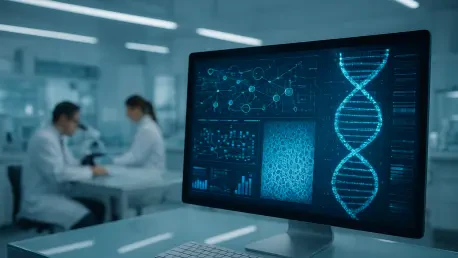

The collaboration focuses on harmonizing complex data types like clinical notes, genomics, and pathology imaging into a single, highly searchable digital format. This strategic alliance between Rush University System for Health and nference represents a pivotal shift in how academic medical centers leverage longitudinal patient data to drive innovation. By integrating decades of unstructured clinical narratives with modern molecular insights, the partnership aims to dissolve the silos that traditionally hinder large-scale medical inquiries. Researchers now face the challenge of navigating oceans of information that often remain trapped in static files or incompatible software systems. This initiative addresses that bottleneck by deploying sophisticated language models and data synthesis tools designed to identify patterns in disease progression that were previously invisible. As health systems across the country grapple with the transition to value-based care, the ability to synthesize such diverse inputs becomes a cornerstone of sustainable clinical excellence and discovery.
Transforming Unstructured Data into Actionable Insights
Bridging the Gap: Data Harmonization Techniques
Central to this partnership is the deployment of the nSights platform, a sophisticated software environment that applies state-of-the-art natural language processing to vast repositories of electronic health records. For years, approximately eighty percent of clinical data has existed in an unstructured state, consisting of physician notes, discharge summaries, and operative reports that standard database queries could not interpret. By utilizing transformer-based neural networks, the collaboration enables the extraction of nuanced clinical phenotypes from these narratives, effectively turning text into computable data points. This process does not merely digitize records but enriches them by identifying temporal relationships between symptoms, diagnoses, and treatments. Such a transformation allows for a more holistic view of the patient journey, providing a foundation for predictive modeling that can alert providers to potential complications before they manifest clinically, thereby enhancing the overall safety and efficacy of patient care protocols.
Securing Privacy: The Federated Learning Model
Ensuring the security of sensitive information remains a paramount concern as these large-scale data integrations become more common in the medical landscape. The framework established by Rush and nference utilizes a federated data model, which allows researchers to query and analyze information without the data ever leaving the secure infrastructure of the health system. This “data-to-code” approach preserves patient privacy by utilizing advanced de-identification algorithms that scrub personally identifiable information while maintaining the clinical integrity necessary for high-fidelity research. By adhering to these rigorous standards, the partnership demonstrates how modern institutions can balance the aggressive pursuit of scientific breakthroughs with the ethical obligation to protect individual privacy. This secure environment fosters a culture of trust among patients and clinicians alike, ensuring that the benefits of artificial intelligence are realized without compromising the fundamental principles of medical confidentiality that have long defined the doctor-patient relationship.
Advancing Multimodal Research and Diagnostics
Synergizing Genomics and Digital Pathology
The inclusion of pathology imaging and genomic sequencing into the searchable framework marks a significant evolution in the depth of clinical research capabilities. Traditionally, pathology slides were stored physically or in siloed digital archives, making it difficult to correlate microscopic cellular features with overall patient outcomes. By digitizing these images and integrating them with genomic data and clinical histories, the collaboration creates a “multimodal” view of disease. Artificial intelligence algorithms can now be trained to recognize specific morphological patterns in tumor biopsies that correspond to certain genetic mutations or responses to immunotherapy. This level of detail allows oncologists to select the most effective targeted therapies with much greater confidence than was previously possible. The integration of these complex data types ensures that every piece of information collected during a patient’s diagnostic workup contributes to a broader understanding of their condition, paving the way for more accurate prognostic assessments.
Implementing Success: Scalability and Clinical Impact
The collaboration between Rush and nference successfully established a framework that converted massive amounts of dormant information into a dynamic asset for medical advancement. By focusing on the harmonization of diverse data types, the initiative provided a clear path toward more personalized and effective healthcare delivery. Stakeholders within the industry recognized that the transition to a searchable, digital format was not merely a technical upgrade but a fundamental shift in the philosophy of clinical inquiry. The actionable steps taken during this period included the refinement of federated learning models and the adoption of transparent AI governance policies. These efforts ensured that the insights gained were both scientifically rigorous and ethically sound. Looking ahead from 2026 to 2028, the focus remained on refining these algorithms to handle increasingly complex biological questions while fostering a collaborative ecosystem where data-driven discoveries could be rapidly translated into bedside applications. This approach ultimately redefined the standard for medical research.