
The rapid expansion of artificial intelligence within the healthcare sector has fundamentally altered the way individuals navigate their initial interactions with medical systems and diagnostic tools. While the industry has long anticipated a future where sophisticated algorithms streamline the triage process, a significant psychological barrier currently threatens the clinical efficacy of these digital solutions. Recent research conducted by a team at the Institute of Psychology at the University of Würzburg suggests that a fundamental discrepancy exists in how patients communicate with artificial intelligence compared to human medical professionals. This study reveals that patients instinctively provide less detail and nuance when they believe they are interacting with an algorithm, a phenomenon that directly degrades the quality of the medical advice the system can provide. By failing to disclose the full breadth of their symptoms, users inadvertently undermine the very technology designed to help them, creating a significant hurdle for modern digital health initiatives.
The Experimental Foundation: Measuring the Communication Gap
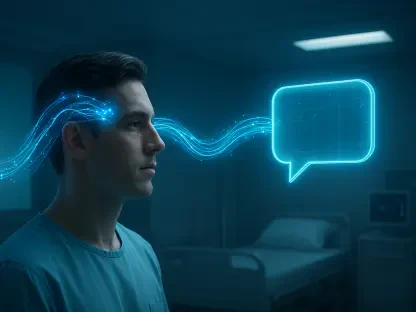
To investigate this behavioral gap, the research team recruited five hundred adult participants to simulate the process of self-triage, which is the initial step in determining the urgency of a medical condition. Each participant was tasked with writing two separate symptom reports: one describing an unusual and persistent headache and another regarding a flu-like illness. The participants were divided into two groups that used identical interfaces and received the same instructions, yet the framing of the recipient differed. One group was informed that a human doctor would be reviewing their symptoms, while the other group was told that an automated chatbot would be the primary recipient. This subtle change in perception led to measurable differences in the textual output. Reports intended for human doctors averaged two hundred and fifty-six characters, whereas those written for the artificial intelligence were notably shorter, averaging only two hundred and twenty-nine characters on average.
This reduction in length is roughly equivalent to omitting one full, descriptive sentence from a medical report, which can be the difference between an accurate triage and a missed diagnosis. The data suggests that when individuals write for a machine, they adopt a more concise and transactional tone, perhaps assuming that a computer does not require the same level of contextual information as a person. However, this brevity is not a sign of efficiency but rather a loss of critical data. By stripping away the narrative elements of their illness, patients provide a skeletal version of their experience. This behavioral shift occurred across various demographics, indicating that the tendency to withhold information from algorithms is a widespread psychological trait. As medical systems increasingly rely on these digital front doors, understanding why people truncate their descriptions becomes essential for maintaining patient safety and ensuring that no vital symptoms are lost in the translation between human and machine.
Analyzing the Clinical Consequences: From Data to Diagnosis
The research team sought to determine if these shorter reports were actually less useful or if they were merely more efficient representations of the same medical facts. To achieve this, every submission was put through a specialized scoring system designed to evaluate how well the description could support an urgent care decision. Furthermore, a panel of four licensed physicians, including neurologists and pulmonologists, reviewed a random subset of the reports without knowing whether they were written for a human or an automated system. The results were consistent across both the automated scoring system and the expert judgments of the doctors. The reports written for the chatbot scored eight percent lower in overall clinical utility. The missing characters were not merely filler; they represented vital contextual data that changed the clinical picture. Patients writing for the artificial intelligence tended to omit nuanced details such as the exact duration of a headache or the specific sound of a cough.
These omissions are particularly problematic because medical algorithms rely on a logic where the quality of the output is entirely dependent on the quality of the input data. When patients leave out secondary symptoms like light sensitivity, nausea, or the specific triggers of their pain, the chatbot is forced to make triage decisions based on an incomplete and often misleading data set. A diagnostic model might be highly sophisticated, but it cannot account for information that is never provided. The study demonstrated that the eight percent quality gap was enough to potentially alter the urgency of the recommended care. If a patient fails to mention that a headache was preceded by a specific neurological aura, the system might categorize a serious issue as a routine tension headache. This highlights a paradox in modern medicine: as the intelligence of our diagnostic tools increases, the quality of the data we feed them may be decreasing due to the very nature of the human-computer interaction.
The Psychological Drivers: Uniqueness Neglect and Trust
The primary driver identified behind this lack of detail is a specific psychological phenomenon termed uniqueness neglect. This is the pervasive belief among users that an artificial intelligence system is fundamentally incapable of understanding the individual nuances of a person’s life and health. Patients often assume that an algorithm merely matches their input against standardized patterns or rigid categories, leading them to believe that spelling out specific or strange details is a waste of effort. Because people do not trust the machine to grasp their individual uniqueness, they subconsciously withhold the very data the machine needs to provide precise and personalized help. This perception creates a barrier where the user treats the interaction as a search engine query rather than a clinical consultation. Consequently, the rich history of a patient’s symptoms is flattened into a list of keywords that lack the necessary diagnostic depth.
Other contributing factors include a general skepticism regarding the diagnostic capabilities of algorithms and lingering privacy concerns about how detailed health data is stored. Previous research from the same institution indicated that even when an automated system provides advice identical to that of a human doctor, users rate the advice as less trustworthy and are less likely to follow the recommended next steps. This lack of algorithmic appreciation creates a self-fulfilling cycle: the user provides poor data, the system provides a mediocre or overly generalized response, and the user’s original skepticism is reinforced. To break this cycle, the healthcare industry must address the underlying assumption that machines are only capable of processing simplified information. Unless patients view digital tools as capable of handling complexity, they will continue to provide the simplified inputs that lead to suboptimal medical outcomes and decreased confidence in digital health systems.
Future Pathways: Bridging the Interaction Bottleneck
One of the most significant takeaways from this research is how it highlights the inherent flaws in the current methods used to test medical software. Most diagnostic models are evaluated using standardized, high-quality data sets that have been curated by professionals. In these controlled laboratory environments, the technology often displays accuracy that rivals or exceeds that of human practitioners. However, this study proves that such accuracy does not necessarily survive contact with real-world users who behave differently when they know they are not speaking to a person. If a patient only gives the system half the story, even the most sophisticated model will fail to route them to the correct level of care. This suggests that the current bottleneck in digital health is not the raw intelligence of the language models, but rather the quality of the interface that facilitates the human-AI interaction. The focus must shift toward designing systems that actively encourage disclosure.
To bridge the quality gap, developers should move away from open-ended text boxes and toward more structured, proactive prompting. By actively asking about the duration, severity, and specific triggers of a symptom, the system can extract the necessary detail that a patient might otherwise deem irrelevant for a machine. Additionally, transparency regarding the system’s capabilities can improve the quality of user input. If a chatbot explains exactly why it needs specific information or provides concrete examples of what a high-quality description looks like, users may be more inclined to provide thorough accounts of their condition. When users understand the logic behind the tool and feel that their specific situation is being carefully considered through targeted questions, the tendency to compress information diminishes. Closing this gap is essential for ensuring that the transition to digital-first triage does not come at the cost of patient safety or diagnostic precision.
Implementing Strategic Design for Better Triage
The researchers emphasized that the solution to this problem is not necessarily to build a more complex model, but to design a more human-like interview process. Developers should prioritize the creation of empathetic interfaces that mimic the conversational flow of a traditional doctor-patient interaction. This includes using follow-up questions that probe for secondary symptoms and providing immediate feedback that acknowledges the importance of specific details. By making the digital interface feel more like a partner in care rather than a data entry form, systems can bypass the psychological barriers that lead to information withholding. Furthermore, healthcare providers should educate patients on how to interact with these tools, stressing that the algorithm’s effectiveness is directly tied to the level of detail provided in the report. This dual approach of better design and user education is necessary to maximize the potential of modern medical technology.
The findings from the University of Würzburg served as a vital reminder to both developers and the public. For those building these tools, the challenge is to design interfaces that counter uniqueness neglect and actively encourage full disclosure. For patients, the takeaway is clear: providing a full and descriptive story of symptoms is the only way to ensure the technology provides the help they actually need. As these systems become the standard gatekeepers for healthcare, addressing the eight percent quality gap became a priority for ensuring diagnostic accuracy across millions of digital consultations. Ultimately, the research suggested that the future of digital medicine depends as much on the behavior of the patient as it does on the sophistication of the software. Moving forward, the industry must focus on creating a collaborative environment where humans feel comfortable sharing the complexities of their health with the digital systems designed to protect them.