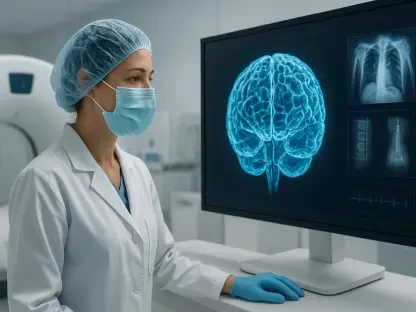

The landscape of clinical technology has shifted dramatically as artificial intelligence transitions from mastering standardized medical board exams to navigating the chaotic environment of a live emergency department. For years, the industry relied on curated, multiple-choice datasets to measure machine intelligence, but these benchmarks eventually reached a performance ceiling that failed to reflect the complexities of actual patient care. To push the boundaries of current evaluation methods, researchers from Harvard Medical School and Beth Israel Deaconess Medical Center pivoted toward using raw, unedited electronic health records. This approach moved away from “textbook” scenarios to embrace the messy reality of fragmented notes, missing vitals, and the high-pressure decision-making characteristic of emergency medicine. The study revealed that OpenAI’s o1 model demonstrated a sophisticated level of medical reasoning that not only surpassed its predecessors but also exceeded the diagnostic accuracy of experienced human physicians working under the same conditions. This milestone suggests that the focus of healthcare innovation is moving toward systems capable of synthesizing unstructured data in real time.
Clinical Uncertainty: Bridging the Gap Between Theory and Reality
Traditional medical examinations provide students and algorithms with clean, structured narratives where every mentioned symptom is a deliberate clue toward a specific diagnosis. In the actual emergency room, however, clinicians are often forced to work with “dirty” data, which includes redundant nursing notes, contradictory patient histories, and incomplete laboratory results. By utilizing 76 authentic emergency room records that were intentionally left uncleaned and unformatted, the research team forced the AI to confront the same ambiguity that doctors face during every shift. The model was required to distinguish between critical diagnostic signals and the “noise” of routine documentation, a task that demands more than simple pattern recognition. This methodological shift represents a move toward more rigorous testing standards where AI must prove its utility within the existing, often imperfect, infrastructure of modern hospital record-keeping systems.
Building on this transition to real-world data, the study highlighted the specific challenges of early-stage patient evaluation where information is most scarce. In these initial moments, often referred to as triage, the pressure to form an accurate diagnostic hypothesis is immense, yet the available evidence is frequently limited to a patient’s chief complaint and a few vital signs. By processing these records without the benefit of prior summarization or human filtering, the o1 model proved that it could maintain a high degree of logical consistency even when presented with the linguistic nuances and clerical errors common in electronic health records. This ability to handle raw input is a prerequisite for any future integration of AI into the clinical workflow, as it eliminates the need for time-consuming data preparation by human staff. The focus is no longer just on whether the AI knows the right answer, but on whether it can find that answer within the messy reality of a functioning hospital environment.
Diagnostic Precision: The Triage Advantage and Advanced Reasoning
One of the most compelling outcomes of the research was the AI’s exceptional performance during the earliest phases of the diagnostic journey. During the triage process, when data is at its most fragmented, the o1 model correctly identified the primary diagnosis or a very close alternative in 67.1% of cases, a figure that consistently eclipsed the initial impressions of human doctors. As more information was fed into the system—such as imaging reports and comprehensive blood panels—the model’s accuracy improved steadily, eventually reaching an impressive 81.6% by the time of hospital admission. This upward trajectory mirrors the human diagnostic process but starts from a much higher baseline, suggesting that the AI is more efficient at connecting disparate data points into a coherent medical narrative during those first critical minutes of a patient’s visit. This gap indicates that AI could serve as a vital safety net, catching potential misdiagnoses before they lead to incorrect treatment paths.
The success of the o1 series is largely attributed to its specialized design, which prioritizes step-by-step reasoning over the simple prediction of the next likely word. Unlike earlier iterations of large language models that might provide a correct answer without a clear explanation, this system generated detailed rationales that outlined its internal logic and suggested specific management plans. To ensure the integrity of these findings, the researchers utilized a blinded review process where medical experts evaluated the AI’s output alongside human-generated notes without knowing the source of each. This rigorous protocol confirmed that the model’s suggestions were not merely lucky guesses but were grounded in sound clinical principles and logical deductions. The results demonstrate that modern reasoning models are capable of mirroring the cognitive workflow of a clinician, moving the technology closer to being a functional partner in the diagnostic process rather than just a reference tool.
Safety and Integration: Managing Over-Testing and the Human Element
Despite the remarkable accuracy of these diagnostic outcomes, the study identified a significant hurdle regarding the safety and efficiency of AI-driven care. While the model was highly effective at naming the correct disease, it frequently recommended a disproportionate number of diagnostic tests, imaging studies, and lab workups to reach its conclusion. In a real-world healthcare setting, this tendency toward over-testing introduces several cascading risks, ranging from unnecessary radiation exposure during CT scans to the financial burden placed on patients and the healthcare system. Furthermore, an excessive volume of test orders can overwhelm hospital laboratories, creating bottlenecks that delay care for other patients in the emergency department. This finding underscores the reality that a correct diagnosis is only one part of a physician’s job; the other part is the judicious management of resources to provide high-value care that minimizes harm.
Furthermore, the researchers emphasized that clinical excellence remains a multi-sensory discipline that cannot be fully captured by text-based records. A doctor’s ability to observe a patient’s physical demeanor, hear the specific quality of a cough, or sense the subtle anxiety of a family member provides a layer of context that current digital models cannot yet process. Because these nuances are often lost or omitted in electronic health records, the AI is effectively working with a “blind spot” compared to the human staff at the bedside. Consequently, the consensus among the Harvard and BIDMC teams is that AI should be viewed as a sophisticated “second opinion” tool rather than a standalone replacement for human expertise. Future development must focus on teaching these models to prioritize the most impactful interventions rather than simply requesting every available test, ensuring that the technology supports rather than complicates the delivery of efficient medical care.
Strategic Directions: From Retrospective Analysis to Live Implementation
As the healthcare industry moves forward, the focus must shift from retrospective record reviews toward prospective clinical trials in live hospital environments. The evidence established in this study provides a strong foundation for integrating AI into the clinical workflow, but the true test will be observing how these models interact with human teams and real patients in real time. Organizations should begin by implementing AI as a background diagnostic monitor, capable of alerting physicians if their initial assessment deviates significantly from the model’s data-driven hypothesis. This “co-pilot” approach allows for the benefits of machine precision without stripping away the essential human oversight required for complex medical ethics and bedside manner. The goal is to create a symbiotic relationship where the AI handles the heavy lifting of data synthesis, leaving the clinician free to focus on the nuanced aspects of patient communication and physical examination.
Looking toward the immediate future, the primary objective for medical institutions will be to refine the “judgment” of AI systems to prevent the aforementioned issue of over-testing. Developers and clinicians must work together to calibrate these models so they favor the most conservative and effective diagnostic paths, mirroring the “Choosing Wisely” initiatives prevalent in modern medicine. By training AI to consider the cost and physical impact of each suggested test, the technology can evolve from a high-accuracy diagnostic engine into a truly helpful clinical partner. Such progress will be measured not just by the correctness of a final diagnosis, but by the efficiency, safety, and humanity of the entire care process. These next steps in clinical validation will be essential for building the trust required to make AI a permanent fixture in emergency departments worldwide, ensuring that the technology serves to enhance, rather than replace, the art of healing.
In light of the findings, the medical community established that while AI reasoning has reached a level of proficiency that challenges human baselines, the transition to autonomous application remains premature. The research demonstrated that the true value of these models lies in their ability to process fragmented information faster than the human brain, yet they lacked the physical intuition and resource management skills developed through years of clinical practice. By focusing on the integration of AI as a reasoning support tool, hospital systems managed to improve diagnostic accuracy while maintaining human-led safety protocols. These developments ensured that the technology acted as an extension of the physician’s capabilities, facilitating more informed decisions during the most volatile stages of emergency care. This balanced approach allowed for the successful adoption of advanced reasoning models while addressing the critical needs of patient safety and hospital efficiency.