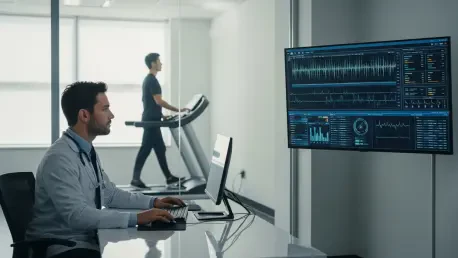

The ability to identify medical complications before symptoms become debilitating represents a major shift in modern clinical practice, transitioning from reactive crisis management toward proactive, data-driven interventions. Grasshopper Health, an innovative startup originating from the University of Nebraska–Lincoln, is spearheading this transformation with the development of the Axis Patch, a low-cost wearable device engineered to continuously monitor a patient’s walking patterns—commonly referred to as gait. Healthcare providers have long recognized gait as a critical indicator of overall health, often calling it the sixth vital sign because subtle changes in movement can signal the early stages of various underlying pathologies. However, traditional office visits frequently fail to capture these nuances because clinicians can only observe patients over short distances in artificial environments. By providing real-time, actionable data during daily life, the Axis Patch offers a representative view of health.
Advancing Precision Diagnostics: The Power of Motion Analysis
Inside the Axis Patch lies a sophisticated sensor array capable of identifying specific gait signatures associated with more than eighteen different medical conditions, ranging from cardiovascular issues to neurological declines. While the initial focus of the development team was on peripheral artery disease, the scope has rapidly expanded to include monitoring for Parkinson’s disease, Alzheimer’s, and chronic heart failure. This continuous monitoring capability allows for earlier medical interventions, giving physicians the opportunity to observe exactly how a patient responds to specific pharmacological treatments or surgical procedures in their natural habitat. By utilizing machine learning algorithms trained on over twenty years of curated medical data, the system can spot movement patterns and hidden signatures that remain invisible to the naked eye. This level of precision ensures that patients receive tailored care plans based on their unique physiological responses rather than generic clinical averages.
From an engineering and design perspective, the Axis Patch is remarkably unobtrusive, mirroring the size and flexibility of a common adhesive bandage. Worn discreetly on the lower back, the device ensures maximum comfort for the user while maintaining a stable position for accurate data collection throughout the day and night. It effectively addresses several historical pain points in the wearable technology sector, such as bulky hardware interfaces and short battery life cycles, by operating for up to two weeks on a single charge. This longevity is crucial for long-term monitoring, as it reduces the burden on the patient and ensures a continuous stream of information for the healthcare provider without frequent interruptions for recharging. The hardware utilizes advanced low-power components and optimized data transmission protocols to maintain a slim profile without sacrificing performance. This seamless integration into a patient’s routine is essential for compliance and high-quality data.
Collaborative Research: Bridging Engineering and Clinical Practice
The creation of the Axis Patch was the result of a deep and sustained partnership between several key Nebraska institutions, each bringing a specific expertise to the project. The University of Nebraska–Lincoln provided the foundational engineering knowledge necessary for the hardware and sensor integration, while the University of Nebraska at Omaha contributed decades of specialized biomechanics research. To ensure that the device met the rigorous demands of the medical community, vascular surgeons and clinical experts at the University of Nebraska Medical Center provided essential insights into patient needs and data integration. This interdisciplinary approach allowed the team to refine their machine learning models by drawing from a vast library of movement data collected from both healthy individuals and those suffering from specific ailments. This rigorous validation process transformed academic theory into a practical, clinical-grade tool that can be used for remote patient monitoring at scale.
By blending high-level engineering with empirical clinical research, the startup successfully developed a system that translates complex kinetic data into clear, readable reports for medical professionals. This collaborative effort ensured that the information gathered by the patch is not only mathematically accurate but also functionally useful for physicians who must manage large patient populations simultaneously. The machine learning architecture was built to filter out environmental noise—such as walking on uneven surfaces or climbing stairs—to focus purely on the physiological indicators of disease progression. This refinement process involved thousands of hours of testing in both laboratory and real-world settings to guarantee that every data point contributes to a more accurate diagnostic picture. This focus on utility ensures that the technology bridges the gap between raw data collection and informed clinical decision-making, allowing for more efficient healthcare delivery and improved patient outcomes across various specialties.
Market Expansion: Economic Impacts of Digital Health Tools
Historically, the widespread adoption of wearable gait monitors was hindered by high production costs and a notable lack of insurance coverage, which kept these tools out of reach for many patients. However, recent shifts in healthcare reimbursement models have created a more favorable environment, allowing insurance providers to cover physician-prescribed digital diagnostic tools like the Axis Patch. Grasshopper Health is currently capitalizing on this transition by securing strategic investments and forming partnerships that assist the company in navigating complex clinical trials and achieving broader commercial scaling. This economic alignment between payers, providers, and developers is essential for moving innovative technology out of niche markets and into standard medical practice. As the healthcare industry continues to prioritize value-based care, devices that offer continuous monitoring and early detection are becoming central to modern cost-saving strategies. This financial viability ensures the long-term sustainability of the platform.
Beyond its immediate medical applications, the development of this technology served as a successful template for how university-led research can stimulate regional economic development and foster a robust biotech ecosystem. By transitioning innovative hardware from the laboratory to the marketplace, the initiative provided doctoral students and early-career researchers with invaluable hands-on experience in the medical device industry. It was determined that healthcare systems needed to prioritize the integration of these remote monitoring tools into their primary care frameworks to maximize the benefits of early intervention. Patients and providers alike benefited from the transition toward data-rich environments where movement served as a precursor to diagnosis. Practitioners successfully expanded the diagnostic capabilities to even more conditions while ensuring that data privacy remained a cornerstone of the platform. This proactive approach to health management fundamentally altered the trajectory of chronic disease care by turning everyday movement into a powerful diagnostic tool.