
In the high-stakes environment of emergency medicine, the first sixty minutes following a traumatic injury—known as the “golden hour”—often dictate whether a patient survives or succumbs to their injuries. James Maitland, a specialist in medical robotics and the integration of IoT in healthcare, joins us to discuss a breakthrough diagnostic tool developed at KGMU that promises to redefine frontline trauma care. By focusing on the critical need for rapid, simplified detection of internal hemorrhaging, this innovation addresses a long-standing gap in emergency response, particularly in resource-limited settings. Our conversation explores the technical ingenuity behind this screen-free device, its potential to democratize life-saving diagnostics, and the shifting landscape of point-of-care technology in the field.
The themes of our discussion center on the shift from complex imaging to simplified, sensor-based alerts that can be operated by non-specialists. We delve into the statistics of internal trauma, where hidden bleeding complicates the treatment of nearly a third of all accident victims, and examine how a handheld, battery-operated probe can facilitate faster referrals to specialized centers.
With the “golden hour” being the most critical window for trauma survival, how does a screen-free, handheld device fundamentally change the way we approach patients in the minutes following an accident?
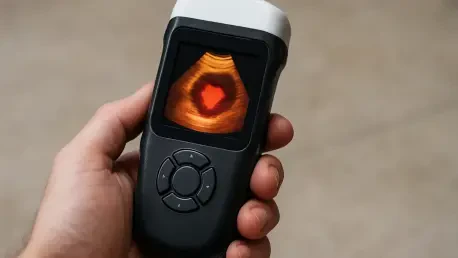
The beauty of this device, developed by Prof Prem Raj Singh and Prof Amiya Agarwal, lies in its ability to strip away the technical barriers that usually delay internal diagnosis. In those first sixty minutes, every second spent waiting for a specialized ultrasound technician or a transportable imaging suite is a second where a patient might be losing blood internally without any outward signs. By using a handheld probe that can be deployed immediately at the scene of a road accident, emergency responders can detect abnormal fluid in the abdomen before the patient even reaches a hospital bed. This proactive approach allows the medical team to bypass the “wait and watch” phase that often happens with external first aid, such as applying compression bandages. It turns a “blind” transport period in the back of an ambulance into a focused diagnostic window where the status of the patient is constantly being evaluated.
In rural areas or small district hospitals that lack sophisticated imaging equipment, what specific barriers does this portable probe remove for healthcare workers?
Traditional ultrasound machines are not just expensive; they are physically bulky and require a level of expertise that isn’t always available in a rural healthcare center or a standard district clinic. This innovation removes the need for a display screen and a specialized operator, which are the two biggest hurdles in low-resource environments. The probe is designed to be a simple, point-of-care tool that functions on both electricity and battery power, ensuring it remains operational even in areas with unstable power grids. When a patient arrives at a small clinic, the staff can simply place the device over the affected area to receive an immediate alert if internal bleeding is present. This simplicity means that the focus shifts from struggling with complex equipment to making an informed clinical decision about whether the patient needs an urgent transfer to a specialized trauma center.
Given that internal bleeding affects roughly 30% to 35% of trauma victims, how does the ability to perform serial monitoring with this device impact long-term patient outcomes?
The statistic that 30% to 35% of trauma patients experience internal bleeding is staggering when you realize how much of that goes unnoticed during initial assessments. Serial monitoring is the practice of checking a patient at regular intervals, and this device makes that process incredibly efficient because it doesn’t require a dedicated imaging room. If a responder can check a patient every ten minutes during a long transport, they can see if the internal fluid volume is increasing, which indicates an active, life-threatening hemorrhage. This constant stream of data provides a narrative of the patient’s condition that a single snapshot simply cannot offer. Knowing that blood loss is accelerating allows the receiving hospital to prep the operating theater before the ambulance even arrives, potentially saving lives through sheer preparation.
The design suggests it can be used by responders with minimal training; what are the practical implications of putting such diagnostic power into the hands of an ambulance driver or a paramedic?
Empowering paramedics and even ambulance drivers with this technology changes the hierarchy of emergency care in a very positive way. Usually, these first responders are limited to basic life support and controlling visible bleeding, but this device allows them to “see” inside the body through simple alerts. The device analyzes fluid within the abdomen and signals the user when it detects something abnormal, meaning the user doesn’t have to interpret grainy black-and-white images on a monitor. This removes the cognitive load and the fear of misinterpretation that comes with using standard medical imaging in a high-stress, noisy environment. It effectively turns every ambulance into a preliminary diagnostic unit, ensuring that the triage process begins the moment a responder reaches the victim.
Early detection is often the difference between a successful surgery and a fatality; how does this innovation streamline the decision-making process for transfers to specialized trauma centers?
One of the biggest challenges in trauma care is the “hidden” injury—those internal bleeds that don’t show up until a patient’s blood pressure crashes and they go into shock. Prof Singh has pointed out that many patients suffer blood loss that isn’t immediately visible, and this device serves as an early warning system to prevent those sudden, catastrophic drops in stability. By identifying high-risk patients at an early stage, emergency teams can bypass smaller, ill-equipped hospitals and head straight to a specialized trauma center. This avoids the dangerous “double-transfer” scenario where a patient wastes time at a local clinic only to be sent elsewhere once they finally show symptoms of shock. The device provides a objective, data-driven reason to escalate care, ensuring that the most critical 30% of patients get to a surgeon as fast as possible.
What is your forecast for the integration of simplified, screen-free diagnostic tools in global emergency medicine?
I believe we are moving toward an era where the “black box” of the human body becomes more transparent to first responders through simplified sensor technology. The fact that the inventors have filed a patent for both the concept and the design suggests that we are looking at a new standard for portable diagnostics that prioritizes functional alerts over visual complexity. In the next few years, I expect to see these handheld probes become as common as stethoscopes or blood pressure cuffs in emergency kits worldwide. As the patent moves toward final approval, we will likely see more iterations of this tech that can detect other internal issues, but for now, the ability to catch a hidden hemorrhage in the abdomen is the single most important leap we can take. This shift will significantly reduce the mortality rate of road accident victims by ensuring that the “golden hour” is used for intervention rather than just observation.