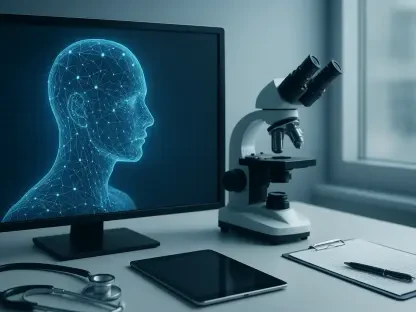

The landscape of otolaryngology is currently undergoing a radical metamorphosis as practitioners move away from traditional, invasive surgical methods toward highly sophisticated, technology-driven solutions that prioritize patient comfort and clinical precision. This shift is not merely a trend but a necessary response to a global healthcare environment that demands higher efficiency and better patient outcomes. As the market for Ear, Nose, and Throat (ENT) devices is projected to nearly double in value by 2035, the industry is witnessing an unprecedented influx of engineering breakthroughs that bridge the gap between complex biology and mechanical ingenuity. The rising prevalence of respiratory conditions and auditory disorders has necessitated a move toward smarter diagnostic tools and more durable surgical instruments. Clinicians are now adopting integrated systems that combine real-time data with traditional physical examinations to provide a more holistic view of patient health. This evolution is driven by a massive surge in R&D investment aimed at solving chronic conditions that have long plagued large portions of the population. By focusing on smart technology, the medical community is redefining what it means to diagnose and treat ailments that affect the senses of sound and breath, ensuring a more resilient health infrastructure.
Addressing the Increasing Burden of Chronic Conditions
Several primary drivers are accelerating the rapid expansion of the ENT sector, most notably the escalating global challenge of hearing impairment and the health requirements of an aging demographic. With more than one billion people worldwide currently experiencing some degree of hearing loss, there is a substantial push for restorative technologies that move beyond the basic functionality of traditional hearing aids. Manufacturers are responding by developing advanced cochlear implants and bone-anchored systems that provide higher fidelity and better noise filtering. Moreover, as life expectancy increases, older adults are seeking relief from chronic conditions like sinusitis and obstructive sleep apnea at higher rates. These patients require sophisticated diagnostic tools capable of managing the complexities of age-related comorbidities, which in turn fuels the demand for high-end endoscopy and nasal packing devices. The pressure on healthcare systems to provide long-term management for these chronic issues has forced a shift toward more durable and effective medical hardware that can withstand frequent use while maintaining high levels of accuracy.
Consequently, there is a clear clinical movement toward minimally invasive procedures that can be performed in office-based settings rather than expensive hospital operating rooms. Procedures such as balloon sinus dilation have quickly become the gold standard for treating chronic sinusitis because they offer patients significantly faster recovery times and lower overall costs. This paradigm shift is encouraging the design and production of specialized, handheld ENT instruments specifically engineered for outpatient environments and ambulatory care centers. These devices allow for precise interventions with minimal trauma to surrounding tissues, making high-quality treatment more convenient and accessible than ever before. As healthcare providers look to reduce the strain on centralized hospitals, the role of portable, highly specialized tools continues to grow. This transition not only improves the patient experience by reducing the need for general anesthesia but also increases the throughput of clinics, allowing specialists to treat a larger volume of patients with greater efficiency and fewer complications.
Technological Frontiers in Diagnostic and Surgical Precision
Artificial Intelligence (AI) and high-definition imaging are currently at the absolute center of the technological revolution within the field of otolaryngology. AI algorithms are being integrated into surgical navigation systems to provide surgeons with real-time data during complex procedures, identifying critical structures and reducing the margin of error. In the realm of audiology, AI is enabling hearing aids to automatically adjust their settings based on the user’s environment, creating a more natural and seamless listening experience. Simultaneously, the adoption of 4K visualization technology and single-use endoscopes is providing clinicians with unprecedented visual clarity while drastically reducing the risk of cross-contamination between patients. These digital tools are streamlining clinical workflows in both large hospital systems and small private practices, ensuring that diagnostic accuracy is no longer limited by hardware resolution. The integration of these technologies allows for a more proactive approach to ENT health, where anomalies are detected earlier and treated with much higher levels of confidence.
Beyond the immediate confines of the operating room, wireless connectivity and robotic precision are fundamentally enhancing patient outcomes and their overall lifestyle integration. Modern hearing implants now feature advanced Bluetooth compatibility, which allows users to stream high-quality audio directly from their smartphones or participate in telehealth consultations for remote adjustments. This level of connectivity ensures that patients remain engaged with their treatment plans regardless of their physical location. At the same time, robotic-assisted surgical instruments are enabling surgeons to perform delicate skull-base procedures with a level of steadiness and accuracy that exceeds human capabilities. By minimizing trauma to healthy tissue during these high-stakes interventions, robotic systems are ensuring safer outcomes for patients with complex tumors or structural abnormalities. This synergy between human expertise and machine precision is creating a new standard for ENT care, where even the most intricate surgeries are becoming routine, predictable, and significantly less disruptive to the patient’s long-term health.
Strategic Market Evolution and Future Implementation
Prominent industry leaders such as Medtronic, Cochlear Limited, and Olympus are currently defining the future of otolaryngology by committing vast resources to specialized research and development. These organizations are focusing their efforts on a wide array of innovations, ranging from AI-assisted surgical navigation platforms to advanced sound processing chips that can isolate speech in extremely noisy environments. Their work is often supported by the rapid expansion of healthcare infrastructure in regions like North America and the Asia-Pacific, where investment in medical technology is booming. By setting high standards for performance and safety, these companies are ensuring that high-tech ENT solutions become a standard part of modern medical practice across the globe. The emphasis on creating modular and upgradeable systems means that healthcare facilities can stay at the cutting edge of technology without needing to replace entire hardware suites every few years. This strategic approach to manufacturing is making the latest advancements more financially viable for a broader range of medical institutions.
The ultimate destination for these advancements is the realization of precision otolaryngology, where digital intelligence and surgical expertise exist in a state of perfect harmony. As manufacturing processes become more efficient and telehealth platforms continue to broaden their reach, advanced ENT treatments will become available to a much more diverse demographic, successfully overcoming traditional barriers like geography and economic status. This ongoing evolution suggests a future where ENT devices are not just tools for treating disease but are intuitive extensions of the clinician’s skill set that minimize disruption to the patient’s daily life. The industry is moving toward a model where preventative care and personalized intervention are the norms rather than the exceptions. By focusing on the integration of data-driven insights and patient-centric design, the ENT sector is poised to provide a level of care that was previously thought to be impossible. This holistic approach ensures that the next decade of medical progress will be defined by its ability to restore and enhance the fundamental human experiences of hearing, breathing, and communication.
The medical community recognized that the integration of digital intelligence into otolaryngology was not merely a luxury but a vital necessity for improving the global standard of patient care. Practitioners who adopted these advanced platforms early reported substantial gains in diagnostic speed and surgical success rates, particularly when managing intricate pathologies of the inner ear and nasal passages. It became clear that the most effective strategy for the future involved a commitment to continuous technical education and the seamless incorporation of robotic assistance into everyday clinical workflows. The focus successfully shifted toward ensuring that these life-altering technologies reached underserved populations, moving beyond the confines of elite urban medical centers to reach rural clinics through robust telehealth networks. By prioritizing intuitive design and user-friendly interfaces, the industry managed to transition into an era where specialized care was more accessible and significantly less invasive than previous decades. Stakeholders remained dedicated to analyzing long-term data from smart devices to further refine personalized treatment protocols for future generations of patients.