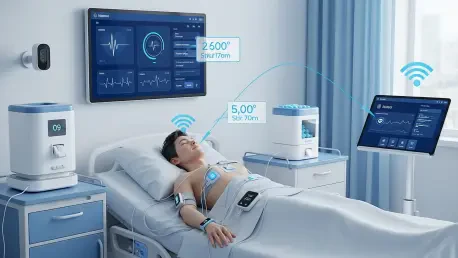

The sophisticated integration of medical devices into a unified digital network has shifted from a visionary concept to the baseline requirement for patient safety and operational efficiency in modern hospitals. As the Internet of Things matures, medical facilities are evolving into complex organisms where data flows seamlessly between bedside monitors, wearable sensors, and centralized analytics platforms. This transition mandates a fundamental reassessment of how technology providers are selected, as the stakes have moved beyond simple procurement to the creation of mission-critical healthcare infrastructure. Organizations no longer view these systems as isolated tools but as an interconnected nervous system that supports clinical decision-making and patient monitoring. A successful partnership in this space requires more than just technical proficiency; it demands a synergy between advanced engineering and a deep understanding of the high-stakes environment found in acute care settings and remote monitoring.
Evaluating Specialized Expertise and Clinical Context
Specialized Medical Knowledge and Workflow Awareness
Deep technical expertise in medical-specific communication protocols like Health Level Seven and Fast Healthcare Interoperability Resources serves as the primary differentiator for a high-quality technology partner. These standards are not merely suggestions but the essential framework that allows disparate systems to exchange data without losing context or accuracy. A partner lacking this specialized knowledge risks creating a fragmented ecosystem where critical information becomes trapped in proprietary silos, ultimately hindering the ability of clinicians to see a complete picture of a patient’s health. Furthermore, the nuances of medical data handling require a developer who understands the sensitivity of real-time telemetry and the low-latency requirements of life-saving alerts. When a partner possesses this level of technical maturity, they can build platforms that are inherently compatible with the existing technological landscape, ensuring that new IoT deployments enhance rather than disrupt the current digital environment.
The ability to interpret complex regulatory requirements and translate them into functional technical specifications is another hallmark of an expert healthcare technology provider. Beyond the basic exchange of data, a partner must be capable of ensuring data integrity across every node of the network, from the edge device to the cloud repository. This involves a comprehensive understanding of how medical devices interact with legacy hospital information systems and how to bridge the gap between old and new technologies. Without a dedicated focus on these medical-grade standards, a project can quickly run into integration bottlenecks that delay implementation and increase costs. Therefore, evaluating a partner’s history with standardized medical data formats is a non-negotiable step in the vetting process. A proven track record in this specialized domain demonstrates that the team can handle the intricacies of hospital connectivity while maintaining the rigorous precision that is required for effective and safe patient care delivery.
Translating Engineering Into Practical Healthcare Tools
A technology partner must look beyond the code to understand the frantic pace and high-pressure environment of the emergency room and the intensive care unit. In these settings, even the most advanced technology can become a burden if it is not perfectly aligned with the natural movements and habits of nurses and physicians. An effective partner spends time observing the clinical environment to ensure that IoT devices do not add to the phenomenon of alarm fatigue, which can desensitize staff to critical warnings. Instead, the focus should be on creating silent, background-driven data collection that only surfaces actionable insights when they are truly needed. This level of empathy for the user experience is what separates a generic software developer from a true healthcare innovator. By prioritizing the human element of technology, a partner can ensure that their digital solutions are embraced by the staff, leading to higher adoption rates and more consistent data collection throughout the facility.
Bridging the gap between a patient’s home and the clinical team requires a unique approach to user interface design and device reliability that a specialized partner must master. In the context of remote patient monitoring, technology must be simple enough for an elderly patient to use without technical support while remaining robust enough to transmit accurate medical data over varying internet connections. A partner who understands this dynamic will design systems that are self-healing and easy to troubleshoot remotely, reducing the burden on both the patient and the hospital’s IT department. This strategic focus on practical utility ensures that the IoT ecosystem serves its primary purpose: extending the reach of the healthcare provider beyond the physical walls of the clinic. When technology is designed with a clear understanding of the patient journey, it becomes a powerful tool for chronic disease management and post-operative recovery, fostering a more proactive and personalized approach to medicine that benefits the entire health system.
Navigating Security, Regulation, and Strategic Growth
Security by Design: Regulatory and Safety Compliance
In an era where healthcare data has become a primary target for sophisticated cyberattacks, security must be an inherent feature of every connected medical device from its very inception. A robust technology partner implements a “security-by-design” philosophy, ensuring that end-to-end encryption and secure boot processes are integrated into the hardware and software layers. This proactive stance is essential because every new sensor or wearable added to the hospital network represents a potential vulnerability that could be exploited to gain access to sensitive patient records. Furthermore, the implementation of multi-factor authentication and rigorous access controls ensures that only authorized personnel can interact with the data stream. By prioritizing these defense mechanisms, a partner provides the foundation of trust necessary for healthcare administrators to scale their IoT initiatives with confidence. Protecting the privacy and safety of patients is not just a technical requirement but a moral imperative that defines the quality of the partnership.
Navigating the complex maze of global healthcare regulations like HIPAA and FDA certifications requires a partner who treats compliance as a continuous process rather than a one-time checklist. A high-quality technology provider stays ahead of shifting legal landscapes, ensuring that every update to the platform remains within the boundaries of strict data protection laws. This “compliance-by-design” approach minimizes the risk of legal penalties and operational shutdowns that can occur if a system is found to be non-compliant. Moreover, a partner should be able to provide detailed documentation and audit trails that demonstrate how data is handled, stored, and transmitted through the IoT ecosystem. This transparency is vital for hospital leadership during internal audits or external inspections by regulatory bodies. By choosing a partner with a deep commitment to regulatory excellence, healthcare organizations can focus on clinical innovation, knowing that their underlying technology platform is legally sound and meets the highest standards.
Integration: Strategic Intelligence and Analytics Architecture
The true value of the Internet of Things in a medical context is realized only when data is liberated from isolated devices and integrated directly into Electronic Health Records. A technology partner who excels in interoperability focuses on building sophisticated Application Programming Interfaces that allow for a fluid exchange of information between the IoT platform and existing hospital software. This integration ensures that a doctor can view real-time physiological data alongside a patient’s historical medical records, providing a holistic view that is necessary for accurate diagnosis and treatment. Without this level of connectivity, clinical staff are forced to manually transfer data between systems, a process that is prone to error and consumes valuable time. Therefore, a partner’s ability to create a cohesive data ecosystem is a critical factor in the overall success of a digital health strategy. Real-time data synchronization empowers clinicians to make informed decisions faster, which is often the difference between a routine recovery and a clinical crisis.
Forward-thinking healthcare organizations sought out partners who did not just provide connectivity but also offered the analytical tools needed to turn raw data into actionable intelligence. This involved the implementation of machine learning algorithms capable of identifying subtle patterns in patient vitals that might signal an impending cardiac event or sepsis before symptoms became obvious. The strategic selection process prioritized teams that demonstrated a clear roadmap for long-term scalability and continuous cloud optimization to manage the vast quantities of data. Administrators realized that a successful deployment required ongoing lifecycle management, including regular security patches and performance tuning, rather than a simple hand-off of the final product. By establishing these deep, collaborative relationships, hospitals successfully transformed their care models and achieved significant improvements in patient outcomes. This shift toward an integrated technology strategy provided a clear path for future innovations in automated medicine.