
The digital pulse of a modern hospital beats through complex servers and interconnected databases that contain the intimate medical histories of millions of patients across the globe. Over the last twenty years, the healthcare industry has successfully navigated a monumental transition from cumbersome paper-based filing systems to the streamlined efficiency of Electronic Health Records (EHR). These digital repositories serve as the critical infrastructure for clinical operations, aggregating everything from real-time vitals and diagnostic imaging to medication histories and genetic profiles. While this technological leap has undoubtedly saved countless lives by providing doctors with immediate access to life-critical data, it has simultaneously introduced a vast and vulnerable front in the ongoing war against cybercrime. Protecting these records has transcended the boundaries of routine IT maintenance, evolving into a fundamental pillar of patient safety that directly influences the quality of care and the long-term viability of medical institutions.
Identifying the Vulnerabilities of Digital Medical Records
The Financial Allure: Why Medical Data Is a Prime Target
The black market value of a single medical record often exceeds that of high-limit credit cards because it represents a permanent, unchangeable identity kit that criminals can exploit for years. Unlike a bank card that can be deactivated within seconds of a breach, an individual’s Social Security number, chronic health diagnoses, and family history are immutable assets that offer a goldmine for long-term identity theft. Hackers prioritize EHR systems because they contain the necessary components to commit sophisticated insurance fraud, obtain illegal prescriptions, and even create fraudulent tax returns. In the underground digital economy, these comprehensive profiles are highly sought after by actors who understand that healthcare data is the most personal information a human being possesses. The sheer density of sensitive information within a single EHR database makes a hospital a far more lucrative target than a standard retail corporation or a financial institution.
Beyond the resale value of the data itself, the healthcare sector is uniquely susceptible to extortion due to the extreme operational urgency inherent in medical environments. When a surgeon is mid-procedure or an emergency room is triaging victims of a mass-casualty event, the availability of digital records is not a luxury but a life-saving necessity. Cybercriminals leverage this high-pressure environment through ransomware attacks, knowing that hospital administrators face an impossible choice: pay a substantial ransom or risk patient lives due to system downtime. This operational sensitivity creates a “perfect storm” for attackers, who recognize that medical facilities are often more inclined to pay quickly to restore critical systems. Consequently, the intersection of high data value and the absolute requirement for constant uptime has made EHR security a top-tier national security concern for governments and health organizations alike.
Exploiting Human and Technical Weaknesses: The Modern Threat Landscape
The methods employed to breach healthcare networks have become increasingly sophisticated, often targeting the weakest link in any security chain: the human element. Phishing remains the primary vector for initial intrusion, where deceptive emails are meticulously crafted to mimic internal hospital communications or urgent requests from medical boards. A single distracted nurse or administrative assistant clicking a malicious link can inadvertently surrender the credentials required to bypass perimeter defenses, giving an attacker a foothold in the internal network. Once inside, these actors often deploy “double extortion” strategies, where they not only encrypt the EHR database but also exfiltrate sensitive files, threatening to leak private patient details to the public if their financial demands are not met. This two-pronged approach ensures that even if a hospital has robust backups, they still face the devastating reputational and legal fallout of a massive data leak.
Technological advancements in patient care have also inadvertently expanded the “attack surface” through the rapid proliferation of the Internet of Medical Things (IoMT). Connected devices, such as smart insulin pumps, networked heart monitors, and intelligent hospital beds, are often designed with clinical functionality as the priority, frequently leaving digital security as an afterthought. Many of these devices run on specialized, legacy software that is difficult to update or patch, creating numerous backdoors that lead directly into the primary EHR infrastructure. An attacker who compromises a seemingly innocuous smart thermometer in a patient wing can use that device as a jumping-off point to move laterally through the network until they reach the central database. This growing web of interconnected medical hardware requires a specialized security approach that accounts for the diversity of devices and the varying levels of protection they offer against modern intrusion techniques.
Implementing Strategic Defensive Barriers
Access Control: Reducing the Internal Attack Surface
To mitigate the risk of unauthorized data exposure, healthcare organizations have adopted a “defense-in-depth” philosophy that relies heavily on strict administrative controls and the Principle of Least Privilege (PoLP). This strategy dictates that every user within the healthcare ecosystem is granted only the minimum level of access necessary to fulfill their specific professional duties. In a practical clinical setting, this means that a physical therapist would have no technical means to view a patient’s psychiatric history or detailed financial billing information, just as a billing specialist would be blocked from viewing surgical imaging. By compartmentalizing data in this manner, the organization effectively limits the “blast radius” of a potential credential theft. If a single employee’s account is compromised, the damage the attacker can do is restricted to the specific permissions of that individual, preventing a total system-wide compromise.
Implementing these access controls requires a dynamic and highly organized management system that can adjust permissions in real-time based on the clinical context. For example, some modern EHR systems utilize “break-the-glass” protocols, which allow a physician to gain emergency access to a patient’s full record during a life-threatening crisis, while logging every move they make for subsequent auditing. This balance between security and clinical necessity ensures that barriers do not become obstacles to urgent care. Furthermore, regular permission audits are conducted to ensure that staff members do not accumulate “privilege creep,” where they retain access to departments or data from previous roles. By maintaining a lean and strictly monitored access environment, healthcare facilities can significantly reduce the risk of internal data misuse, whether it stems from malicious intent or simple curiosity by staff members.
Technical Fortification: Segmentation and Patch Management
One of the most effective technical defenses against modern cyberattacks is network segmentation, a process that involves dividing a hospital’s massive digital infrastructure into smaller, isolated “sub-networks.” This architecture prevents the lateral movement of threats, ensuring that if a hacker manages to breach a low-security area, such as the guest Wi-Fi or a cafeteria payment terminal, they are physically and digitally blocked from reaching the clinical EHR environment. Each segment acts as a secure vault with its own set of firewalls and inspection protocols, requiring additional authentication for any traffic attempting to cross from one zone to another. This structured isolation is vital for protecting high-stakes medical data from the inherent vulnerabilities of non-essential systems, effectively creating a series of internal walls that stall an intruder’s progress long enough for security teams to detect and neutralize the threat.
Parallel to network isolation is the unceasing requirement for rigorous vulnerability management and software patching. Modern EHR platforms are complex software ecosystems that require frequent updates to address newly discovered security flaws that could be exploited by automated hacking tools. When a software provider identifies a “zero-day” vulnerability, the window of time between the announcement and a coordinated attack is often measured in hours, not days. Healthcare IT departments must maintain a disciplined lifecycle for patching not only the EHR software but also the underlying operating systems and the firmware of medical devices. Neglecting these updates is akin to leaving the digital windows of a facility unlocked, as attackers use automated scanners to find unpatched systems across the internet. By prioritizing a proactive stance on maintenance, medical centers ensure their digital defenses remain resilient against the latest evolution of predatory software and intrusion tactics.
Advanced Technical Safeguards and Identity Verification
Digital Fortresses: The Critical Role of Sophisticated Encryption
As medical information travels across vast networks—passing between primary care physicians, specialized clinics, diagnostic laboratories, and insurance providers—it is at its most vulnerable state. To combat this, cybersecurity frameworks employ robust encryption protocols that serve as a final, unbreakable line of defense for patient data. Encryption works by using complex mathematical algorithms to scramble information into an unintelligible string of characters, which can only be decoded by someone possessing the correct digital key. In a modern EHR environment, data must be encrypted both “at rest,” while it resides on physical servers or cloud storage, and “in transit,” while it is being sent over the internet or internal fiber-optics. This ensures that even if a sophisticated attacker manages to intercept a data packet or steal a physical hard drive, the contents remain completely useless to them, maintaining patient confidentiality under the most dire circumstances.
The implementation of end-to-end encryption has become the industry standard for any healthcare facility aiming to protect its digital assets. This approach guarantees that data remains encrypted from the moment a clinician enters a note into a tablet until it is viewed by a specialist on a different floor or in a different city. Furthermore, advancements in cryptographic techniques have introduced features like “homomorphic encryption,” which allows certain types of data analysis to be performed on encrypted files without ever needing to decrypt them. This is particularly valuable for medical research and population health studies, where high-level statistics can be gathered without exposing individual patient identities. By embedding these cryptographic layers into every facet of the EHR ecosystem, healthcare providers can ensure that the privacy of the patient remains intact, regardless of the physical location or the movement of the digital file.
Identity Verification: Beyond the Traditional Password
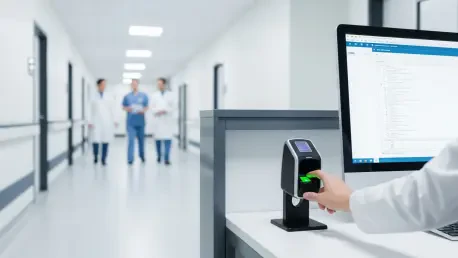
In the current threat environment, the traditional password is widely recognized as a failed security measure that can no longer be trusted to protect sensitive medical databases. Most modern healthcare organizations have transitioned to Multi-Factor Authentication (MFA) as a mandatory requirement for any user attempting to access the EHR system. MFA requires a secondary, independent form of identification, such as a biometric fingerprint scan, a facial recognition check, or a unique, time-sensitive code sent to a verified mobile device. This multi-layered approach is incredibly effective because it requires an attacker to possess both the digital credentials and a physical object or biological trait belonging to the user. Statistics indicate that the implementation of robust MFA protocols can block over ninety-nine percent of automated, credential-based attacks, providing a massive increase in security with minimal disruption to the clinician’s workflow.
Complementing MFA is the use of Identity and Access Management (IAM) systems, which provide a centralized framework for controlling the entire lifecycle of a digital identity within a hospital. These systems automate the complex process of onboarding new doctors, residents, and nurses, ensuring they are instantly granted the correct permissions based on their job code and department. Perhaps more importantly, IAM systems enable the immediate revocation of all access rights the moment an employee leaves the organization or changes roles. This prevents the common security loophole of “orphaned accounts,” where former employees or disgruntled contractors retain access to sensitive databases long after their departure. By integrating biometric verification with automated identity management, healthcare facilities can create a highly secure environment where every digital action is tied to a verified individual, ensuring complete accountability and transparency in the handling of patient records.
Ensuring Resilience through Vigilance and Innovation
Real-Time Monitoring: Detection and Regulatory Compliance
The ability to detect a security breach in its earliest stages is often the difference between a minor incident and a catastrophic data loss event. Security Information and Event Management (SIEM) platforms have become indispensable tools for healthcare cybersecurity, acting as a digital nervous system that monitors every action taken across the entire network. These systems use advanced behavioral analytics to establish a baseline of “normal” activity, allowing them to instantly flag anomalies that might indicate a breach. For instance, if a staff member who usually accesses ten patient records a day suddenly attempts to download five hundred records in the middle of the night from an unrecognized IP address, the SIEM triggers an immediate alert. This proactive detection allows security teams to isolate the affected account or device before the attacker can exfiltrate data or deploy ransomware, significantly increasing the institution’s overall resilience.
Beyond the immediate technical benefits, these monitoring systems are also essential for maintaining compliance with strict legal frameworks such as the Health Insurance Portability and Accountability Act (HIPAA) and international standards like the General Data Protection Regulation (GDPR). These regulations mandate that healthcare providers not only protect data but also maintain detailed audit trails of who accessed what information and when. SIEM platforms automate this record-keeping, providing a comprehensive and tamper-proof log that can be presented during regulatory audits or forensic investigations. This level of transparency is vital for maintaining the public’s trust and avoiding the massive financial penalties associated with non-compliance. By combining constant vigilance with automated reporting, healthcare organizations can demonstrate their commitment to data integrity and prove that they are meeting the highest ethical and legal standards for patient privacy.
Future-Proofing Care: Zero-Trust and Artificial Intelligence
As the healthcare landscape continues to evolve, the industry is moving away from the outdated “perimeter” model of security toward a “Zero-Trust” architecture. This modern philosophy operates on the principle of “never trust, always verify,” regardless of whether a user is sitting in a hospital office or working remotely from a home network. In a Zero-Trust environment, every request to access the EHR is continuously re-authenticated based on the user’s identity, the health of their device, and their physical location. This eliminates the dangerous assumption that anyone inside the hospital’s four walls is inherently safe, providing a much higher level of protection against insider threats and sophisticated external actors. This model is particularly well-suited for the modern medical workforce, which increasingly relies on telehealth services and mobile devices to provide care across multiple physical locations.
Furthermore, the integration of Artificial Intelligence (AI) and machine learning is revolutionizing the speed at which healthcare facilities can respond to new threats. AI-driven security tools can process and analyze vast amounts of network traffic in real-time, identifying “zero-day” threats—vulnerabilities that were previously unknown to researchers—far faster than any human analyst ever could. These systems learn from every attempted attack, constantly refining their detection algorithms to stay one step ahead of cybercriminals. Additionally, the migration of EHR systems to secure, enterprise-grade cloud environments allows even smaller, rural hospitals to benefit from the massive security resources and specialized talent managed by major cloud providers. By embracing these innovative technologies and shifting toward a culture of continuous verification, the healthcare industry is building a future where digital medical records are as secure as they are accessible.
Sustaining Integrity: Future Directions for Clinical Security
The collective efforts to safeguard Electronic Health Records resulted in a more resilient and transparent healthcare ecosystem that prioritized patient safety above all else. By implementing layered defense strategies, medical institutions successfully transitioned from reactive postures to proactive, intelligence-driven security models. The consistent application of encryption protocols and multi-factor authentication became the gold standard, effectively neutralizing the vast majority of automated threats and credential theft attempts. These technical barriers, supported by the Principle of Least Privilege, ensured that even when individual accounts were compromised, the most sensitive clinical data remained isolated and protected. This systemic approach not only preserved the confidentiality of patient information but also guaranteed the availability of critical data during the most demanding medical emergencies.
To maintain this trajectory of security and trust, organizations must now focus on fostering a deep culture of digital responsibility among all staff members. Training programs should move beyond basic compliance and focus on real-world simulations that empower nurses, doctors, and administrators to recognize and report suspicious activity in real-time. Additionally, facilities must prioritize the modernization of legacy medical devices, ensuring that every piece of equipment connected to the network meets current security standards. Investing in offline, immutable backups remains an essential insurance policy against the evolving threat of ransomware, providing a reliable path to recovery that does not involve negotiating with criminals. By viewing cybersecurity as a continuous process rather than a one-time achievement, healthcare leaders ensured that their institutions remained safe harbors for the vital information that defines the future of human health.