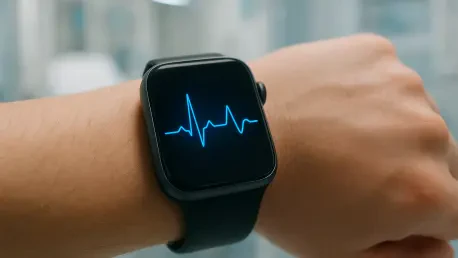

Context-aware security systems must determine if a sudden flood of network traffic is a cyberattack or a legitimate response to a patient’s physical distress. This critical distinction is the cornerstone of patient safety in the increasingly connected world of the Internet of Medical Things (IoMT). As healthcare in 2026 moves toward more personalized, continuous monitoring, Wireless Body Area Networks (WBANs) have become indispensable, linking wearable sensors and implantable devices to provide a constant stream of life-sustaining data. However, the open nature of these wireless protocols invites significant risks, including denial-of-service attacks that drain device batteries and data tampering that could lead to fatal medical errors. The emergence of the Dynamic Weighted K-Asynchronous Federated Learning (DW-KAFL) framework represents a major milestone in addressing these vulnerabilities. By prioritizing privacy and efficiency, this system ensures that sensitive biological data remains on the device while still contributing to a robust, global security model. The integration of such advanced intrusion detection systems is no longer a luxury but a fundamental requirement for modern digital health infrastructures.
Addressing Efficiency Through Asynchronous Learning
Overcoming The Straggler Bottleneck: Enhancing Network Resilience
Standard federated learning models have long struggled with the “straggler bottleneck,” a phenomenon where a central coordinator must wait for every participating device to submit its local model update before the global system can progress. In the dynamic environment of a medical body network, this synchronous approach is fundamentally impractical. Patients are constantly moving, entering elevators, or traveling through areas with poor signal strength, causing sensors to frequently drop in and out of range. When a single device experiences a delay or a connection failure, the entire security training process stalls, leaving the network vulnerable to emerging threats. This latency is particularly dangerous in clinical settings where intrusion detection must be immediate and responsive to the latest attack patterns.
The DW-KAFL framework resolves this inefficiency by implementing a K-asynchronous update protocol. Instead of waiting for a total consensus from every connected sensor, the central coordinator aggregates updates as soon as a predefined threshold of “K” responsive nodes is reached. This design ensures that the global intrusion detection model evolves continuously, even as individual sensors intermittently disconnect due to mobility or interference. By allowing the system to learn from the most active and reliable nodes without being hindered by slower ones, the framework maintains a high level of security readiness. This advancement is vital for 2026-era medical applications, where the stability of monitoring systems directly impacts the quality of life and the physical safety of patients using wearable healthcare technologies.
Optimizing Performance: The Role Of Adaptive Clustering
Medical body networks are inherently heterogeneous, consisting of a diverse array of hardware including glucose monitors, heart rate sensors, and smart thermometers. Each of these devices operates with different processing capabilities, memory limits, and power profiles, which often leads to conflicting data patterns that can confuse a one-size-fits-all machine learning model. To manage this diversity, the DW-KAFL framework utilizes an adaptive K-clustering mechanism. This system groups sensors based on a multi-dimensional profile that evaluates residual battery energy, mobility stability, and data quality. By organizing devices into clusters with similar characteristics, the framework significantly reduces gradient divergence, allowing the model to converge on accurate security solutions much faster than traditional methods.
Beyond mere efficiency, this clustering approach ensures that the intrusion detection system is fine-tuned to the specific demands of various medical hardware types. For example, high-frequency heart rate monitors can be processed differently than low-power temperature sensors, preventing the data from one from overwhelming the analysis of the other. This targeted optimization is essential for operating within the harsh resource constraints of microcontrollers, which often have as little as 8 KB of RAM. By distributing the computational load and grouping similar devices, the framework extends the operational lifespan of implantable and wearable sensors. This helps prevent the premature depletion of batteries in life-critical devices like pacemakers or insulin pumps, which would otherwise require invasive procedures to replace.
Ensuring Reliability With Trust Aware Systems
Implementing Dynamic Weighting: Securing The Network From Within
A significant challenge in decentralized security is the risk of “Byzantine” attacks, where compromised devices inject malicious or “poisoned” data into the learning process to degrade the system’s overall accuracy. DW-KAFL mitigates this risk through a sophisticated dynamic weighting scheme that assigns a “trust score” to each participating node. This score is not static; it is constantly recalculated based on the node’s local classification accuracy, its energy sustainability, and the age of its data. Updates from highly accurate and stable nodes are given more weight in the global model, while the influence of outdated or inconsistent updates is automatically decayed. This ensures that the global security state remains grounded in the most reliable and current information available.
This trust-aware mechanism acts as a primary defense against label-flipping and other sophisticated cyber threats that attempt to manipulate the network’s perception of safety. If a sensor begins providing data that is statistically inconsistent with the rest of the network or shows signs of tampering, its trust score naturally drops, effectively isolating the malicious node and starving the attack of any influence. This self-healing property is critical in a medical context, where an attacker might attempt to mask a genuine physical crisis or trigger a false alarm to cause confusion. By prioritizing reliable data over sheer volume, the framework creates a resilient environment that can withstand sustained attacks without compromising the integrity of the patient’s clinical monitoring system.
Fusing Biological And Network DatAchieving Contextual Awareness
The most distinctive innovation within the DW-KAFL framework is its ability to validate network behavior using the body’s own physiological signals. This is achieved through a hybrid model that combines a Convolutional Neural Network (CNN) for spatial-temporal network analysis with a Long Short-Term Memory (LSTM) network for biological signal modeling. Most security systems only look at traffic patterns, such as packet delivery rates or throughput, to identify threats. However, in a medical setting, a spike in traffic might not be an attack; it could be a legitimate response to a patient’s rapid heart rate or a sudden drop in oxygen levels. By fusing these two data streams, the system gains a holistic understanding of the patient’s state.
This cross-modal architecture dramatically reduces the frequency of false positives, which is a major concern in modern hospitals suffering from “alert fatigue.” When a clinician receives a security warning, they must be certain it is a real threat rather than a misinterpretation of a medical emergency. For instance, if the system detects a potential denial-of-service attack but also sees that the patient’s vitals are in a state of distress, it can prioritize the medical alert while recognizing the traffic surge as a legitimate data transmission effort. Conversely, if traffic spikes while the patient is at rest with stable vitals, the system identifies the event as a cyberattack and takes immediate protective action. This level of context-aware intelligence bridges the gap between digital cybersecurity and physical healthcare.
Maintaining Privacy And Performance Standards
Protecting Patient DatAdvanced Differential Privacy Techniques
Privacy is a non-negotiable requirement for any technology handling sensitive biological information, especially under the strict legal frameworks of 2026. DW-KAFL enforces end-to-end privacy through the implementation of (ε, δ)-differential privacy. This technique involves clipping model updates and injecting controlled Gaussian noise before they are transmitted to the central coordinator. By doing so, the system ensures that individual patient data cannot be reconstructed from the shared model parameters, effectively shielding the network against membership inference and model inversion attacks. This mathematical guarantee of privacy allows medical facilities to collaborate on building a stronger global security model without ever having to share the raw medical records of their patients.
The framework further optimizes privacy through the use of a “Moments Accountant” method, which carefully tracks and limits the total privacy loss over multiple training rounds. Since only a subset of nodes participates in each update cycle due to the K-asynchronous protocol, the overall rate of privacy budget consumption is significantly slower than in traditional federated learning models. This enables the system to maintain a high level of protection over long periods of monitoring without degrading the utility of the intrusion detection model. For patients, this means that their life-saving devices are protected by a state-of-the-art security system that is also fully compliant with international privacy standards like HIPAA, ensuring their personal health data remains confidential and secure.
Evaluating Real World Effectiveness: Results And Future Directions
The evaluation of the DW-KAFL framework demonstrated exceptional performance in high-stakes medical simulations, proving its readiness for widespread adoption. The researchers measured a detection accuracy of over 97.5% and a per-round latency of just 140 milliseconds, which was well within the requirements for real-time cardiac monitoring. Furthermore, the system successfully reduced communication overhead by approximately 35% compared to standard models, leading to a significant decrease in energy consumption per node. This efficiency proved to be a major advantage for extending the battery life of wearable sensors, which is a critical factor for long-term patient care. Even when subjected to intensive attacks where nearly 30% of the nodes were malicious, the system maintained its accuracy, losing only a fraction of its performance while traditional models collapsed.
The study concluded that the future of medical network security lies in decentralized coordination that leverages the local processing power of devices like smartphones. The successful integration of biological signals into the security layer established a new standard for context-aware protection in the Internet of Medical Things. Based on these findings, future development should prioritize the implementation of blockchain technology for model provenance and the use of hardware-aware compression to support even smaller implantable devices. Ultimately, the research provided a definitive blueprint for securing Wireless Body Area Networks, ensuring that the technology protecting patients is as sophisticated as the medical devices themselves. Moving forward, clinicians and engineers should focus on deploying these asynchronous, trust-aware models to build a more resilient and privacy-focused digital healthcare ecosystem.