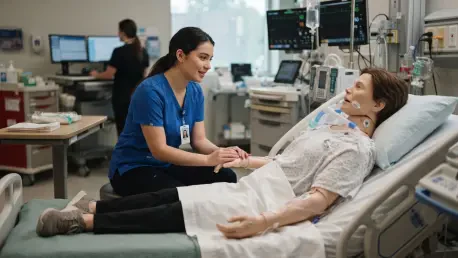

Educational programs are now prioritizing the mitigation of student stress through wellness hubs and 24/7 support lines to prevent future professional burnout. This shift reflects a broader understanding that a nurse’s ability to provide compassionate care is inextricably linked to their own psychological well-being and professional resilience. As healthcare environments become increasingly complex, particularly within the realm of mental and behavioral health, the pedagogical focus is transitioning from the mechanical treatment of symptoms to a more profound engagement with the human being behind the clinical chart. The objective is to dismantle the traditional silos that have long separated physical medicine from psychiatric care, ensuring that every patient interaction is grounded in empathy. By integrating these principles into the foundational layers of nursing curricula, institutions are moving away from viewing patients as mere room numbers, instead fostering a culture where the art of caring is valued just as highly as the scientific application of clinical protocols.
The New Standard: Integrating Behavioral Health Into General Practice
The modernization of nursing education acknowledges that mental health challenges are not confined to isolated psychiatric units but are pervasive across all clinical settings. From emergency departments and school clinics to correctional facilities and outpatient centers, nurses are the first line of defense against psychological crises that often accompany physical ailments. Educators are now embedding behavioral health concepts throughout the entire academic journey rather than reserving them for specialized senior-level rotations. This proactive strategy ensures that students develop a universal toolkit for patient interaction, allowing them to recognize early indicators of trauma, anxiety, or depression in diverse populations. By normalizing the presence of mental health issues within general medical training, the industry is effectively preparing a workforce that can provide seamless, integrated care. This approach addresses the reality that a patient recovering from a physical injury or chronic illness is often navigating a complex emotional landscape.
A critical component of this integrated curriculum involves the mastery of therapeutic communication, which serves as the bedrock for all effective nursing interventions. Students are taught to look past the diagnosis to see the individual’s lived experience, a process that requires both technical knowledge and emotional intelligence. This shift in perspective is vital because the labels often attached to psychiatric conditions can inadvertently create barriers between the caregiver and the patient. When nurses are trained to prioritize the personhood of their patients, they are better equipped to de-escalate volatile situations and build the trust necessary for long-term recovery. This human-centric model of care promotes a more holistic understanding of health, where the psychological state of the patient is viewed as a fundamental determinant of their overall physical outcome. Consequently, the education system is now focusing on producing practitioners who are not only clinically proficient but also deeply attuned to the nuances of human behavior and the importance of maintaining dignity within the healthcare system.
Experiential Learning: Bridging Theory and Reality Through Advanced Simulation
To effectively prepare students for the high-pressure environment of modern medicine, nursing programs are increasingly turning to high-fidelity simulations and immersive experiential learning. These technologies allow students to navigate high-stakes psychiatric emergencies, such as acute substance abuse crises or suicidal ideation, within a controlled and safe environment. By using sophisticated manikins and peer role-playing, learners can practice de-escalation techniques and therapeutic questioning without the risk of real-world harm. This hands-on training is essential for building the muscle memory and composure required to handle unpredictable behaviors in the field. Rather than relying on traditional lecture-heavy instruction, these interactive modules force students to think critically and react in real-time, significantly reducing the reality shock that many new graduates experience during their initial clinical rotations. This pedagogical shift ensures that technical skills like pharmacology and stabilization are seamlessly blended with the soft skills of emotional regulation and professional empathy.
Beyond the development of clinical skills, these simulations serve as a powerful tool for confronting and dismantling the deep-seated social stigmas associated with mental illness. Many nursing students enter their programs with unconscious biases or fears regarding patient safety in psychiatric settings, which can negatively impact the quality of care they provide. Educators utilize guided reflection and post-simulation debriefings to help students identify their own personal triggers and prejudices. By fostering this level of self-awareness, the curriculum encourages nurses to provide nonjudgmental care that respects the humanity of every individual, regardless of their diagnosis. This focus on the art of caring helps students understand that a disruptive behavior is often a manifestation of unmet needs or internal distress rather than a personal affront. As a result, the training process becomes a journey of self-discovery, where students learn to manage their own emotional responses to ensure they remain focused on the patient’s well-being. This creates a standard of excellence that prioritizes compassion alongside clinical safety.
Future Directions: Cultivating Interdisciplinary Collaboration and Sustainability
The evolving landscape of healthcare demands a transition toward interdisciplinary models where nurses work in close coordination with mental health professionals and other specialists. Modern programs are facilitating this by pairing nursing students with graduate students from clinical mental health counseling programs, allowing for a cross-pollination of ideas and strategies. This collaborative approach provides nurses with a deeper understanding of psychotherapeutic processes and disease progression, preparing them for a professional environment where patient care is managed by multi-disciplinary teams. Such partnerships emphasize that no single clinician has all the answers, and the best outcomes are achieved when diverse expertise is combined to treat the whole person. Furthermore, this interdisciplinary exposure helps nurses recognize the boundaries of their practice and understand when to refer patients to specialized resources. By breaking down traditional hierarchies, the education system is fostering a more cohesive and efficient healthcare environment for all.
The systemic transition toward a more human-centric nursing model necessitated a comprehensive reevaluation of how clinical competency was measured and maintained. In the recent progress from 2026 to 2028, educational leaders established a standard where the assessment of a student’s success was based equally on technical precision and the demonstrated ability to maintain a therapeutic connection under stress. This shift was supported by the implementation of mandatory self-care rotations and the integration of behavioral health screenings as a standard part of every patient intake, regardless of clinical setting. By fostering an environment where interdisciplinary collaboration became the norm rather than the exception, institutions ensured that the burden of care was shared across specialized teams. These strategic developments prioritized the creation of robust support networks for clinicians, acknowledging that the longevity of the healthcare system depended on the health of the providers. This focus moved toward a model that viewed professional wellness as a non-negotiable asset.