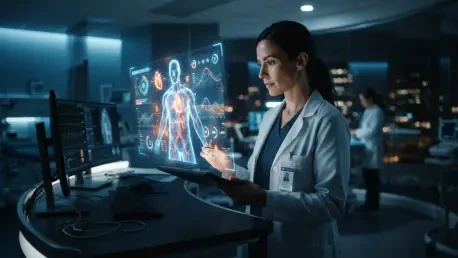

Hybrid healthcare delivery systems aim to create a win-win scenario where technology makes medical services both more responsive and more accessible to patients. This fundamental shift is currently being spearheaded by GTC Consulting through the publication of its latest U.S. patent application, titled Systems and Methods for Hybrid Health Care Delivery. By bridging the gap between physical and digital spaces, the Cincinnati-based firm is formalizing a model that prioritizes the continuity of care over the convenience of a single virtual encounter. This patent represents a significant expansion of the company’s intellectual property portfolio, focusing on the sophisticated integration of artificial intelligence and remote patient monitoring into a unified longitudinal care framework. As the industry moves away from the fragmented nature of traditional telehealth, this development offers a roadmap for creating a persistent medical environment that supports patients around the clock.
The Shift: Transitioning from Episodic Visits to Longitudinal Care
The evolution of digital health has reached a critical juncture where the simple video conference is no longer sufficient to meet the complex needs of modern populations. GTC Consulting’s new framework seeks to replace these episodic, one-on-one virtual appointments with a comprehensive hybrid healthcare delivery system. This model establishes a constant connection between patients, clinicians, and health plans, ensuring that data flows seamlessly across various platforms. Instead of treating a telehealth visit as an isolated event, the technology creates a persistent environment that operates before, during, and after a clinical encounter. By maintaining this continuous link, healthcare organizations can transition from reactive interventions to a proactive stance. This shift is essential for managing chronic conditions where patient status can change rapidly between scheduled visits, requiring a system that monitors health metrics and alerts the care team.
At the center of this transformation is the strategic use of artificial intelligence to manage and streamline complex clinical workflows that were previously manual and prone to error. The system described in the patent application utilizes advanced algorithms to automate administrative tasks while providing clinicians with decision support based on aggregated patient data. For instance, the AI can generate real-time clinical summaries and identify specific patient risks by analyzing trends from remote monitoring devices. This technological layer ensures that the outcomes of a virtual visit are automatically integrated into a long-term treatment plan rather than being lost in disparate electronic records. By synchronizing these data points, the hybrid model facilitates a higher level of multi-provider collaboration, allowing specialists and primary care physicians to work together on a single patient’s trajectory without the typical delays associated with traditional care systems.
Technological Foundations: Integrating Advanced Monitoring and Artificial Intelligence
The intellectual property behind this advancement is the result of a decade of focused development that began in 2016. This latest patent application serves as a continuation-in-part of foundational work that has already garnered significant industry attention, with over 165 forward citations from major healthcare technology entities. Such a high volume of citations underscores the influence GTC Consulting has had on the broader technological trajectory of the sector. By securing these claims, the firm is addressing the integration of AI-assisted workflows and asynchronous data management at a time when the infrastructure for these technologies is finally mature. This strategic positioning allows the company to offer a robust framework for hospital systems that are eager to implement next-generation care models but require a proven intellectual property foundation to ensure the scalability and legality of their digital health investments as they move into the coming years.
Beyond simple automation, the system focuses on a sophisticated architecture that bridges the gap between live medical encounters and the ongoing collection of physiological data. The patent details a framework for remote patient monitoring that goes beyond periodic check-ins to include intermittent and event-driven data capture through connected wearable devices. This continuous stream of information is not just stored; it is actively analyzed to inform future live visits and adjust treatment protocols on the fly. This ensures that when a patient does speak with a provider, the clinician has a wealth of longitudinal data at their fingertips rather than a snapshot of the patient’s health at that exact moment. By refining the way asynchronous data is handled, GTC Consulting is making it possible for medical professionals to provide more accurate diagnoses and personalized care plans that are specifically tailored to the unique physiological patterns of each patient.
Strategic Implementation: Economic Growth and Security Standards
The publication of this patent coincides with massive projected growth in the digital health sector, which is estimated to reach an annual value of approximately $300 billion by 2035. This fourfold increase from current levels reflects a global consensus that the future of healthcare is inextricably linked to connected, data-driven delivery models. Central to this market strategy is the shift toward value-based care, where financial success for providers is tied to long-term patient outcomes rather than the volume of individual services rendered. CEO Benjamin Mink posits that the goal of this innovation is to create a scenario where technology reduces the administrative burden on doctors while making healthcare more responsive. This philosophy underpins the entire patent, focusing on how AI can handle documentation and coordination so that human clinicians can focus on complex decision-making, fostering a more coordinated medical landscape that benefits both providers and patients.
The publication of the patent application established a comprehensive blueprint for the next generation of medical services, moving the industry toward a more integrated and secure future. To capitalize on these advancements, healthcare organizations were urged to implement unified platforms that prioritized data integrity and multi-provider communication. It was recognized that the successful integration of artificial intelligence required a focus on regulatory compliance, drawing from established safety standards to protect patient information. Looking forward, the focus shifted to expanding these hybrid workflows into specialized fields like veterinary medicine and complex chronic care management. Leaders were advised to move beyond isolated digital tools and instead invest in persistent healthcare environments that functioned seamlessly across institutional boundaries. By adopting these strategies, the medical community successfully created a more resilient system capable of providing continuous care.