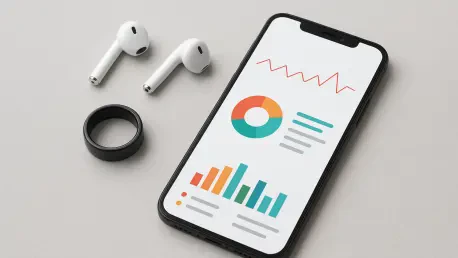

In a landscape saturated by bulky smartwatches and invasive notifications, a subtle shift toward minimalist health tracking has redefined how users engage with their own biological data. With a five-atmosphere water resistance rating, the hardware is designed to remain on the finger during swimming, showering, and hand-washing to maintain the continuity of health data records. This emphasis on constant wear reflects a growing demand for technology that disappears into the user’s lifestyle rather than demanding constant attention. Unlike traditional wearables that interrupt the day with vibrations and screen alerts, the ring functions as a silent observer, gathering metrics without requiring active input. This approach prioritizes data integrity over interactivity, ensuring that every heartbeat and temperature fluctuation is captured without the user feeling like they are tethered to a digital device. By focusing on a frictionless experience, the device bridges the gap between sophisticated biometric monitoring and the simple, unobtrusive nature of a piece of jewelry, making it an ideal companion for health-conscious individuals.
Durable Design and Monitoring Health
Materials and Environmental Resilience: Building a Lasting Wearable
The construction of the ring relies on a combination of lightweight durability and skin-friendly comfort, utilizing a tough titanium outer shell that protects the internal electronics from the stresses of daily activity. This metallic exterior is paired with a non-allergenic resin interior, which serves the dual purpose of shielding the sensitive sensor nodes while providing a smooth surface against the finger. Weighing less than four grams, the ring is remarkably light, often becoming unnoticeable within minutes of being put on. However, despite its light weight, the physical profile is slightly more pronounced than that of a standard wedding band, featuring a width and thickness that might feel substantial to those unaccustomed to wearing jewelry. This increased volume is necessary to house the sophisticated circuitry and the battery required for multi-day operation. For many users, the trade-off between a slightly thicker band and the comprehensive health insights provided is well worth the adjustment period required to normalize the feel.
Securing the correct fit is the foundational step for any successful experience with the hardware, as the ring lacks any form of adjustment once it leaves the factory. Because finger size can fluctuate due to temperature, hydration, and activity levels, the manufacturer provides a dedicated sizing kit that users must utilize before making a final selection. This process involves wearing plastic spacers for at least twenty-four hours to ensure the chosen size remains comfortable during sleep and exercise. A fit that is too tight can cause discomfort and swelling, while a fit that is too loose will inevitably lead to sensor gaps and inaccurate biometric data. The non-adjustable nature of the titanium and resin build means that there is no margin for error in this initial phase. Consequently, the sizing kit is not just a suggestion but a mandatory component of the acquisition process, ensuring that the ring stays securely in place regardless of the environment or the intensity of the user’s physical movements during a standard day.
Sensor Performance and Sleep Analysis: Decoding Biological Trends
At the heart of the device lies a suite of specialized sensors that work in tandem to monitor the body’s physiological responses to daily stress and physical exertion. The primary components include an optical heart rate sensor, a highly sensitive accelerometer for movement detection, and a skin-temperature sensor that tracks subtle thermal changes. Together, these tools provide a comprehensive overview of the user’s metabolic activity and resting state without the need for manual input. Because the ring lacks an onboard screen or GPS, it functions exclusively as a passive data collector, transmitting information via Bluetooth to a paired smartphone. This design choice significantly extends battery life but also defines the ring’s primary role as a wellness monitor rather than a dedicated sports watch. Athletes who require real-time feedback on pace or distance will find the device lacking in those specific areas, as the focus is squarely on long-term trends and general health maintenance rather than high-performance metrics.
One of the most touted capabilities of the device is its ability to analyze sleep patterns, providing a detailed breakdown of various stages including light, deep, and REM sleep. By monitoring heart rate variability and movement throughout the night, the ring attempts to quantify the quality of rest and identify disruptions that might go unnoticed by the sleeper. This data is then synthesized into a recovery score, which is designed to inform the user about their readiness for the day ahead. However, the accuracy of this staging can be inconsistent, as the ring sometimes misinterprets periods of quiet wakefulness as light sleep. This can lead to an overestimation of total sleep time, which in turn inflates the overall sleep score. For individuals who suffer from frequent nighttime disturbances, these inaccuracies can be frustrating, as the device may fail to capture the true extent of their restlessness. Despite these hurdles, the long-term trends provided by the sleep tracker offer valuable insights.
User Experience and Total Value
Software Navigation and Interface Challenges: Managing Health Insights
Since the ring lacks any physical buttons or a display, the companion mobile application serves as the primary gateway for all user interactions and data visualization. Upon opening the app, users are greeted with a dashboard that summarizes their key metrics, including step counts, calories burned, and their most recent sleep score. The interface is designed to be visually engaging, using color-coded charts and graphs to illustrate health trends over days, weeks, and months. Beyond basic tracking, the software includes a comprehensive nutrition logging feature that allows users to record their daily intake and compare it against their energy expenditure. This holistic approach to wellness is further enhanced by an AI-driven assistant that analyzes the gathered data to provide personalized insights and answer health-related queries. By centralizing all this information in one place, the app aims to create a cohesive ecosystem where users can see the direct correlation between their daily habits and their physiological state.
Despite the range of features, the companion app is not without its drawbacks, often suffering from what is commonly referred to as app bloat. The inclusion of social community features and an integrated e-commerce platform can make the interface feel cluttered and unnecessarily complex. For users who simply want to check their heart rate or sleep stages, navigating through promotional content or social feeds can be a frustrating experience that detracts from the core purpose of the device. This commercialized approach to the software interface can sometimes overshadow the health data, making it feel like the app is more interested in selling accessories than in providing a clean, focused user experience. Furthermore, the lack of a tool to locate the hardware via Bluetooth signal strength is a significant oversight for such a small and easily misplaced item. Addressing these technical hurdles and focusing on the most requested utilities would go a long way in solidifying the device’s reputation among dedicated users.
Power Management and Cost Efficiency: Assessing Long-Term Utility
Battery performance remains one of the most compelling advantages of the ring, especially when compared to the daily charging cycles required by many modern smartwatches. With a single charge lasting up to eight days, the device truly delivers on its promise of a continuous, uninterrupted tracking experience. This longevity is achieved by the absence of power-hungry components like high-resolution screens or constant GPS pings, allowing the internal battery to focus entirely on background sensor monitoring. For the user, this means that data gaps caused by a dead battery are rare, ensuring a more accurate and complete picture of their health over time. When the time eventually comes to recharge, the process is handled through a proprietary USB-C charging case that doubles as a protective travel container. The simplicity of the charging solution, combined with the impressive overall battery life, sets a high standard for what users should expect from wearable technology, proving that a small form factor can succeed.
The exploration of the tracking hardware demonstrated that high-quality health monitoring did not have to come with a premium price tag or a monthly bill. Potential users looked toward several actionable steps to maximize their experience, beginning with the meticulous use of the sizing kit to ensure data accuracy. It was determined that wearing the device on the non-dominant hand reduced the likelihood of cosmetic scuffing during daily chores and exercise. Furthermore, establishing a routine for logging nutrition and mood within the app proved essential for the AI assistant to provide meaningful and personalized insights. The decision to prioritize battery longevity and a fee-free model resonated with those who valued a straightforward relationship with their technology. In the final assessment, the integration of a location-tracking feature and a more streamlined app interface were identified as key areas for improvement. Ultimately, the device served as a practical solution for passive monitoring of daily trends.