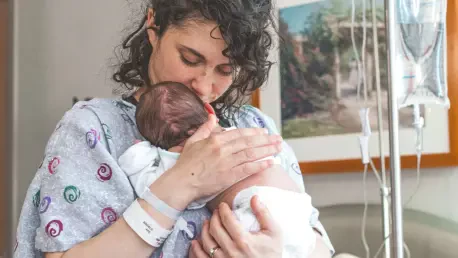

The tragedy involving the Clancy family underscores a desperate need for a more proactive and nuanced approach to identifying mothers at high risk for psychosis. In the clinical landscape of 2026, healthcare providers are increasingly confronted with the reality that standard screening protocols often fail to capture the rapid onset of severe psychiatric disturbances. While postpartum depression has garnered significant awareness, psychosis remains a rare but catastrophic condition that requires a distinct set of diagnostic criteria and intervention strategies. The current system frequently relies on self-reported data which can be inadvertently masked by patients who fear the social or legal consequences of disclosing intrusive thoughts. To bridge this gap, medical professionals are advocating for a more integrated model of care that moves beyond the episodic nature of postpartum checkups. This approach emphasizes the importance of continuous monitoring during the first year of parenthood, ensuring that subtle behavioral shifts are identified before they escalate into a crisis. By fostering a more supportive environment, the medical community aims to provide a safety net that protects both mothers and their children from the devastating effects of untreated mental illness.
Screening Limitations: Moving Beyond Standard Questionnaires
The reliance on the Edinburgh Postnatal Depression Scale has long been a cornerstone of maternal healthcare, yet its limitations in detecting psychosis have become more apparent. This standard tool primarily focuses on symptoms of low mood and anxiety, which, while important, do not necessarily overlap with the cognitive distortions or hallucinatory experiences that characterize a psychotic break. In 2026, clinical experts have pointed out that a mother experiencing a detachment from reality might still score within a normal range on a depression-focused survey. This discrepancy highlights a critical need for specialized screening questions that explicitly probe for disorganized thinking, mania, and sleep deprivation-induced delirium. New protocols are being developed to include these specific markers, allowing for a more accurate assessment of a patient’s psychiatric state. These updated interviews are designed to be conducted in a conversational manner, providing clinicians with the opportunity to observe non-verbal cues and behavioral inconsistencies that a written test might miss. Such improvements represent a necessary shift toward a more sophisticated diagnostic framework that accounts for the full spectrum of postpartum disorders.
Technological advancements in 2026 have introduced innovative tools such as AI-driven speech analysis and digital phenotyping to assist in early detection efforts. These systems are capable of identifying subtle changes in communication patterns or cognitive processing that often serve as early warning signs of a psychiatric episode. By analyzing patient interactions and reported data in real-time, healthcare teams can receive automated alerts when a mother’s profile deviates from her baseline. This proactive monitoring is particularly essential for women with a history of bipolar disorder, as they face a significantly higher risk of experiencing psychosis after childbirth. The integration of these digital health tools provides a continuous layer of oversight that extends far beyond the confines of a doctor’s office. Furthermore, wearable devices that track physiological markers of stress and sleep quality are offering objective data to complement subjective self-assessments. This multi-layered approach ensures that high-risk individuals are identified with greater precision, allowing for timely medical intervention that can prevent the escalation of symptoms. By leveraging these technologies, the healthcare industry is building a more resilient system for maternal mental health.
Structural Reforms: Enhancing the Safety Net for Families
The implementation of specialized Mother-Baby Units has emerged as a vital solution for providing intensive psychiatric care while maintaining the maternal bond. These residential facilities allowed mothers to receive professional treatment in a secure environment without the trauma of being separated from their infants. Previous models of care often placed postpartum patients in general psychiatric wards, which were frequently ill-equipped to handle the specific needs of new parents and their children. In contrast, specialized units provided a tailored approach that included lactation support, infant care assistance, and family therapy. This holistic environment proved to be far more effective in promoting long-term recovery and reducing the risk of future relapses. The healthcare community recognized that successful intervention required a focus on the family unit as a whole, rather than just the individual patient. As these units became more accessible, they transformed the standard of care for the most severe cases of postpartum illness. The success of this model has encouraged further investment in residential programs that prioritize the stabilization of both the mother’s mental health and the family structure.
The resolution of recent legislative initiatives led to a significant expansion of training programs for obstetricians and pediatricians to identify psychiatric red flags. Medical schools and residency programs updated their curricula to ensure that every frontline provider possessed the skills necessary to navigate the complexities of maternal mental health. These changes were supported by increased federal funding, which allowed for the creation of rapid-response psychiatric consult lines for primary care doctors. As a result, the healthcare system established a clear and immediate pathway for referring high-risk patients to specialized care without the delays that once plagued the industry. Community-based support groups also received enhanced resources, fostering a culture of openness that encouraged mothers to seek help without fear of judgment. These structural improvements were essential in creating a comprehensive network that supported families throughout the transition into parenthood. By prioritizing early intervention and specialized education, the medical field took decisive action to prevent future tragedies and ensure the well-being of the most vulnerable members of society. The collective efforts of clinicians and policymakers successfully moved the needle toward a more compassionate and effective system of care.