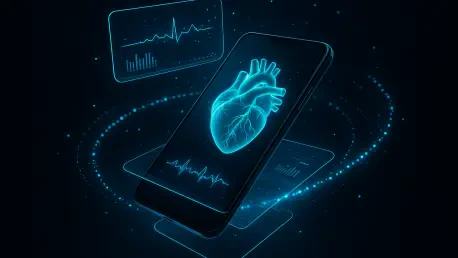

Following a first-place finish at the Maryland NEW VENTURE pitch competition, the team behind PocketCardio is preparing to transition their laboratory prototype into a commercially available consumer health product by next year. This advancement represents a significant milestone in the evolution of modern smartphones, which have evolved into sophisticated bundles of sensors that may soon revolutionize how individuals manage their personal health. Led by researchers such as Dong Li at the University of Maryland, Baltimore County, the scientific community is actively exploring methods to turn these ubiquitous devices into clinical-grade medical tools. By bridging the gap between specialized hospital equipment and everyday consumer electronics, this work aims to move health monitoring from occasional, formal clinic visits to a continuous and real-time experience that is accessible to the general population. The shift reflects a broader trend in bioengineering where the focus is on maximizing the utility of existing hardware for medical purposes.
Engineering Precision: Unlocking the Power of Mobile Sensors
The first major step in this transition involves the maturation of mobile health sensing, often referred to as mHealth, which focuses on unlocking the hidden potential of a phone’s built-in sensors. Instead of requiring users to purchase and attach new hardware, researchers utilize existing optical, acoustic, and haptic components to measure critical biological signs like heart rate and blood pressure variability. This approach essentially provides users with a digital sixth sense regarding their internal physiology, allowing for the monitoring of skin stiffness and respiration rates without the need for expensive or bulky machinery traditionally found in hospitals. By repurposing the high-resolution cameras and sensitive microphones already present in millions of devices, the technology can detect subtle changes in blood flow and chest movement. This engineering feat transforms a standard communication device into a proactive diagnostic tool that functions silently in the background of daily life.
This transformation relies heavily on the interdisciplinary convergence of computer science and clinical medicine. Through strategic partnerships between research universities and professional medical schools, technical innovations are rigorously tested against real-world clinical needs to ensure absolute accuracy and reliability. Engineers work alongside cardiologists to calibrate sensors that can distinguish between normal physiological fluctuations and actual medical emergencies. The ultimate goal of this collaborative trend is the decentralization of healthcare, moving sophisticated diagnostic capabilities out of traditional hospitals and directly into the hands of the public. By doing so, the medical community hopes to foster a more proactive care model where patients can identify potential health issues early. This shift could significantly reduce the burden on emergency departments by providing individuals with the tools necessary to manage chronic conditions from home.
Intelligence at the Edge: AI Integration in Personal Diagnostics
While hardware sensors collect raw data, the true intelligence of these modern medical tools comes from advanced artificial intelligence models trained to interpret complex physiological signals. Similar to how large language models understand the nuances of human speech, these health-focused AI systems are trained on massive, diverse datasets to identify subtle patterns that are often invisible to the human eye. By analyzing long-term micro-trends in a user’s vital signs, these models can flag the very earliest indicators of illness or cardiovascular distress. This allows for medical intervention long before a condition becomes critical or requires invasive surgery. The integration of machine learning at the edge means that the smartphone can process this data locally, providing near-instantaneous feedback to the user. Such rapid processing is vital for conditions where every minute counts, turning a passive device into an active guardian of a person’s physical well-being.
To support this vision of ubiquitous health intelligence, researchers must also prioritize the development of rigorous data security and privacy protocols. For mHealth technology to achieve widespread success, users must feel absolutely confident that their most sensitive medical information is protected from unauthorized access or digital breaches. Building this secure infrastructure is a technical requirement, but it is also a psychological necessity, as public trust remains one of the most significant factors in the adoption of mobile medical tools. Developers are increasingly implementing decentralized data storage and end-to-end encryption to ensure that health metrics stay under the user’s control. These security measures are designed to comply with global healthcare regulations while maintaining the speed and efficiency required for real-time monitoring. Without a foundation of ironclad privacy, even the most accurate diagnostic tool would likely face significant resistance from a cautious and privacy-conscious public.
Validating Clinical Accuracy: From Prototypes to Patient Care
A primary example of this technology in action is the PocketCardio project, an innovative application designed to monitor blood pressure through an intuitive and accessible user interface. This project has already moved past the theoretical phase and into active clinical trials, where it has been successfully tested on dozens of healthy participants to establish a baseline of accuracy. The software uses the phone’s camera to detect minute changes in skin color associated with blood flow, a technique known as photoplethysmography. By refining the algorithms that translate these optical signals into numerical blood pressure readings, the team has managed to achieve results that rival traditional mechanical cuffs. This success in a controlled environment provided the necessary proof of concept to move toward more complex medical scenarios. The transition from a laboratory setting to a functional mobile application demonstrates the potential for high-level engineering to solve everyday health challenges.
Researchers are now expanding these trials to include hypertensive patients in hospital settings to see if the smartphone sensors can maintain precision under clinical pressure. This validation process is essential for proving that consumer-grade devices can handle the rigorous demands of professional medicine. By testing the sensors across a diverse range of patient populations, including those with varying skin tones and underlying health conditions, the team can ensure the technology works reliably for everyone. These trials represent the critical bridge between a promising laboratory prototype and a tool that doctors and patients can actually rely on for daily care. If the results continue to show high correlation with gold-standard medical equipment, it will pave the way for regulatory approval and widespread clinical adoption. Ensuring that the technology is robust enough for those with existing cardiovascular issues is the final hurdle before full-scale commercialization.
Equitable Access: Navigating Security and Market Adoption
Despite the technical breakthroughs, a significant hurdle remains in shifting public perception and addressing lingering concerns about how health data is handled on personal devices. Moving a diagnostic procedure from a formal doctor’s office to a personal smartphone app requires a massive change in how people think about medical privacy and the reliability of their electronics. Overcoming this challenge involves transparent communication from developers and a commitment to maintaining the highest security standards to prove that these digital tools are as safe as they are convenient. Educational campaigns are being developed to help users understand how their data is used to improve their health outcomes without compromising their anonymity. As the technology becomes more commonplace, the familiarity of using a phone for health tasks will likely diminish the initial skepticism, provided that the initial rollout is handled with extreme care and technical integrity.
Looking ahead, the commercial potential of these tools was already gaining significant traction as developers planned to bring refined products to the consumer market. By making advanced monitoring familiar and affordable, this technology had the potential to create a much more equitable healthcare system globally. The focus shifted toward empowering individuals to take charge of their own well-being using the very devices they already carried in their pockets every day. Moving forward, stakeholders should prioritize the integration of these tools into existing electronic health records to ensure a seamless flow of information between patients and providers. Continued investment in cross-platform compatibility will be necessary to ensure that health equity is not limited by the brand of smartphone a person owns. By focusing on these actionable steps, the industry successfully laid the groundwork for a future where clinical-grade diagnostics became a standard feature of every mobile device.