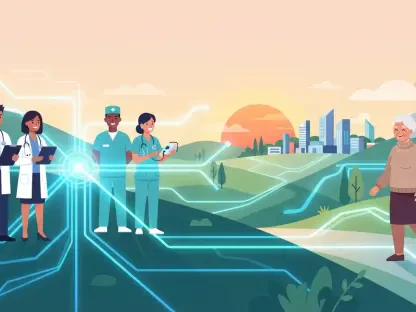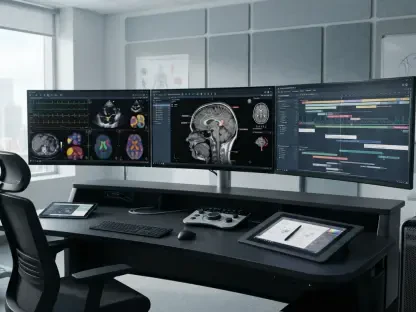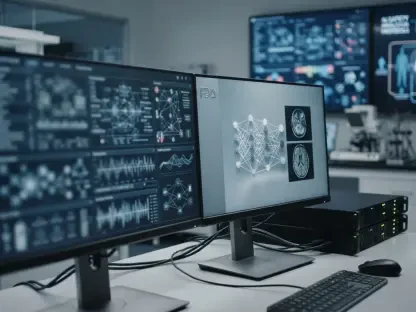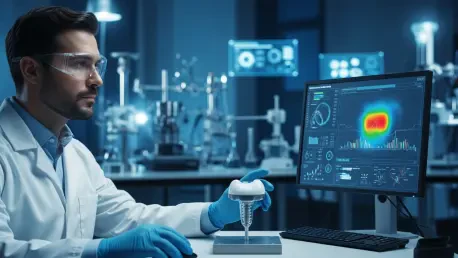

The necessity of recurring surgical interventions to replace depleted batteries in life-sustaining medical implants has long been the primary limiting factor for patient comfort and long-term healthcare outcomes. For decades, individuals living with pacemakers, neurostimulators, or insulin pumps have faced the inevitable reality of a secondary surgery every five to ten years simply because the power source reached the end of its functional life. These procedures, while often characterized as routine by medical providers, carry inherent risks including post-operative infections, scarring, and extended recovery periods that disproportionately affect elderly or immunocompromised populations. However, current breakthroughs in wireless power transfer are fundamentally altering this landscape by allowing energy to traverse the skin barrier safely. By integrating advanced inductive coupling and radio-frequency energy harvesting, the medical industry is moving toward a reality where the original implant serves the patient for life without a scalpel ever needing to touch the site again. This shift promises to reduce the total cost of care while significantly improving the quality of life for millions of people worldwide who depend on bio-electronic assistance.
Technological Foundations: Advances in Power Delivery
Current advancements in near-field resonant inductive coupling have allowed for the miniaturization of receiving coils to a scale previously thought impossible for medical applications. These micro-coils are now integrated directly into the titanium housing of stimulators, enabling high-efficiency energy transfer from an external wearable patch. Unlike older generations of inductive charging that required precise alignment and resulted in significant energy loss, the newest systems utilize adaptive frequency tuning to maintain a steady flow of power even as the patient moves or changes position. This technological leap ensures that the charging process is no longer a burden but a passive activity that can occur while the patient is sleeping or wearing a discreet garment. Furthermore, the efficiency of these systems has reached a point where the heat generated during the charging cycle is negligible, preventing any damage to the surrounding biological tissue or the integrity of the implant. This level of precision is essential for long-term device stability and patient safety in everyday environments.
Moving beyond simple induction, researchers are successfully implementing ultrasonic power transfer for devices located deeper within the thoracic cavity or cranium. While electromagnetic waves struggle to penetrate deep tissue without significant attenuation, acoustic waves travel efficiently through the body’s water-rich environment. Recent implementations have demonstrated that specialized piezoelectric transducers can convert these ultrasonic vibrations back into electrical energy with minimal loss. This approach is particularly transformative for deep-brain stimulators used in managing Parkinson’s disease, where traditional battery replacements involve high-risk cranial access. By utilizing an external ultrasonic transmitter, clinicians can now provide a continuous or periodic charge to these deep-seated units without any invasive procedures. This advancement not only extends the functional lifespan of the hardware but also allows for the design of smaller, more specialized devices that were previously constrained by the bulk of high-capacity batteries. The transition to acoustic energy harvesting represents a critical milestone in the pursuit of permanent, maintenance-free internal bio-electronics.
Strategic Implementation: The Path toward Universal Care
One of the primary challenges in the widespread adoption of wireless charging has been the management of Specific Absorption Rate (SAR) and the resulting thermal impact on human tissue. Regulations now mandate strict limits on temperature fluctuations near sensitive organs, necessitating the development of intelligent thermal feedback loops within the charging hardware. Modern implants are equipped with real-time temperature sensors that communicate with the external power source to modulate the intensity of the energy transfer. If the temperature of the internal casing rises by even a fraction of a degree, the system automatically throttles the power or pauses the cycle until the heat dissipates. This dynamic regulation has proven effective in clinical trials, ensuring that the patient remains entirely unaware of the energy transfer occurring beneath their skin. Additionally, new ceramic-based biocompatible materials are being utilized to enhance electromagnetic transparency, allowing the charging field to reach the internal coil without being blocked or scattered by metal enclosures. These materials are engineered to maintain structural durability while facilitating a more seamless energy flow.
The medical community successfully pivoted toward a model where surgeries for power-related issues became obsolete, and the transition toward wireless charging provided a clear path to reducing the frequency of revision surgeries. Stakeholders across the healthcare spectrum recognized that the initial investment in wireless-ready hardware yielded substantial long-term savings by eliminating the costs of secondary hospitalizations and operating room time. Early adopters in the field of cardiology and neurology demonstrated that patients who utilized non-invasive charging reported higher levels of satisfaction and lower rates of post-implantation anxiety. These outcomes validated the move toward a maintenance-free model, pushing manufacturers to standardize wireless protocols across various therapeutic platforms. The industry successfully addressed the logistical hurdles of power delivery, turning what was once a technical theory into a cornerstone of modern bio-electronic therapy. This progression underscored the importance of patient-centric design, where the technology adapted to the human body rather than requiring the body to undergo repeated trauma for the sake of device upkeep.