
The retrospective synthesis of patient reports and physical exams provided the ground truth necessary to validate the accuracy of automated wearable tracking systems. This advancement comes at a critical time for stroke management, where the silent windows of deterioration during sleep or between nurse rounds remain a major hurdle. In standard hospital environments, specialized staff might only check motor functions a few times daily, leaving massive gaps where a patient’s condition could spiral downward without immediate detection. By integrating affordable accelerometer technology with sophisticated machine learning, researchers have found a way to bridge this surveillance gap, ensuring that every tremor or lack thereof is cataloged in real time. This approach transforms a reactive medical model into a proactive defensive strategy, potentially saving countless hours of recovery time by catching secondary strokes the very moment they occur throughout a patient’s critical stay.
Hardware Architecture: Designing for Seamless Data Transmission
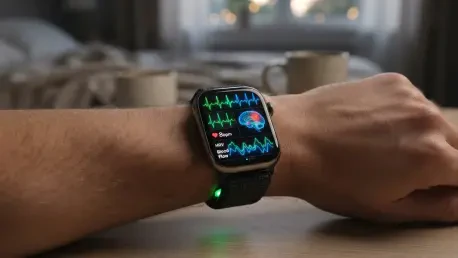
The foundational hardware for this initiative was built around bilateral wrist accelerometer modules designed to capture the subtle nuances of human movement without burdening the patient with heavy equipment. Each module featured the MPU6050 sensor, a versatile component capable of recording three-axis acceleration and gyroscopic data at a high resolution. Operating at a sampling rate of 0.01 seconds, these devices provided a granular view of physical activity that traditional observational methods simply cannot replicate. By focusing on 16-bit resolution, the system ensured that even the slightest deviation in limb velocity or orientation was captured for later analysis. This precision is essential in acute settings where the onset of hemiparesis, or one-sided weakness, might initially manifest as a barely perceptible lag in movement. The simplicity of the design also means that the modules are cost-effective, allowing for widespread deployment across various facilities.
Managing the massive influx of data generated by such high-frequency sensors required a streamlined cloud-based architecture and a robust communication strategy. To prevent local memory overflows and ensure real-time oversight, the devices were configured to transmit batches of 120 samples every two minutes. This process utilized a stable mobile connection powered by integrated subscriber identity modules, allowing the system to operate independently of the local hospital network, which can often be unreliable in older clinical wings. Power management was handled through a simple yet effective system of swappable battery packs every twenty-four hours, ensuring that the monitoring remained uninterrupted for the duration of a patient’s recovery window. By compressing data into maximum acceleration values per second, the system struck a perfect balance between maintaining detailed movement profiles and optimizing the bandwidth required for continuous, remote monitoring across the digital server.
Clinical Methodology: Establishing the Gold Standard Ground Truth
The validation process for this movement-tracking system relied on a rigorous prospective observational study involving 82 patients treated at Can Tho Central General Hospital. These participants, the majority of whom had suffered acute ischemic strokes, were monitored for periods ranging from 12 to 72 hours. To create a reliable baseline, the research team utilized the National Institute of Health Stroke Scale as the primary metric for neurological health. Experienced stroke specialists performed daily examinations to assess arm motor scores and muscle strength, ensuring that any clinical decline was documented with professional precision. This human oversight was the bedrock of the experiment, providing the gold standard against which the machine learning model’s predictions were compared. Maintaining a consistent physician for each patient throughout their hospital stay reduced the risk of subjective variability, creating a highly controlled environment for testing the wearable’s accuracy.
Identifying the exact moment of clinical deterioration required a nuanced approach that combined objective sensor data with subjective reports from caregivers and bedside staff. Within the study cohort, approximately 18.3 percent of the participants developed significant hypomobility during the monitoring phase, presenting a unique opportunity to observe the transition from a stable state to a critical one. These positive cases were critical for defining the specific movement signatures that precede or accompany a stroke-related deficit. By correlating the timestamp of a physical exam with the divergent movement signals between the right and left hands, the researchers were able to pinpoint the onset of weakness with remarkable accuracy. This methodology highlights the importance of hybrid monitoring, where automated systems are trained using deep clinical expertise to ensure that the resulting alerts are medically significant and contextually relevant to the patient’s history.
Advanced Signal Processing: Filtering and Asymmetry Metrics
Raw acceleration data is notoriously noisy, often influenced by external factors like bed adjustments, patient repositioning by nurses, or even the subtle vibrations of nearby medical equipment. To address this, the system utilized a sophisticated multi-step pipeline involving one-minute and 15-minute simple moving averages to smooth out the signals and highlight meaningful physical activity. This filtering process was essential for distinguishing between purposeful arm movements and the incidental jitter common in a busy hospital environment. The primary focus of the analysis was the concept of movement asymmetry, as unilateral weakness is one of the most reliable indicators of an ischemic event. By calculating the ratios and differences between the right and left wrist movements, the software could identify when one side of the body began to lag behind the other. This comparative approach allowed for a personalized baseline, as each patient’s natural activity level served as their own control.
To pinpoint the exact onset of a potential stroke, the researchers implemented Bayesian changepoint detection, a statistical technique designed to find sudden shifts in the mean or variance of a data stream. This allowed the system to ignore the gradual changes that happen throughout the day and focus instead on the abrupt departures from a patient’s established movement pattern. The analysis also accounted for the natural decrease in activity during sleep through seasonal adjustments, preventing the system from triggering false alarms during periods of rest. By applying linear models to 30-minute windows around these detected changepoints, the system calculated the specific slope of the movement decline. This quantification of the speed and severity of the change provided the machine learning algorithm with the high-level features needed to classify an event as either a routine behavioral shift or a legitimate medical emergency requiring immediate intervention by the neurology team.
Machine Learning Optimization: Balancing Precision and Sensitivity
The classification engine of the monitoring system was built using the XGBoost algorithm, a choice driven by its reputation for high performance with structured data and its ability to handle missing values through internal regularization. A major hurdle in the development of this tool was the significant class imbalance between stable periods and the relatively rare instances of hypomobility. In the collected dataset, negative events outnumbered positive ones by a ratio of 35 to one, a disparity that could easily lead a standard algorithm to overlook the very events it was designed to detect. To solve this, the researchers employed the Synthetic Minority Oversampling Technique to artificially increase the representation of clinical declines in the training set. Furthermore, the model’s internal weights were adjusted to prioritize sensitivity, ensuring that the software would be more likely to flag a potential issue even if it meant a slight increase in the rate of false positives.
The predictive performance of the optimized XGBoost model was exceptionally strong, yielding an Area Under the Curve of 0.975 during the validation phase. When tuned for maximum sensitivity, the system correctly identified nearly 97 percent of the patients experiencing a decline in limb mobility, while maintaining a specificity of 90 percent. These metrics suggest that the wearable system is capable of operating with a high degree of reliability in a fast-paced hospital ward, where the cost of a missed event is significantly higher than the inconvenience of a false alarm. With an F1-score of 0.930, the model demonstrated a robust balance between precision and recall, proving that it could function as a dependable secondary monitor for nursing staff. This level of accuracy is particularly impressive given the low-cost nature of the hardware, suggesting that the intelligence of the system lies primarily in the mathematical modeling rather than in expensive sensor arrays.
Future Outlook: Scaling Smart Monitoring Solutions
For any artificial intelligence system to find a home in modern medicine, its decisions must be transparent and understandable to the clinicians who rely on them. To achieve this, the research team utilized explainability tools to provide a clear view of why a particular alert was triggered. The analysis revealed that the most influential factor in the model’s decision-making process was the interaction between the patient’s status and the slope of the one-minute right-left asymmetry ratio. In simpler terms, the algorithm learned that a rapid and sustained shift in the balance of movement between the two arms was the clearest indicator of a neurological deficit. This alignment with traditional medical logic, where unilateral weakness is taught as a primary sign of stroke, is crucial for fostering trust. When the software points to the same symptoms a doctor would look for during a physical exam, adoption becomes more likely across various healthcare institutions.
The study established a powerful proof of concept for using low-cost wearables as a twenty-four-hour early warning system in acute stroke care. By converting the laborious task of manual clinical monitoring into a smart, automated process, the researchers provided a roadmap for modernizing the way hospitals manage neurological recovery. The findings suggested that integrating high-resolution data collection with explainable machine learning models offered a path toward better patient outcomes and more efficient resource allocation. Moving forward, the medical community took these insights to heart, beginning the process of validating the system across larger, more diverse patient populations in various global regions. The transition toward this tech-enabled monitoring represented a major leap in hospital safety, ensuring that the silent periods of the day no longer posed a hidden threat. Actionable steps were identified to integrate these alerts directly into electronic records.