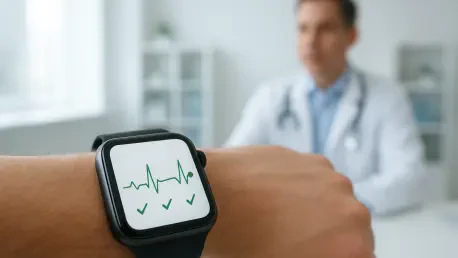

When faced with confusing physiological alerts, sixty-one percent of device owners turn to the internet for answers instead of consulting a qualified medical professional. This reliance on digital search engines highlights a fundamental paradox in the current healthcare ecosystem. While more than half of the adult population now wears sophisticated technology capable of monitoring everything from blood oxygen levels to heart rate variability, the ability to translate these metrics into actionable medical knowledge remains stagnant. The shift from reactive care—where patients only see a doctor when symptoms manifest—to a proactive, continuous monitoring model has happened rapidly. Today, smartwatches and fitness trackers provide a constant stream of physiological data, yet many users find themselves staring at complex charts without the specialized education required to interpret them. This friction creates a landscape where significant health insights are often ignored.
Navigating the Disconnect: Data and Interpretation
The core of the issue lies in the massive disconnect between the volume of data being generated and the consumer’s ability to extract meaningful context from it. As wearables become more advanced, they are no longer just counting steps; they are monitoring intricate biological signals that were once the exclusive domain of clinical settings. This technological leap has not been matched by a similar advancement in public health education, leaving many users feeling overwhelmed by the very tools meant to empower them. Without a foundational understanding of what a normal respiratory rate looks like or why an irregular heart rhythm notification might be triggered, the average person is left to speculate. This lack of interpretation leads to a cycle of confusion where the potential for improved health outcomes is lost in a sea of metrics. Addressing this gap requires a concerted effort to simplify data presentation while also elevating health literacy.
Behavioral Responses: Digital Anxiety
When a wearable device vibrates with a notification about an irregular rhythm or an elevated heart rate, the psychological response is rarely neutral. Users often oscillate between two extremes: complete dismissal of the technology as a technical error or a descent into digital self-diagnosis. Those who ignore the data frequently do so because the information feels abstract or disconnected from their physical sensations, leading to missed opportunities for early intervention. Conversely, those who seek answers online often encounter a flood of generic and potentially alarming information that lacks the specificity of their unique medical history. This phenomenon, referred to as cyberchondria, can result in unnecessary psychological stress and a strained relationship with the device. Without a clear path toward professional validation, the very tools designed to provide peace of mind can become sources of persistent uncertainty and anxiety for the consumer.
Clinical Context: Medical Expert Role
The bridge between raw data and medical insight is built through clinical context, a component that algorithms alone cannot yet fully replicate. Medical professionals observe that while a wearable might flag a high heart rate, it cannot always account for situational factors like recent caffeine consumption or intense stress. When patients present their longitudinal data to a physician, it allows for a much more nuanced discussion than a single measurement in a clinic. For instance, a doctor can correlate a series of sleep disturbances or heart rate spikes with specific lifestyle changes or underlying pathologies. This collaborative approach has already proven successful in detecting conditions such as atrial fibrillation or early signs of infection before they escalate into emergencies. By treating the wearable as a supplementary diagnostic tool rather than an autonomous medical authority, the industry can foster a more effective partnership between technology and healthcare.
The Future Landscape: Integrated Care
As the industry moves forward, the focus is shifting toward a more integrated model that pairs real-time wearable data with deeper biological insights, such as genomic testing. This evolution represents a transition from simply tracking current health states to predicting future vulnerabilities with high precision. By analyzing a user’s genetic predispositions alongside their daily activity, healthcare systems can identify risks for chronic conditions like cardiovascular disease or diabetes years before clinical symptoms appear. This synergy allows for the creation of personalized prevention strategies that are tailored to the individual’s specific genetic makeup and lifestyle. For example, a person with a genetic inclination toward hypertension might receive specialized alerts and recommendations through their wearable that are calibrated to mitigate their unique risks. This shift toward predictive analytics signifies a major advancement in how health technology is utilized to maintain long-term wellness.
Holistic Metrics: Expanding Scope
Beyond cardiovascular monitoring, modern wearables are expanding their reach into diverse aspects of well-being, including sleep architecture and metabolic health. These devices now offer detailed breakdowns of sleep stages—light, deep, and REM—providing a holistic view of recovery that was previously only available in specialized sleep laboratories. Furthermore, the integration of non-invasive glucose monitoring and advanced hydration sensors is beginning to provide a clearer picture of how nutrition and activity interact in real-time. However, the ultimate efficacy of these advancements hinges on the user’s ability to navigate the literacy gap. Manufacturers and healthcare providers must work together to develop interfaces that do not just display numbers, but provide educational context that empowers the individual. When technology empowers users with both data and the knowledge to understand it, the promise of true preventative care can finally be realized through proactive decisions.
Strategic Pathways: Better Outcomes
The transition toward a tech-integrated health model demonstrated that while hardware adoption was rapid, the educational framework lagged behind. Stakeholders eventually recognized that providing a device was only the first step; the true challenge resided in cultivating a population capable of interpreting the results. Moving forward, the focus shifted toward developing more intuitive health dashboards and standardized data sharing protocols that prioritized clarity over complexity. Healthcare providers began incorporating digital health literacy training into routine consultations, ensuring that patients understood the significance of the alerts they received. This proactive stance helped mitigate the internet-first diagnostic trend, replacing it with a more balanced reliance on professional expertise. By closing the information gap, the industry transformed wearables from mere novelty gadgets into essential components of a modern, preventative medical infrastructure that benefited all.