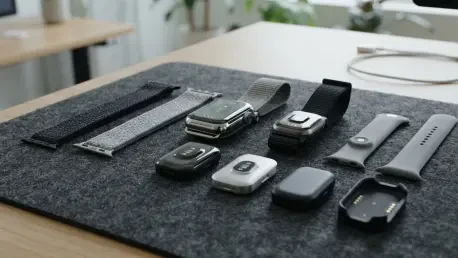

Integrating voice-to-text journaling directly into a wearable allows users to log dietary habits and physical symptoms the moment they occur rather than relying on memory. This innovative approach addresses the fundamental disconnect between automated sensor data and the qualitative human experience that often determines long-term wellness outcomes. In the current landscape of health technology, consumers frequently find themselves caught in a binary struggle, forced to select between the discreet presence of a smart ring and the multifaceted utility of a traditional wrist-worn fitness tracker. The Alloop Trio enters this fray with a disruptive modular philosophy, aiming to bridge the gap by providing a versatile ecosystem that shifts according to the wearer’s immediate environmental and physical needs. By decoupling the primary sensing components from the physical housing, the system seeks to eliminate the friction associated with long-term health monitoring. Whether one is engaging in high-intensity training that requires a secure wrist strap or prioritizing sleep recovery through a lightweight ring, the continuity of data remains unbroken. This shift represents a broader trend in the market toward hardware that respects personal aesthetics without compromising on the granularity of physiological insights required for high-level health analysis. As we observe the evolution of the wearable sector, the Trio’s three-in-one concept serves as a compelling answer to the problem of device fatigue, offering a single, unified brain that powers multiple form factors throughout a single day.
Understanding the Core Components of the Trio System
The Technological Foundations: Analyzing the Cube and Halo
The technological heart of the Alloop Trio is the Cube, a miniaturized sensing module that serves as the central processing unit for all physiological data. Despite its diminutive size, the Cube is packed with a sophisticated array of sensors, including multi-wavelength photoplethysmography (PPG) arrays, high-precision accelerometers, and advanced thermistors. Engineering such a compact device to be removable presents significant challenges, particularly regarding the maintenance of sensor alignment and signal integrity across different housings. By isolating the sensing hardware into a dedicated module, the design ensures that the data collection process remains consistent, whether the unit is docked in a ring or a wristband. This consistency is vital for long-term health tracking, as it prevents the data discrepancies that often occur when users switch between different standalone devices from various manufacturers. The Cube acts as an objective observer, silently recording baseline metrics with a level of accuracy that rivals high-end medical-grade monitors, all while remaining small enough to be virtually imperceptible during daily use.
Complementing the passive data collection of the Cube is the Halo, an interaction module that introduces an active layer of communication between the device and the user. While the Cube focuses on internal vitals, the Halo facilitates external engagement through a sophisticated user interface that includes haptic feedback, subtle light patterns, and an integrated microphone system for voice-driven inputs. This module is what truly differentiates the Trio from standard trackers, as it allows for real-time interaction without the need to pull out a smartphone. The Halo enables users to acknowledge notifications, receive haptic alerts for health milestones, and, most importantly, provide the qualitative data that sensors alone cannot capture. This interaction layer is built on a foundation of ambient computing, where the technology recedes into the background until it is needed, providing a streamlined experience that reduces screen time while maintaining high levels of connectivity. By pairing the Halo with the Cube, the system achieves a balance between being a powerful medical tool and a helpful daily assistant, catering to the needs of modern users who demand both depth and accessibility.
Design Versatility: The Intersection of Form and Function
The physical versatility of the Trio system is defined by its interchangeable housings, which allow the user to transition between a ring and a wristband with minimal effort. The ring housing is specifically engineered for nighttime use and low-impact daily activities, where comfort is the primary driver of consistent data collection. Many users find traditional wrist-worn devices to be cumbersome during sleep, often leading to “data gaps” when the device is removed for comfort. To solve this, Alloop provides the ring in nine distinct sizes, ensuring a precise fit that is essential for accurate PPG readings. A properly fitted ring maintains stable contact with the skin, allowing the sensors to monitor blood oxygen levels and heart rate variability with extreme precision. The materials used in the ring housing are selected for their biocompatibility and durability, featuring a lightweight yet robust construction that resists the daily wear and tear of an active lifestyle. This form factor allows the technology to remain nearly invisible, fulfilling the promise of a wearable that provides constant insights without becoming a physical burden.
When the user transitions to more active pursuits or requires a more robust interface, the Cube can be moved into the wristband housing. This configuration offers a more traditional wearable experience, providing additional surface area for the Halo module and a more secure fit for vigorous physical exercise. The wristband is designed to handle the dynamic movements associated with gym workouts, running, or cycling, where a ring might be prone to slipping or causing discomfort. This modular approach recognizes that human activities are varied and that a single form factor cannot be optimal for every scenario. By allowing the user to customize their wearing experience, Alloop addresses the “friction” that often leads to abandoned wearables. The mechanical connection between the Cube and its housings is a feat of precision engineering, utilizing secure locking mechanisms that ensure the module remains in place while remaining easy to swap. This adaptability not only enhances user comfort but also extends the lifecycle of the device, as users can update or replace individual components rather than the entire system, reflecting a more sustainable approach to consumer electronics.
The Evolution of Personalized Health Metrics
Assessing Vital Signs: A Deep Dive into Physiological Monitoring
The Alloop Trio’s monitoring capabilities are anchored by its ability to track five primary physiological signals, providing a comprehensive baseline for cardiovascular and autonomic nervous system health. Resting heart rate (RHR) and heart rate variability (HRV) serve as the dual pillars of this monitoring suite, offering insights into the body’s stress levels and recovery status. HRV, in particular, is a critical metric for understanding the balance between the sympathetic and parasympathetic nervous systems, helping users determine when they are ready for intense physical exertion or when they require additional rest. Furthermore, the inclusion of blood oxygen (SpO2) monitoring and respiratory rate tracking provides a detailed look at pulmonary health, which is especially useful for detecting potential sleep apnea or other respiratory disturbances. By continuously logging these metrics throughout the day and night, the Cube module builds a high-definition profile of the user’s internal state, allowing for the detection of subtle shifts that might indicate the onset of illness or the effects of overtraining.
In addition to heart and lung metrics, the Trio integrates a highly sensitive temperature sensor that monitors fluctuations in the body’s baseline heat levels. Temperature tracking is an increasingly important feature in the 2026 wearable market, as it provides a window into various biological processes, from immune system responses to hormonal changes. By establishing a personalized thermal baseline, the system can alert the user to deviations that might go unnoticed otherwise. This holistic approach to vital sign monitoring ensures that the data is not viewed in isolation; instead, the interplay between heart rate, temperature, and respiration is analyzed to provide a multi-dimensional view of health. The sophisticated algorithms running within the Cube are designed to filter out “noise” from movement or environmental factors, ensuring that the readings remain accurate even in challenging conditions. This level of physiological scrutiny allows the Trio to move beyond simple step-counting, positioning it as a sophisticated tool for preventative health management and long-term wellness optimization.
The Bio Age Framework: Synthesizing Data into Actionable Insights
One of the most ambitious features of the Alloop Trio is its Bio Age metric, a proprietary scoring system that translates complex physiological data into a single, intuitive number. This score is designed to reflect the user’s biological age relative to their chronological age, providing a clear indicator of how lifestyle choices are impacting their long-term health. The Bio Age algorithm evaluates data across six key domains: sleep, activity, cardiovascular health, nutrition, metabolic status, and musculoskeletal well-being. By synthesizing these diverse data points, the system provides a high-level summary that is far more accessible to the average user than a series of disconnected charts and graphs. This consolidated approach encourages a more proactive stance toward health, as users can easily see the direct impact of improved sleep hygiene or increased physical activity on their overall biological score. The goal is to move away from reactive healthcare and toward a model of continuous optimization, where users are empowered with the knowledge they need to make better daily decisions.
The true innovation within the Bio Age framework lies in its ability to integrate subjective, qualitative data through the Halo module’s voice journaling feature. While sensors can measure heart rate, they cannot easily detect how a user feels after a meal or whether they are experiencing persistent joint pain. By allowing users to log these experiences via voice, the Alloop system gains a more nuanced understanding of the individual’s physical state. For instance, if a user journals about feeling fatigued despite a full night’s sleep, the algorithm can cross-reference this subjective report with objective data like HRV and temperature to identify potential underlying issues, such as poor sleep quality or metabolic stress. This combination of “hard” sensor data and “soft” user-reported data creates a holistic health narrative that was previously impossible to achieve with standard wearables. The resulting Bio Age score becomes a living metric that evolves with the user, providing a personalized roadmap for improving longevity and vitality based on a comprehensive understanding of their unique biological profile.
Navigating the Competitive Landscape of 2026
Strategic Advantages: Breaking the Monolithic Design Standard
In an industry where design cycles are often dominated by incremental updates to established form factors, the Alloop Trio’s modularity represents a significant departure from the status quo. Major tech conglomerates have traditionally favored sealed, monolithic designs that prioritize manufacturing efficiency and brand consistency over user flexibility. By contrast, the Trio targets a growing segment of the market that values personalization and functional adaptability. This strategic positioning allows Alloop to compete not by outspending the giants in research and development, but by offering a unique value proposition that addresses the specific pain points of modern wearable users. The ability to switch between a ring and a band without losing data continuity is a powerful differentiator that appeals to tech-savvy consumers who are dissatisfied with the “one-size-fits-all” approach. This flexibility also opens up new possibilities for style and aesthetics, as the housings can be customized to match different outfits or environments while maintaining the same core sensing technology.
Furthermore, the Trio’s focus on ambient interaction through the Halo module reflects a broader shift in 2026 toward reducing screen addiction. While many smartwatches are essentially secondary screens for smartphones, the Trio is designed to be a purposeful tool for health management that does not constantly demand the user’s visual attention. The voice journaling and haptic feedback systems provide a more natural and less intrusive way to interact with technology, aligning with the “calm tech” movement. This design philosophy not only improves the user experience but also broadens the device’s appeal to those who might find traditional smartwatches too distracting or overwhelming. By focusing on deep health insights and seamless integration into daily life, Alloop is carving out a niche as a premium, health-first brand. The success of this strategy will likely influence other manufacturers to reconsider the limitations of fixed-form hardware, potentially leading to a more modular and user-centric future for the entire wearable industry.
Engineering Obstacles: Durability and Power Management
The path to a successful modular wearable is fraught with significant engineering hurdles, particularly concerning the durability of the physical and electronic connections between the components. For a system like the Trio to be viable, the connection points between the Cube, the Halo, and the various housings must be able to withstand thousands of swaps without degrading. Dust, moisture, and skin oils present constant threats to electronic contacts, necessitating advanced sealing techniques and robust material choices. Alloop has addressed these concerns by utilizing high-grade gaskets and precision-engineered latching mechanisms designed to maintain an airtight seal when the modules are docked. Ensuring that the device remains water-resistant while being inherently “open” for component swapping is a complex task that requires meticulous attention to detail. If the modularity leads to a higher failure rate, the brand’s reputation could suffer, making the long-term reliability of these connections a make-or-break factor for the device’s market acceptance.
Another critical consideration for the Trio is power management and battery longevity. In a traditional wearable, the battery can take up a significant portion of the internal volume, but the miniaturization required for the Cube sensing module imposes strict limits on battery capacity. To achieve acceptable runtimes, the Alloop team must employ highly efficient power-management algorithms and low-energy communication protocols. The challenge is magnified by the addition of the Halo interaction module, which introduces power-hungry features like voice processing and haptic feedback. Users in 2026 have come to expect multiple days of battery life from their trackers, and a modular system that requires daily charging may struggle to gain traction. Balancing the power demands of high-frequency physiological monitoring with the constraints of a small, swappable battery is one of the most difficult trade-offs in modern hardware design. The final specifications regarding battery life and charging speed will be closely scrutinized by potential buyers, as these factors directly impact the convenience and “invisibility” of the overall experience.
Final Considerations for Prospective Users
Logistics: Preparing for the Kickstarter Launch
As the November 10, 2026, Kickstarter launch approaches, prospective users must evaluate the Alloop Trio within the context of the crowdfunding ecosystem. The initial price point of $299 is positioned to attract early adopters who are willing to support a novel hardware concept in exchange for a potentially revolutionary product. However, it is essential for backers to understand that the $299 price may only represent the starting point for a full ecosystem. Clarity on whether this bundle includes the Cube, the Halo, and both the ring and band housings will be crucial for managing consumer expectations. Historically, crowdfunding projects in the wearable space have faced challenges ranging from manufacturing delays to features being scaled back during production. Therefore, interested individuals should approach the campaign with a balanced perspective, recognizing the inherent risks involved in supporting hardware startups. Verification of the company’s manufacturing partners and supply chain stability will be key indicators of whether the Trio can move from a successful campaign to a widespread commercial reality.
Beyond the hardware itself, the software ecosystem and data privacy protocols will be under intense scrutiny. In 2026, the security of personal health data is a paramount concern, especially when voice recordings are involved. Alloop must provide transparent documentation on how voice-journaled data is encrypted, where it is stored, and whether the processing occurs locally on the device or in the cloud. Furthermore, the potential for a subscription-based model to access the most advanced “Bio Age” insights is a common trend in the industry that could influence the total cost of ownership. Early adopters should look for assurances regarding long-term software support and the absence of hidden fees that could diminish the value of their initial investment. The success of the Kickstarter campaign will not only be measured by the funds raised but by the company’s ability to build a community of trust through clear communication and a commitment to data integrity.
Industry Trends: The Shift Toward Modular Solutions
The introduction of the Alloop Trio provided a significant case study in how modularity could serve as the cornerstone of health technology adoption. By successfully launching the system through its crowdfunding phase, the company demonstrated that there was a substantial appetite for devices that refused to be confined to a single, static form factor. This move signaled a departure from the monolithic design cycles of previous years, showing that users prioritized data continuity and personal comfort over the rigid brand loyalty often associated with traditional tech ecosystems. The transition from a wristband for high-impact activity to a ring for restorative sleep allowed for a more granular understanding of the body’s recovery cycles than had previously been possible. The integration of qualitative voice logs with quantitative sensor data created a more cohesive health narrative, effectively reducing the reliance on external journaling apps that often fragmented the user experience.
Moving forward, the success of the modular approach suggested that the industry should focus on building interoperable components rather than isolated gadgets. Consumers are encouraged to look for devices that offer long-term value through upgradeability and repairability, moving away from the “planned obsolescence” that has characterized much of the consumer electronics sector. The Alloop Trio highlighted the importance of ergonomic versatility as a primary feature, reminding the market that technology must adapt to the human form to be truly effective. As the wearable landscape continues to evolve, the lessons learned from the Trio’s launch emphasized that the most powerful health tools are those that a person actually wants to wear every single day. For those seeking to optimize their biological potential, the actionable next step involved embracing systems that offer a multi-dimensional view of health, combining the precision of modern sensors with the necessary flexibility of a modern lifestyle.