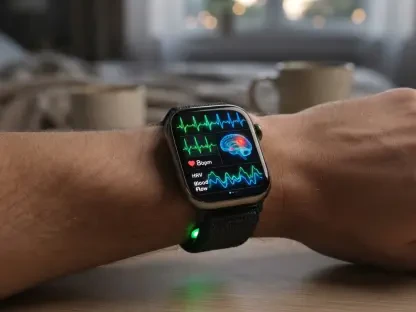

The shift toward end-to-end encryption in medical devices presents a new challenge for security frameworks that rely on inspecting raw biometric data to find anomalies. While the Internet of Medical Things (IoMT) has drastically improved patient outcomes by enabling real-time telemetry for devices like pacemakers and bedside monitors, it has simultaneously introduced a precarious and expanding attack surface. Modern healthcare facilities now manage thousands of connected sensors that transmit sensitive physiological data across local and cloud networks. However, the sheer volume of these devices often obscures subtle malicious activities that can have fatal consequences. Traditional security paradigms, which primarily focus on keeping intruders out of the network, are proving insufficient against sophisticated attackers who compromise devices to manipulate data payloads without triggering standard alerts. This growing vulnerability has necessitated a shift toward forensic frameworks capable of identifying discrepancies at the intersection of network behavior and clinical reality.
The Problem: Context Blindness in Modern Medical Security
A fundamental flaw in existing digital forensics and intrusion detection systems is a phenomenon known as context blindness. In the current landscape of medical device security, most defensive tools focus exclusively on unimodal analysis, typically examining network traffic metadata such as packet headers, flow durations, and transmission frequencies. While these tools are proficient at spotting noisy attacks—such as Denial of Service attempts that flood a network with traffic—they remain largely ineffective against sophisticated data alteration attacks. In such a scenario, a compromised sensor continues to behave perfectly from a network perspective; it sends packets of the correct size at the expected intervals. However, the payload inside those packets is malicious, containing physiologically impossible readings designed to trigger incorrect treatments. Because the container looks normal, the content goes unscrutinized, leaving a critical gap between network safety and patient survival.
Building on this challenge, the inability to distinguish between a healthy heartbeat and a simulated one within a standard packet flow highlights the necessity for deeper inspection. Most healthcare infrastructure relies on security software that flags volume-based anomalies, yet many medical devices operate on predictable, low-bandwidth cycles that make volume spikes rare. Consequently, an attacker who gains access to a smart insulin pump can alter the dosage data while keeping the communication pattern identical to a legitimate session. This level of technical deception bypasses the majority of perimeter-based defenses that were designed for general IT environments rather than specialized clinical settings. To combat this, security professionals have begun exploring behavioral fingerprints that look beyond the network wrapper. By integrating the actual biometric values into the forensic profile, it becomes possible to detect when a device’s electrical signals no longer match the medical data it claims to report.
The Multimodal Pipeline: Dual-Channel Parsing and Normalization
The Multimodal Behavioral Fingerprinting Framework (MBFF) introduces a rigorous four-phase pipeline designed to achieve high-fidelity forensic attribution after a security incident. The initial phase involves passive data acquisition, where traffic is captured from an IoMT gateway in a read-only mode to preserve forensic integrity. A dual-channel parser then dissects the captured traffic into two distinct streams. The first channel focuses on the network wrapper, extracting essential TCP, UDP, and IP headers to establish a baseline for flow statistics and communication timing. Simultaneously, the second channel utilizes Deep Packet Inspection to decapsulate the application layer, extracting raw physiological sensor readings like heart rate, oxygen saturation, and body temperature. This separation allows the framework to evaluate the device’s hardware behavior in direct comparison with the clinical information it generates, creating a holistic view of the device’s operational status.
A significant technical hurdle in combining these two data streams is the extreme disparity in numerical magnitude. In a digital hospital network, features such as source bytes or packet counts can easily reach into the millions during a single observation window. Conversely, human biometric data exists within very narrow and stable ranges; for example, a patient’s body temperature rarely fluctuates outside the range of 36 to 40 degrees Celsius. If these raw values were fed directly into a machine learning algorithm, the massive network figures would statistically overwhelm the smaller biometric numbers, effectively rendering the medical data invisible to the model. To solve this, the framework applies min-max normalization to scale every feature into a standardized range between 0 and 1. This ensures that a minor spike in a patient’s fever carries the same statistical weight as a massive surge in network traffic, allowing the algorithm to detect subtle clinical anomalies.
Early Orthogonal Feature Fusion: Creating a Unique Device Fingerprint
The core innovation of this framework lies in the early orthogonal feature fusion stage, where network and biometric data are merged into a single composite fingerprint. The researchers opted for early fusion—concatenating data sources before classification—rather than late fusion, where separate models would vote on a result. This decision was based on the need to preserve the granular, non-linear relationships between a device’s communication rhythm and the patient’s vitals. The analysis revealed that these two data types are orthogonal, meaning they are statistically independent and provide non-redundant information. For instance, there is no inherent correlation between a person’s heart rate and the jitter or latency of the network packets carrying that data. This independence is a significant defensive advantage, as it forces an attacker to mimic two completely unrelated sets of behaviors simultaneously, which is exponentially more difficult than spoofing a single network ID.
Once the composite fingerprint is established, the framework employs a Random Forest classifier to categorize the device’s behavior as either normal or malicious. This machine learning model is particularly effective for IoMT security because it can handle high-dimensional data and provide clear insights into which features contributed most to a detection. The classifier is trained to identify complex patterns that distinguish legitimate physiological changes from artificial data injections. For example, if a patient’s heart rate suddenly spikes while the network traffic remains suspiciously static, the model can flag this as a potential data alteration attack. By focusing on the totality of the device’s footprint, the system can provide forensic investigators with a clear trail of evidence, even if the attacker attempted to hide their tracks by spoofing MAC addresses or using compromised credentials that would otherwise appear valid to standard administrative logs.
Performance Validation: Results from the Clinical Environment
To validate the effectiveness of the multimodal approach, researchers tested the framework using the WUSTL-EHMS-2020 dataset, a benchmark specifically designed for medical security research. This dataset reflects the imbalanced nature of real-world hospital networks, where approximately 87.5% of the traffic is benign and only a small fraction represents active cyberattacks. To prevent the machine learning model from becoming biased toward normal traffic, the team utilized over-sampling techniques to ensure the system was adequately trained on rare attack instances. The experimental results demonstrated an overall accuracy of 93.11%, but the most critical metric was the F1-score for data alteration attacks. The framework achieved a near-perfect score of 0.99 in this category, successfully identifying 185 out of 187 attempts to inject false medical information. This performance marked a substantial leap over network-only models, which failed to detect these stealthy maneuvers.
The study also uncovered a nuanced performance trade-off regarding the detection of device spoofing versus data manipulation. While the framework was nearly flawless at protecting data integrity, it encountered more difficulty with advanced spoofing attacks where one device perfectly mimics the network signature of another. However, from a clinical safety perspective, the accuracy of the medical data is far more vital than the specific identity of the hardware transmitting it. A doctor making a life-saving decision relies on the truth of the heart rate or blood pressure reading rather than the MAC address of the bedside monitor. By prioritizing the detection of data tampering, the framework ensures that even if an attacker manages to impersonate a device, they cannot feed false information into the electronic health record. This focus on payload integrity addresses the most dangerous aspect of IoMT vulnerabilities—the potential for cyberattacks to cause direct physical harm.
Implementation Challenges: Encryption and Operational Impact
One of the primary challenges for the widespread adoption of the Multimodal Behavioral Fingerprinting Framework is the increasing use of end-to-end encryption in modern medical devices. While encryption is essential for privacy, it prevents the Deep Packet Inspection required to extract the biometric payloads that the framework relies on for fingerprinting. As the healthcare industry moves toward universal encryption standards, security researchers are pivoting toward side-channel analysis to maintain visibility. This technique involves monitoring the timing, size, and frequency of encrypted packet bursts to infer the nature of the data inside without actually decrypting it. For example, the specific transmission pattern of an EKG monitor differs significantly from that of a temperature sensor. By identifying these encrypted signatures, the framework can still perform high-level behavioral analysis, ensuring that forensic capabilities remain robust even in high-security environments.
The development of this multimodal framework established a new standard for securing the increasingly complex ecosystem of the Internet of Medical Things. By treating clinical data as a critical component of the security signature, the research provided a viable solution to the problem of context blindness that had long plagued hospital networks. The successful integration of network and biometric features allowed for a defense strategy that prioritized patient safety over simple connectivity metrics. As hospitals expanded their digital infrastructure throughout 2026, the implementation of behavioral fingerprinting helped reduce the risk of alarm fatigue by providing more accurate and actionable alerts for IT staff. These advancements proved that a holistic view of device behavior was necessary to protect the integrity of modern healthcare. Moving forward, the industry adopted these behavioral models as a cornerstone of zero-trust architecture, ensuring that every piece of medical data was verified against its own historical and physiological context.