
Rigorous clinical validation and data privacy regulations remain significant hurdles for the commercialization of connected home-use devices. Yet, the landscape of modern medicine is currently undergoing a seismic shift, moving away from centralized, expensive laboratory testing toward decentralized, accessible, and affordable point-of-care diagnostics. At the heart of this revolution are electrochemical sensors—technological workhorses that have long been synonymous with the common glucose test strip but are now being reimagined through advanced material science and digital integration. This transformation is driven by the convergence of low-cost nanomaterials, innovative manufacturing techniques like screen printing, and the ubiquity of smartphone technology. In 2026, the overarching goal is to create a future where diagnostic information is as accessible as cellular connectivity, potentially democratizing healthcare for billions of people worldwide. This shift represents a transition where lab-grade diagnostic precision is brought to clinics, homes, and resource-limited environments. By synthesizing the current state of industrial and engineering chemistry, it becomes clear that the ability to monitor health in real-time is no longer a distant aspiration but a tangible reality for the global population. This movement focuses on addressing the two greatest barriers to health equity: the high cost of specialized equipment and the physical distance between patients and specialized laboratories.
Technical Fundamentals and Material Innovation
Mechanisms of Signal Detection
An electrochemical sensor operates by facilitating a reaction between a target chemical species—the analyte—and an electrode surface through a redox reaction that transfers electrons. This process generates an electrical signal, such as current, potential, or a shift in electrical properties, which is directly proportional to the concentration of the analyte being measured. A standard electrochemical cell consists of three primary components: a working electrode where the specific reaction occurs, a reference electrode that provides a stable known potential, and a counter electrode that completes the electrical circuit. These components are typically immersed in an electrolyte solution that facilitates the movement of ions. Selectivity is achieved by functionalizing the electrode surface with molecular recognition elements, such as enzymes, antibodies, or synthetic aptamers. These elements act as biochemical locks that only the specific analyte key can fit, allowing the sensor to distinguish the target molecule from a noisy biological environment. This fundamental principle allows for the detection of everything from blood sugar levels to specific viral proteins with remarkable accuracy. By fine-tuning the electrode surface, scientists have managed to improve the sensitivity of these devices to levels that were previously only possible in multi-million dollar laboratory settings.
The interpretation of these electrical signals relies on various readout modes that offer different layers of diagnostic data. Amperometry, for instance, involves applying a fixed potential and measuring the resulting current, a method that serves as the foundation for most commercial glucose meters. In contrast, potentiometry measures the voltage difference between electrodes at near-zero current, which is commonly used in ion-selective electrodes for pH monitoring. More complex techniques like voltammetry sweep the potential across a range to produce current-voltage curves, providing both qualitative and quantitative insights about the sample’s chemical composition. Conductometric and impedimetric techniques track changes in the electrical properties of the solution or the interface itself, often utilized for detecting binding events without the need for a specific redox reaction. These diverse modes of operation allow engineers to tailor sensors for specific clinical needs, ranging from simple home tests to complex screenings for chronic conditions. The versatility of these readout mechanisms ensures that electrochemical platforms can adapt to the evolving demands of modern medicine, providing a robust framework for everything from emergency room triage to long-term monitoring of chronic diseases in rural communities.
Cost-Effective Material Solutions
The primary barrier to widespread diagnostic adoption has historically been the cost of raw materials, but recent innovations in carbon-based nanomaterials are rapidly bridging this gap. Carbon remains the most promising material for low-cost sensing due to its abundance and versatility. Carbon black, an industrial byproduct, is now being formed into electrodes that rival the performance of expensive graphite or gold at a fraction of the cost. More advanced iterations, such as carbon nanotubes and reduced graphene oxide, offer massive electrochemically active surface areas and high conductivity, which significantly enhance signal strength. For example, hydrogen peroxide detection—a critical step in enzymatic glucose sensing—is vastly improved when using carbon-nanotube-modified electrodes, leading to faster response times and lower detection limits. These materials are not only affordable but also highly compatible with mass-production techniques, ensuring that the next generation of medical sensors can be manufactured for pennies rather than dollars. This economic shift is essential for making healthcare technologies viable in low-income regions where the cost of a single traditional lab test could exceed a patient’s monthly income.
In a significant move toward sustainable healthcare, researchers are increasingly looking toward bio-derived substrates to replace plastic and silicon. The use of biomass-derived materials—such as the outer shells of bamboo, sugarcane, and palm—allows for the creation of water-resistant, recyclable sensing chips. Furthermore, lignin-based carbon nanomaterials are being explored for their biodegradability and low toxicity, addressing the growing concern of electronic waste in the medical field. One of the most innovative examples is the use of silk from the silkworm, where glycerol-plasticized silk mats are used to create skin-conformal electrodes. These sensors are breathable and comfortable for long-term wear, effectively monitoring analytes in sweat without irritating the skin. Beyond sustainability, these natural substrates often possess unique mechanical properties, such as flexibility and porosity, which are difficult to replicate with synthetic polymers. By integrating these organic materials with conductive polymers like polyaniline, engineers are creating a new class of “green” electronics that are as effective as they are environmentally responsible, marking a major milestone in the evolution of wearable medical technology.
Scalability and Digital Connectivity
Advanced Manufacturing for Mass Production
The shift from laboratory prototypes to mass-market medical devices relies heavily on manufacturing efficiency, with screen printing serving as the backbone of the affordable sensor industry. This process, adapted from the textile industry, allows for the high-volume deposition of electrodes onto flexible substrates like paper or plastic. Because the per-unit cost drops significantly at scale, these devices can be produced as disposables, which is crucial for preventing cross-contamination in clinical settings. Recent developments in 2026 have seen screen printing reach new levels of precision, allowing for the integration of multiple sensors onto a single postage-stamp-sized strip. This ability to “multiplex” allows a single test to check for multiple biomarkers simultaneously, such as glucose, lactate, and electrolytes, providing a more comprehensive snapshot of a patient’s physiological state. The simplicity of the equipment required for screen printing also means that local manufacturing hubs can be established in developing nations, reducing the reliance on complex global supply chains and ensuring that diagnostic tools are available where they are needed most.
Beyond traditional printing, additive manufacturing and inkjet technologies are pushing the boundaries of sensor design. 3D printing allows for the creation of complex, three-dimensional geometries that include microfluidic channels, enabling the precise handling of tiny fluid samples. This technology allows for the fabrication of complete “lab-on-a-chip” systems from a single digital file, making it possible to update or customize sensor designs in real-time. Meanwhile, inkjet printing provides the precision needed to deposit conductive inks onto varied surfaces, including common fabrics used in smart clothing. The durability of these printed sensors is a key focus; many have been shown to maintain their structural and functional integrity even after repeated washing or exposure to harsh outdoor environments. This resilience ensures that the sensors can handle the rigors of daily life, whether they are used by an athlete in a high-performance setting or a farmer in a remote agricultural region. The combination of high-speed screen printing and high-precision 3D printing provides a dual-track approach to manufacturing that covers both high-volume needs and specialized, low-volume diagnostic requirements.
The Role of Smartphones and the IoMT
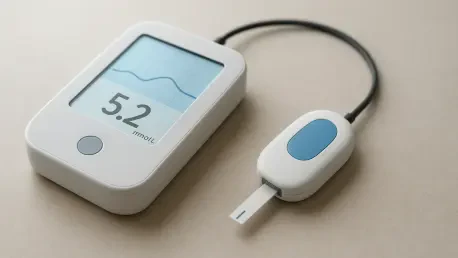
A sensor is only as useful as the data it provides, and the modern smartphone has become the essential processor, display, and communication hub for modern diagnostics. With nearly universal ownership of mobile devices, the infrastructure for a global health network already exists. Most contemporary electrochemical sensors are designed to interface with smartphones via Bluetooth, Near-Field Communication, or even the headphone jack, turning a consumer device into a powerful medical instrument. This connectivity allows for the real-time transmission of data to cloud-based platforms, where machine learning algorithms can analyze trends and provide immediate feedback to the user. For instance, Continuous Glucose Monitors now use this model to alert patients of dangerous blood sugar fluctuations before they become symptomatic. This digital integration removes the need for patients to interpret complex chemical data themselves, instead providing actionable insights that can be shared instantly with healthcare providers located thousands of miles away.
This evolution is a cornerstone of the Internet of Medical Things, where the human body effectively becomes a data-generating node within a larger network. Wearable platforms now integrate electrochemical sensors with traditional physical sensors like accelerometers and heart rate monitors to provide a multi-modal view of health. By combining chemical data from sweat with physical data from movement, these systems can predict health crises, such as dehydration or cardiac distress, with unprecedented accuracy. This shift from a reactive to a proactive medical model is particularly vital for managing chronic diseases, which require constant vigilance rather than occasional check-ups. Moreover, the aggregate data collected from thousands of these devices can provide public health officials with real-time maps of disease outbreaks, allowing for faster responses to emerging health threats. In 2026, the synergy between mobile technology and electrochemical sensing is transforming the role of the patient from a passive recipient of care to an active participant in their own health management, supported by a global digital framework.
Clinical Utility and Future Challenges
Diverse Applications in Modern Medicine
The clinical utility of electrochemical sensors covers a broad spectrum of modern healthcare challenges, ranging from metabolic disorders to infectious diseases. In the realm of diabetes management, the focus has shifted toward non-invasive sensing using sweat and saliva, utilizing the silk-based and polymer-modified sensors mentioned previously to overcome historical issues with skin irritation. Beyond glucose, these sensors are now being deployed to monitor cardiovascular health by detecting critical biomarkers such as troponin and C-reactive protein. Paper-based analytical devices allow for rapid testing in emergency settings, where every minute saved in diagnosing a heart attack can significantly improve patient outcomes. The portability of these devices means they can be used in ambulances or at the bedside, providing immediate answers that were previously only available through time-consuming central lab processing. This speed is a critical factor in reducing the burden on overstretched hospital emergency departments.
Infectious disease monitoring is perhaps the most vital application for resource-limited settings. Innovative assays for tuberculosis now utilize inexpensive electrodes to detect the bacteria with single-cell sensitivity, providing results in just over an hour for a few dollars. This is a stark contrast to traditional laboratory cultures that can take weeks to produce a definitive result. Similar platforms were rapidly adapted for viral proteins and host antibodies during recent health crises, proving that electrochemical platforms are the most versatile tools for rapid pandemic response. Furthermore, the field of oncology is benefiting from sensors capable of detecting cancer biomarkers, such as prostate-specific antigen, at extremely low concentrations. Portable, smartphone-linked sensors offer a viable path for cancer screening in regions where specialized pathology labs are nonexistent, potentially catching the disease at much earlier, more treatable stages. By providing high-sensitivity detection in a low-cost format, these sensors are closing the gap in cancer care between high-income and low-income populations.
Overcoming Biological and Regulatory Hurdles
Despite the technical progress, the human body remains a hostile environment for delicate electronic components. Biological samples like blood and sweat contain a complex mixture of proteins and lipids that can foul the electrode surface, creating a physical barrier that blocks the desired reaction and degrades the signal over time. To combat this, researchers are developing advanced “anti-fouling” coatings and synthetic receptors like aptamers, which are more robust and stable than traditional enzymes. These synthetic elements can withstand varying temperatures and pH levels, making them better suited for use in the field where refrigeration and climate control are often unavailable. Additionally, sophisticated signal-processing algorithms are being employed to filter out interference from non-target molecules or common medications, which can lead to the false positives that often plague early-stage diagnostic tools. Ensuring long-term stability and calibration remains a primary focus for engineers as they move toward permanent implantable or long-wear sensors.
The regulatory environment also presents a formidable challenge that must be navigated with precision. Any new medical device must undergo extensive clinical validation to prove that it is as safe and effective as the existing gold-standard laboratory methods. For home-use devices, the burden of proof is even higher, as the sensors must be intuitive enough for untrained users to operate without error. In the United States and Europe, strict legal frameworks govern how the data generated by these sensors is handled, stored, and transmitted. Protecting patient privacy while maintaining the benefits of a connected health network requires a delicate balance of cybersecurity and transparency. Developers must implement robust encryption and clear consent protocols to ensure that sensitive health information does not fall into the wrong hands. Addressing these legal and ethical concerns is just as important as solving the engineering puzzles, as public trust is the foundation upon which the democratization of healthcare is built.
Strategic Integration: Actionable Steps for Global Health
The potential for electrochemical sensors to transform global health necessitated a strategic approach to integration within existing medical infrastructures. To move forward, international health organizations and local governments established unified standards for sensor calibration and data interoperability, ensuring that a device manufactured in one region could provide reliable data to a clinician in another. Public-private partnerships were instrumental in funding the transition from laboratory prototypes to large-scale production, specifically targeting the manufacturing of assays for endemic diseases. These initiatives focused on “open-source” hardware designs that allowed local engineers to repair and maintain equipment using locally sourced materials. By prioritizing the training of healthcare workers in remote areas to interpret digital diagnostic data, the industry avoided the pitfall of deploying technology without the necessary human support. This comprehensive strategy focused on long-term sustainability rather than short-term fixes, creating a foundation for a resilient global diagnostic network.
Looking toward the next decade, the focus is shifting toward the development of closed-loop systems, where sensors not only detect health issues but also trigger localized treatment. An example of this is the “artificial pancreas” for diabetes, where an electrochemical glucose sensor is directly linked to an insulin pump. Expanding this concept to other chronic conditions, such as hypertension or hormonal imbalances, could lead to a future where medical intervention is automated and highly personalized. Researchers also investigated the use of these sensors for environmental monitoring, such as detecting heavy metals in drinking water, recognizing that environmental health is inextricably linked to human health. The actionable roadmap for the future involves a deeper integration of chemical sensing into everyday objects, from smart bandages that monitor wound healing to toothbrushes that screen for early signs of systemic inflammation. By embedding diagnostic capabilities into the fabric of daily life, the medical community aimed to catch diseases in their infancy, drastically reducing the cost and complexity of later-stage treatments.
The Socioeconomic Impact of Universal Diagnostics
The synthesis of advanced materials, digital connectivity, and clinical utility fundamentally altered the global healthcare economy. By decentralizing diagnostics, the reliance on high-cost infrastructure was minimized, allowing for a more equitable distribution of medical resources. The widespread availability of low-cost sensors meant that early detection became the standard rather than the exception, leading to a measurable decrease in the mortality rates of preventable and manageable diseases. This shift also empowered individuals in underserved communities to take charge of their own health, reducing the socioeconomic disparities that have historically defined medical outcomes. The transformation was not merely technical; it was a societal change that repositioned health data as a basic utility rather than a premium service. As the technology matured, the cost of manufacturing dropped to a level where the sensors became as common as cellular SIM cards, fulfilling the promise of a truly democratized healthcare system.
In retrospect, the integration of these sensors provided a pathway for the global population to access lab-grade diagnostics regardless of their geographic or financial status. The humble electrode, once limited to a simple glucose strip, evolved into a sophisticated tool that bridged the gap between advanced science and everyday human needs. This progress demonstrated that when innovative engineering is aligned with humanitarian goals, the resulting technologies can overcome even the most significant systemic barriers. The success of electrochemical platforms served as a blueprint for other fields of medical technology, proving that accessibility and high performance are not mutually exclusive. Ultimately, the transition to a sensor-based healthcare model redefined the relationship between technology and society, ensuring that the benefits of scientific advancement were shared by all. The journey toward democratization was marked by persistent innovation and a commitment to the idea that diagnostic information was a universal right, a goal that was largely achieved through the convergence of chemistry and digital connectivity.