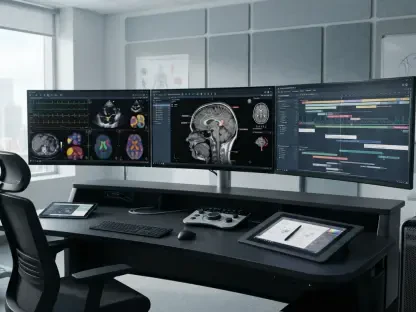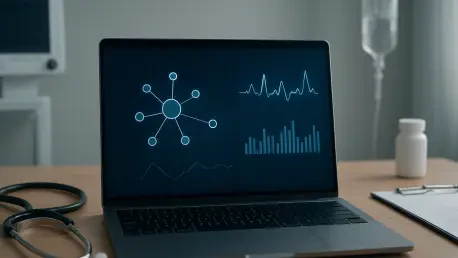

The combination of bio-inspired algorithms and advanced cryptography offers a practical blueprint for deploying high-performance AI in resource-constrained medical settings. This realization comes at a time when the healthcare industry is struggling to manage an unprecedented “data deluge” generated by advanced bedside monitors, diagnostic imaging, and wearable sensors. While these data streams are vital for predictive medicine, they present a massive challenge for traditional artificial intelligence. Legal frameworks like HIPAA and the high energy demands of large-scale training often make it impossible to move raw patient records to a central server. To address these hurdles, researchers G. Geetha and N. Ramshankar have developed Bio-Inspired Reinforcement Federated Optimization, or Bio-RL-FedOpt. This framework allows hospitals to collaborate on training sophisticated models without ever sharing sensitive data, while simultaneously optimizing the energy consumption of the physical hardware involved in the process.
Part 1: The Foundations of Decentralized Learning Architectures
Traditional machine learning relies on gathering all data into a single repository, which creates significant privacy risks and single points of failure. In contrast, Bio-RL-FedOpt utilizes Federated Learning, a decentralized approach where the training process occurs directly on local hospital servers or even individual bedside devices. By keeping the raw data in its place of origin, the framework avoids the security vulnerabilities associated with data migration. This architectural shift ensures that patient records remain behind the protective firewalls of their home institutions. Instead of sharing actual records, the system only exchanges model parameters—mathematical representations of what the local AI has learned. This decentralized method effectively bridges the gap between the need for large-scale medical insights and the necessity of strict data sovereignty within the healthcare ecosystem.
The core strength of this federated approach lies in its ability to aggregate diverse clinical knowledge from multiple sources without compromising confidentiality. Once local devices complete their training, they send mathematical weights to a central coordinator that merges them into a single global model. This global version is then redistributed back to all participating hospitals, improving their local predictive capabilities. This iterative cycle allows the AI to learn from a vast, global dataset, capturing rare medical conditions and diverse patient demographics that no single hospital could provide on its own. Because the central coordinator never sees the underlying patient records, the risk of a massive data breach is effectively eliminated. This setup turns competing medical institutions into collaborative partners, working together to refine diagnostic accuracy while maintaining the highest standards of digital ethics.
Part 2: Securing the Edge through Encryption and Energy Management
The first phase of the Bio-RL-FedOpt pipeline focuses on the “network edge,” which refers to the immediate point where medical sensors capture patient vitals. To protect this data from the moment it is generated, the framework implements a lightweight hybrid encryption system. This security layer scrambles information as it is collected, ensuring that even if a sensor is physically compromised or the signal is intercepted, the underlying health data remains unreadable. This proactive encryption is vital for the integrity of the entire system, as it prevents the introduction of unauthorized or malicious data at the very start of the pipeline. By securing the data stream locally, the framework establishes a foundation of trust that persists through the more complex stages of model training and optimization across the wider network.
Beyond security, the initial phase introduces a sophisticated Energy Profiling Layer that manages the computational burden on medical equipment. Standard AI software often ignores the physical limitations of the devices it runs on, which can lead to battery drain on critical bedside monitors. Bio-RL-FedOpt solves this by calculating the power cost of processing tasks in real-time. If a device is low on energy, the framework can dynamically reduce the frequency of data collection or postpone heavy computations until the device is plugged into a power source. This ensures that the AI functions as a supportive tool rather than a liability that could interfere with the primary life-saving duties of hospital equipment. By prioritizing the operational continuity of medical hardware, the system makes high-performance AI viable for the messy, resource-limited reality of a modern hospital ward.
Part 3: Advanced Modeling with Hybrid Neural Architectures
Once the data is secured and power levels are confirmed, the system employs a hybrid neural network architecture for local training. This design combines Convolutional Neural Networks, which are specifically built to interpret spatial data like X-rays and MRI scans, with Transformers, which excel at tracking long-range sequences such as heart rate variability over several days. This dual-layered approach allows the AI to understand both the immediate visual evidence and the broader historical context of a patient’s health trajectory. By fusing these two distinct types of machine learning, the Bio-RL-FedOpt framework achieves a level of diagnostic precision that far exceeds simpler models. This ensures that the clinical insights generated are not only fast but also highly nuanced, reflecting the complex nature of human physiology and the progression of various diseases.
To maintain the integrity of this local training, the framework includes an Adaptive Autoencoder-based Anomaly Detector. This component serves as a digital gatekeeper, screening out “noisy” data that might be caused by faulty sensor calibrations or even deliberate cyber-attacks designed to poison the AI model. By identifying and filtering these inaccuracies at the local level, the system ensures that only high-quality, reliable insights contribute to the global learning process. This quality control mechanism is essential for a federated system, where the central coordinator cannot manually inspect the data used by each participant. By automating the detection of errors, Bio-RL-FedOpt maintains the reliability of the global model even when individual devices in the network malfunction. This creates a resilient learning environment that can withstand the technical inconsistencies of a large medical network.
Part 4: Bio-Inspired Optimization and Intelligent Control Strategies
The “Bio-RL” component of the framework introduces a reinforcement learning agent that acts as a dynamic controller for the entire training process. In typical AI development, human engineers must spend significant time manually adjusting hyperparameters—the internal settings that govern how quickly or slowly a model learns. Bio-RL-FedOpt automates this tedious process by using an agent that constantly observes the training progress and fine-tunes these settings on the fly. This automation significantly speeds up the rate at which the model reaches its peak performance, reducing the time and computational power required to achieve high diagnostic accuracy. By removing the need for constant human intervention, the framework makes it much easier for medical facilities without specialized AI teams to deploy and maintain advanced predictive tools.
The framework also draws unique inspiration from nature through its Tunicate Swarm-based optimizer. By mimicking the collective behavior and jet-propulsion movement of tunicates—marine invertebrates—the algorithm identifies the most efficient path for aggregating model updates from various hospitals. This biological mimicry is specifically designed to minimize the amount of data transmitted across the network, which is often a major bottleneck in federated systems. By streamlining communication, the tunicate swarm optimizer saves significant bandwidth and further reduces the electrical footprint of the entire federated network. This approach demonstrates how biological principles can be applied to solve complex mathematical problems in network engineering. The result is a system that is not only smarter but also significantly more efficient than standard federated learning methods used in other industries.
Part 5: Strategic Implementation and Future Clinical Considerations
To provide an ironclad guarantee of privacy, the architecture utilizes Energy-Sensitive Differential Privacy alongside blockchain-based auditing. Differential privacy works by injecting calculated mathematical noise into the model updates before they are shared with the central coordinator. This noise makes it statistically impossible for any outside observer to reverse-engineer the updates to identify an individual patient. By balancing the amount of noise with the energy available on the device, the system maintains extreme levels of privacy without overburdening the local processor. Furthermore, the integration of Zero-Knowledge Proofs on a blockchain creates a permanent, tamper-proof record of every training step. This builds a foundation of absolute trust, allowing competing healthcare providers to collaborate on research without ever fearing that their proprietary data or patient secrets could be exposed.
The researchers validated the effectiveness of Bio-RL-FedOpt using the MIMIC-IV database, which provided a rigorous test of its accuracy and efficiency. The results showed that the system outperformed standard models in prediction speed, energy savings, and data security. In the past, hospitals had to choose between high-performance AI and strict privacy, but this research proved that both could be achieved simultaneously. For clinical administrators, the next steps involved a modular rollout where the encryption and energy-monitoring components were integrated into existing digital ecosystems. This phased approach allowed for the modernization of hospital networks without requiring an immediate replacement of legacy hardware. The focus shifted toward creating unified standards for federated communication, ensuring that different medical centers could seamlessly join the network to contribute to a growing collective intelligence.