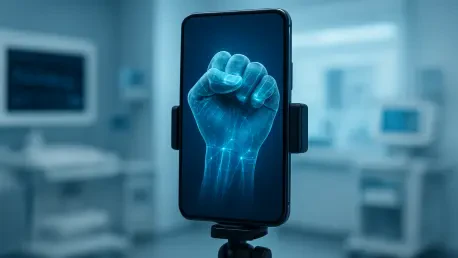

Heatmap analysis of the AI’s decision-making process confirms the model focuses on medically relevant areas like finger joints and the base of the thumb. This finding is particularly significant because acromegaly remains one of the most elusive conditions in modern medicine, often hiding in plain sight for a decade before a formal diagnosis is reached. The disease, which stems from a benign pituitary tumor overproducing growth hormone, causes a gradual transformation of physical features that is so subtle it frequently escapes the notice of patients and their primary care physicians. While the enlargement of hands, feet, and the jaw progresses slowly, the internal damage to the cardiovascular and skeletal systems accumulates, leading to severe comorbidities like heart disease, diabetes, and joint destruction. By the time many patients are finally referred to an endocrinologist, the systemic impact is often irreversible, underscoring the urgent need for a screening tool that identifies these subtle changes much earlier.
Innovation in Diagnostic Technology
Privacy-First Methodology: Focusing on Hand Imagery
To address this diagnostic gap, researchers at Kobe University developed a sophisticated deep-learning model known as ResNet-50, which was trained on an extensive dataset of over 11,000 images from several hundred participants. A primary concern during the development of this tool was the ethical handling of patient data, particularly in an era where facial recognition technology faces heavy scrutiny and regulatory hurdles. By bypassing facial analysis entirely, the team ensured the diagnostic tool could be used in various clinical settings without the privacy risks associated with biometrics. This approach recognizes that the hands serve as a highly reliable physiological record of hormonal influence, showing characteristic thickening of soft tissue and bone changes that occur in the presence of excess growth hormone. Focusing on extremities allows for a robust screening process that prioritizes patient anonymity while still capturing the physical manifestations required for an accurate assessment.
Ethical Standards: Protecting Sensitive Biometric Data
The methodology further refined its privacy-conscious design by excluding palm photographs to avoid the accidental collection of fingerprints, a decision that aligns with the strictest modern data protection standards. Instead, the AI focuses on two specific perspectives: the back of the hand and the hand in a clenched fist position. This strategic focus ensures that the tool can be deployed via standard smartphone cameras in a primary care setting without requiring specialized hardware or risking sensitive biometric exposure. By analyzing the density of skin folds and the width of the digits, the algorithm identifies structural deviations that might not be apparent to a general practitioner who sees the patient frequently and has become accustomed to their appearance. This innovative screening method provides a non-invasive, low-cost solution that could be integrated into routine physical examinations, effectively turning a simple photograph into a powerful frontline diagnostic instrument.
Clinical Indicators: Analyzing the “Fist Sign”
One of the most distinctive markers the AI was trained to recognize is the “fist sign,” a clinical indicator that has long been recognized by specialists but is rarely utilized in general screenings. In patients with acromegaly, the significant enlargement of the fingers and the base of the thumb often prevents them from making a tight fist, making it nearly impossible to hide their fingernails from view when the hand is clenched. The AI’s ability to quantify these subtle spatial relationships between the palm and the digits allows it to detect the disease at a stage where the physical changes are still localized to the soft tissues. This provides a measurable advantage over traditional visual assessments, as the machine can detect minor increments in finger circumference and joint spacing that the human eye might dismiss as normal aging or weight gain. By isolating these specific clinical indicators, the model bridges the gap between expert knowledge and general clinical practice for this rare disorder.
Measuring Performance Against Medical Experts
Surpassing Human Accuracy: Evaluating the Results
The performance of the AI model was evaluated through a rigorous comparison against ten board-certified endocrinologists, all of whom possessed extensive experience in identifying hormonal disorders. In these blind tests, the AI achieved an impressive F1 score of 0.89, which is a metric that balances precision and recall to provide a comprehensive view of diagnostic accuracy. In contrast, even the most skilled human specialist in the group achieved a score of only 0.63, illustrating a significant gap between algorithmic processing and human observation. The AI’s superior sensitivity means it is far less likely to miss positive cases of acromegaly, while its high specificity ensures that healthy individuals are not unnecessarily subjected to invasive follow-up testing. This level of reliability suggests that the machine can act as a force multiplier for specialists, allowing them to focus their expertise on confirming diagnoses and managing treatment plans rather than basic screening.
Objective Assessment: Overcoming Clinical Bias
This performance gap is largely attributed to the AI’s ability to process vast amounts of visual data without the cognitive biases that can affect human judgment. Doctors often rely on clinical intuition or may be influenced by the patient’s overall appearance, which can lead to missed diagnoses if the physical manifestations of acromegaly are not yet pronounced in the face. The AI, however, remains focused purely on the anatomical ratios and tissue textures presented in the hand images, providing an objective assessment every time. Moreover, the consistency of the algorithm across different lighting conditions and image qualities further cements its utility as a reliable diagnostic aid. While human experts are limited by the number of cases they have seen in their careers, the AI benefits from having learned from thousands of examples, including rare variants of the disease that a typical physician might encounter only once or twice in their entire professional life, if at all.
Addressing Limitations: Identifying Diagnostic Challenges
Despite the high precision of the neural network, the research identified specific demographic and clinical scenarios where the model’s performance encountered difficulties. It was noted that middle-aged men with naturally robust hand structures occasionally produced results that mimicked the early bone changes of acromegaly, leading to potential false positives in that specific subgroup. Furthermore, the AI faced challenges when analyzing patients who had already undergone successful surgery or pharmacological treatment to normalize their hormone levels. In these individuals, the characteristic soft tissue swelling often receded, causing the AI to struggle with distinguishing between a current active state and a post-treatment recovery phase. These findings emphasized the importance of refining the training datasets to include a broader spectrum of physiological variations. Addressing these nuances is essential for ensuring that the screening tool remains reliable across diverse populations.
Future Implementation: Actionable Steps for Clinical Care
The successful development and testing of this diagnostic tool provided a clear pathway for the integration of artificial intelligence into the early detection of rare endocrine disorders. It was observed that by focusing on privacy-compliant hand imagery, the researchers established a model that balanced clinical effectiveness with ethical data standards. Moving forward, the most practical next step involved conducting community-based trials to evaluate how the AI performed in less controlled, real-world environments like rural clinics or pharmacy screenings. Medical institutions were advised to evaluate the implementation of such non-invasive screening protocols as part of standard wellness checkups, as the cost of early intervention remained significantly lower than the long-term management of complications. By prioritizing the deployment of these privacy-conscious algorithms, the healthcare industry moved closer to addressing the decade-long diagnostic delay, ensuring that patients received life-saving treatments.