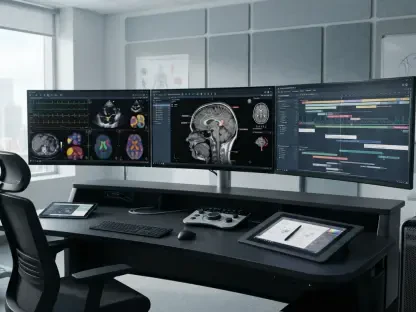

Relying solely on analytics is insufficient when insights remain trapped within departmental silos rather than being activated at the point of direct patient care. For years, health systems have funneled capital into predictive modeling, yet the promise of value-based care often feels like a distant milestone rather than a present reality. The current environment is defined by the data abundance paradox, where a surplus of disparate information creates noise rather than a roadmap for medical professionals. When actuarial data, quality metrics, and clinical records exist in isolation, different hospital departments frequently pursue identical objectives using conflicting datasets. This lack of a unified perspective often prevents care teams from identifying critical moments for intervention, resulting in missed opportunities and administrative fatigue. Rather than empowering providers, this fragmented landscape forces clinicians into a state of analysis paralysis that ultimately hinders the patient experience.
Transitioning: From Passive Data to Active Clinical Enablement
Harnessing AI for Prioritization and Integration
The transition from passive historical reporting to active clinical enablement requires a fundamental shift in how organizations process information. Modern analytics must evolve beyond simply tallying past events to providing real-time guidance that can be executed immediately. By utilizing artificial intelligence, organizations are now able to distill vast and complex data streams into a clearly prioritized list of actions, effectively bypassing the manual sorting of administrative records. This approach allows clinical expertise to be directed exactly where it is most needed, ensuring that limited human resources are not wasted on low-value data entry or redundant review processes. AI-enabled prioritization ensures that insights are not just captured for a report but are delivered to the primary care provider at the precise moment they can influence a patient’s health trajectory. This method turns cold statistical data into a foundation for meaningful human interaction.
Successful implementation of these technologies relies heavily on the concept of interoperability and the seamless flow of data across the healthcare ecosystem. It is no longer enough for an AI model to predict a readmission risk; that prediction must reach the care manager within the existing software environment they use every day. By integrating these prioritized insights directly into the digital infrastructure of a clinic, organizations can significantly reduce the time between identification and intervention. This speed is critical in value-based care, where the window for preventing a health crisis is often quite narrow. When clinical teams are equipped with real-time enablement tools, they can move from a reactive posture to a proactive strategy that anticipates patient needs. This shift allows healthcare leaders to demonstrate the actual utility of their technological investments, moving the industry closer to the goal of high-quality care at a lower cost.
Leveraging Pattern Recognition for Holistic Care
Comprehensive population health management in the current era demands a nuanced understanding of patient needs that extends far beyond a simple list of chronic diagnoses. Organizations are increasingly turning to advanced pattern recognition to assess utilization history, complex comorbidities, and the social determinants of health that drive clinical outcomes. By examining these factors across a broad patient base, systems can identify subtle indicators of risk that traditional reporting methods might overlook entirely. For instance, understanding the correlation between transportation barriers and medication non-adherence allows for a more targeted intervention that addresses the root cause of a patient’s health decline. This holistic view enables providers to move past generic care plans and toward a model that respects the unique circumstances of each individual. The ability to recognize these patterns at scale transforms a massive dataset into a strategic asset.
While artificial intelligence serves as a powerful engine for surfacing these hidden patterns, it does not replace the necessity of professional clinical judgment. Industry consensus reinforces the idea that human oversight remains the essential final step in translating a machine-generated insight into a compassionate treatment plan. AI can highlight a high-risk patient, but it takes a skilled clinician to understand the emotional and physical nuances of that person’s situation. This partnership between machine intelligence and human empathy creates a more balanced approach to healthcare delivery, where data provides the direction and the provider provides the care. By viewing AI as a supportive tool rather than a replacement, organizations can maintain a high standard of patient-centered care. This ensures that every intervention is not just medically sound but also personalized to the patient’s goals and values, which is the cornerstone of any successful value-based care initiative.
Management: Optimizing Resources Through Structured Patient Management
Strategic Cohort Targeting and Workflow Integration
Resource optimization is the linchpin of a sustainable value-based care model, requiring a disciplined approach to structured patient prioritization. In any large population, a significant percentage of patients may be classified as being at risk for complications, but only a specific subset requires intensive, immediate support. Effective organizations use data-driven strategies to organize these individuals into targeted cohorts based on the severity of their needs and the likelihood that an intervention will succeed. By focusing clinical efforts on these specific groups, care teams can avoid the inefficiency of treating every patient with the same level of intensity. This strategic alignment ensures that high-level population data is directly linked to individual clinical encounters, maximizing the impact of every touchpoint. This method allows providers to manage larger panels effectively while ensuring that those with the highest complexity receive dedicated attention.
A significant hurdle in achieving the goals of value-based care is the operational friction caused by navigating multiple, disconnected software platforms. When a clinician is forced to exit their primary electronic health record to hunt for analytics in a separate dashboard, the likelihood of an actionable intervention decreases significantly. This technical tax not only wastes time but also leads to information gaps that can compromise patient safety. To mitigate this issue, leading healthcare organizations are prioritizing the embedding of actionable intelligence directly into the tools that clinicians use during their daily routines. By integrating risk scores and recommended actions into the standard workflow, systems provide much-needed context at the point of care. This seamless flow of information allows for more focused and productive patient conversations, as the provider has all the relevant data points immediately visible on their screen.
Sustaining the Ecosystem Through Unified Operating Models
Coordinated care relies on total visibility across the patient’s entire journey to prevent duplicate outreach and ensure that all members of the care team are working from the same script. When different specialists and care managers have a unified view of the active interventions, the patient experiences a much more consistent level of service. This connectivity also establishes a vital feedback loop, where information captured during the actual delivery of care is fed back into the central system to refine future insights. For example, if an AI-flagged intervention is found to be irrelevant by a clinician, that feedback should automatically adjust the algorithm for that specific patient type. This continuous cycle of learning allows healthcare organizations to assess the impact of their programs in real-time, making adjustments based on what is actually occurring on the ground rather than relying on outdated or theoretical models of clinical success.
The successful transition to a sustainable value-based care model depended on an operating structure that aligned population health, finance, and clinical delivery teams around a shared intelligence. Leadership teams recognized that data was never the final product, but rather a catalyst for coordinated action across the enterprise. They prioritized unified visibility and resource optimization to ensure that specialists were engaged at the most appropriate times to influence outcomes. To achieve this, organizations established rigorous protocols for embedding insights into every clinical encounter and standardized the feedback mechanisms that refined their predictive accuracy over time. These entities focused on reducing administrative burdens while simultaneously increasing the frequency of high-value patient interactions. By treating technology as an engine for human-centric care, they transformed cold insights into warm interventions that finally delivered the promised value of modern medicine.