
The integration of portable cuff-based monitors with wrist-worn fitness trackers allows for the continuous physiological mapping required to identify pathological blood pressure patterns. This technological synthesis is currently reshaping the landscape of cardiovascular medicine, particularly as highlighted during the American Heart Association’s Scientific Sessions in 2026. For a long time, hypertension has been managed through isolated readings that only capture a fraction of a patient’s health profile. These periodic checks often fail to detect the sudden, dangerous spikes that lead to hypertensive crises, which are medical emergencies characterized by readings exceeding 180/120 mm Hg. By transitioning from these snapshots to a continuous stream of data, researchers from the University of Maryland Capital Region Medical Center have pioneered a system that identifies warning signs long before they reach a critical stage. This proactive paradigm shift is designed to provide healthcare professionals with a seventy-two-hour window to intervene, effectively moving the needle from emergency response to preemptive care. The methodology utilizes the power of artificial intelligence to process complex signals that would otherwise go unnoticed by both patients and clinicians in the course of their daily lives.
Data Collection: Blending Cuffs and Continuous Sensors
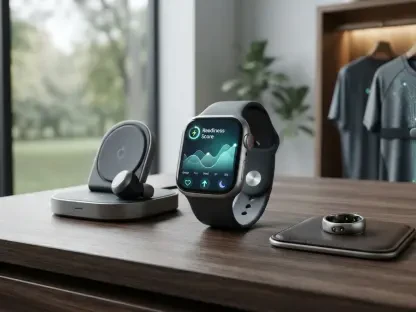
This breakthrough was validated through a comprehensive study involving 4,190 adults diagnosed with Stage 2 hypertension, where blood pressure levels are consistently at or above 140/90 mm Hg. The research, which tracked participants throughout the current year, utilized a multimodal data collection strategy to ensure high fidelity and clinical relevance. Participants were equipped with both portable cuff-based monitors and wrist-worn fitness trackers, allowing the research team to gather two different types of physiological data simultaneously. While the upper-arm cuffs provided the precise, clinical-grade measurements necessary for monitoring actual pressure levels during the day and night, the wrist-worn devices captured supplementary cardiovascular signals such as heart rate variability and activity levels. This dual-device strategy addressed a common limitation in digital health where comfort often comes at the expense of accuracy. By combining the rigid precision of the cuff with the continuous, unobtrusive monitoring of the fitness tracker, the study established a robust dataset that reflects the true, dynamic state of a patient’s vascular system as they navigate their normal environment.
The heart of this innovation lies in the advanced artificial intelligence tool that processed forty-seven distinct physiological characteristics from the gathered data. This algorithm was trained to recognize subtle longitudinal changes and specific circadian rhythms that often precede a cardiovascular event. Unlike traditional monitoring, which might only look at an average blood pressure reading, the AI analyzed the interaction between heart rate fluctuations, sleep patterns, and the rate of pressure change over several days. This allowed the system to distinguish between harmless, temporary increases in blood pressure—such as those caused by minor stress or physical exertion—and the pathological patterns that signal a systemic breakdown. The capacity of machine learning to handle such massive datasets is what makes this predictive model possible, as it can identify correlations that are invisible to the human eye. By refining these algorithms throughout 2026 and into 2027, developers are creating a safety net that operates in the background, providing high-risk patients with a level of digital oversight that was previously only available in a hospital’s intensive care unit.
Predictive Biomarkers: The Science of Nightly Rhythms
The research identified several critical physiological indicators that serve as high-probability predictors for an upcoming crisis, with the most significant findings revolving around the body’s behavior during rest. One of the most prominent red flags is the “non-dipping” phenomenon, which refers to a failure of blood pressure to decrease significantly during sleep. Under healthy conditions, an individual’s blood pressure should drop as the body enters a restorative state; however, the study found that participants whose pressure remained elevated throughout the night were nearly five times more likely to experience a hypertensive emergency within the following three days. This lack of nocturnal dipping suggests a persistent state of vascular strain that the AI can now quantify with high precision. By focusing on these nightly rhythms, the predictive model provides a much clearer picture of cardiovascular risk than any single daytime measurement could offer, allowing clinicians to see how well a patient’s body is actually recovering from the daily stresses placed upon their circulatory system.
In addition to nighttime patterns, the AI identified an exaggerated “morning surge” as another potent warning sign of an impending crisis. If a patient’s blood pressure rose by more than 35 mm Hg immediately upon waking, their risk of a life-threatening event increased fourfold. The AI model demonstrated remarkable accuracy in categorizing these risks, maintaining a 97.4% specificity rate for those who remained stable. This high level of reliability ensures that the system does not cause unnecessary alarm while successfully flagging approximately one-third of the individuals who would eventually suffer a crisis if left untreated. By pinpointing these specific windows of vulnerability—the transition between sleep and wakefulness—the technology provides a roadmap for when patients are at their most fragile. This granular level of insight represents a move away from generalized medical advice toward a personalized understanding of each patient’s unique physiological signature, ensuring that medical resources are directed exactly where and when they are most needed.
Clinical Outcomes: Reducing Emergencies Through Timely Alerts
The clinical utility of this AI-driven model is perhaps best illustrated by the quantifiable benefits it provides to patient outcomes and the broader healthcare infrastructure. When the system issued a “positive alert” indicating a high risk of crisis within seventy-two hours, physicians were immediately prompted to contact the patient to review symptoms and medication adherence. This direct line of communication allowed for rapid adjustments to treatment plans, such as modifying dosages or introducing supplementary medications before a crisis could manifest. The impact was profound: in cases where clinical intervention occurred within twenty-four hours of an AI alert, the incidence of hypertensive crises plummeted by 61%. This demonstrates that the three-day warning window is more than enough time for outpatient management to effectively stabilize a patient’s condition. By preventing the escalation of high blood pressure, the system successfully avoided the severe organ damage typically associated with hypertensive emergencies, such as acute kidney injury or intracranial hemorrhage.
Beyond the immediate health benefits for individual patients, this predictive technology offers a viable solution for reducing the immense strain on emergency departments and hospital resources. In the study group monitored by the AI tool, emergency department visits were reduced by 45%, as many potential crises were managed safely in an outpatient setting. This shift not only saves lives but also optimizes the efficiency of the medical system by preventing the high costs and logistical challenges of emergency admissions. The study suggests that as this technology becomes more widely adopted from 2026 onward, it will lead to a significant reduction in the total number of hospitalizations related to cardiovascular instability. By empowering physicians with actionable data three days in advance, the healthcare industry can move from a model of reactive crisis management to one of strategic prevention, ensuring that patients receive the right care at the right time without ever having to step foot in an emergency room.
Future Implementation: Scaling Proactive Cardiovascular Medicine
The ongoing transition toward digital-first healthcare signifies a maturity in technology where wearables and AI are no longer just fitness tools but essential medical instruments. For decades, the medical community struggled with the “silent” nature of hypertension, but the current integration of machine learning provides the voice that was previously missing. This evolution emphasizes the importance of understanding variability rather than just average values. Experts at the University of Miami and other leading institutions have noted that these digital signatures allow for a more nuanced approach to treatment, focusing on the specific times of day or physiological states where a patient is most at risk. This level of personalization is expected to become the standard of care as healthcare providers move away from traditional “one-size-fits-all” blood pressure management. The goal is to create a seamless ecosystem where the data collected in a patient’s home is as clinically relevant as the data collected in a specialist’s office, bridging the gap between daily life and medical supervision.
The successful validation of the AI predictive model during the recent scientific trials provided a clear roadmap for the future of hypertension management across global populations. Researchers acknowledged that the next steps involved expanding these studies to include more diverse demographics and varying healthcare environments to ensure the algorithms remained unbiased and effective for everyone. The implementation of these tools proved that a “human-in-the-loop” approach, where AI handled the complex data analysis while physicians provided the final clinical judgment, maximized the strengths of both technology and traditional expertise. As these systems were integrated into standard protocols, they offered a sustainable way to manage the growing burden of chronic cardiovascular disease. The transition to this proactive model successfully shifted the focus from treating the damage caused by high blood pressure to preventing the damage from ever occurring. Ultimately, the adoption of these predictive insights provided a new level of security for patients, transforming a previously unpredictable health risk into a manageable and preventable condition.