
Inconsistent record-keeping across global hospital systems results in poor data quality that directly degrades the performance and reliability of diagnostic algorithms. This fundamental reality creates a stark divide between the pristine conditions of a research laboratory and the chaotic, high-pressure environment of a modern hospital. While academic papers frequently tout superhuman accuracy in detecting various pathologies, the actual implementation of these tools in clinical settings often hits a wall of operational complexity. Medical practitioners find themselves in a unique position where they are surrounded by technological potential that remains just out of reach for daily use. The transition from a promising proof-of-concept to a standard-of-care tool requires more than just better math; it demands a radical rethink of how data is collected, shared, and interpreted across different healthcare jurisdictions and technological platforms today.
Measuring Maturity: Moving Beyond Pilot Testing
To systematically evaluate the readiness of these healthcare tools, researchers utilize the Technology Readiness Level framework, a classification system originally pioneered by NASA. This scale ranges from basic scientific observation at level one to a fully proven operational system at level nine. Current analysis of over one hundred high-quality studies indicates that the majority of medical artificial intelligence projects are currently clustered between levels three and five. This specific range represents the transition from analytical proofs of concept to early laboratory validation and pilot testing in controlled settings. While these projects demonstrate significant technical merit, they are conspicuously absent from the higher stages of development, which involve actual deployment in large-scale clinical environments. This discrepancy highlights a maturity gap where the technology is sophisticated enough to impress in a lab but lacks the necessary robustness for the unpredictability of patient care.
This maturity gap is not merely a technical issue but an organizational hurdle that prevents the industry from achieving widespread operational success. Even as algorithmic capabilities expand between 2026 and 2028, the lack of infrastructure to support real-time data integration remains a primary bottleneck. Most healthcare institutions are currently operating with legacy systems that cannot handle the high-velocity data streams required by modern artificial intelligence. Consequently, even the most innovative prototypes struggle to move beyond the pilot phase into level seven or eight of the NASA scale. Overcoming this barrier requires a transition from isolated laboratory tests to comprehensive clinical trials that mirror the complexities of real-world patient interactions. The industry must focus on standardizing integration protocols to ensure that a smart tool developed in one hospital can function just as effectively in another, regardless of the underlying digital framework or specific data profile.
Categorizing the AI Tools Reshaping Medicine
The current taxonomy of healthcare AI distinguishes between machine learning and the more complex deep learning models, each serving distinct purposes in patient care. Machine learning relies on algorithms that extract specific features from datasets and refine their diagnostic accuracy through iterative exposure to new information. Established methods such as Support Vector Machines and Naïve Bayes classifiers remain highly relevant today, particularly for tasks involving patient monitoring and early risk assessment. For instance, these systems are increasingly applied to analyze facial expressions and physiological indicators to identify emotional distress or the onset of chronic pain. By focusing on recognizable patterns within structured data, machine learning provides a practical entry point for hospitals looking to automate routine administrative and diagnostic tasks. These tools act as the first line of defense, helping clinicians sort through massive amounts of patient information to prioritize those who need immediate medical attention.
Deep learning represents the more sophisticated end of the spectrum, utilizing artificial neural networks with multiple hidden layers to process unstructured data at scale. This technology has fundamentally revolutionized medical imaging by allowing machines to analyze visual information with extraordinary depth. In fields like radiology and pathology, deep learning models are trained on millions of images to detect malignant tumors or subtle fractures that might be missed by the human eye. The performance of these models often rivals the accuracy of seasoned specialists in dermatology and ophthalmology, where the detection of tiny irregularities is critical for patient outcomes. However, the complexity of these networks means they require massive computing power and highly curated datasets to function correctly. As these models become more integrated into diagnostic workflows between 2026 and 2030, the emphasis is shifting toward ensuring they can generalize their findings across different patient populations, rather than just excelling on specific data.
The Synergy: Connecting Emerging Technologies
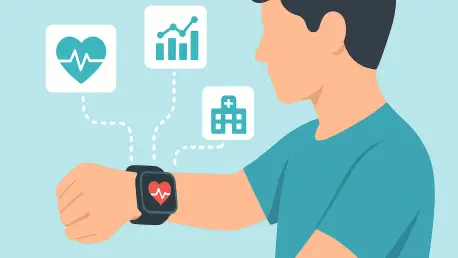
The true potential of artificial intelligence in the medical sector is realized through its convergence with other emerging technologies like the Internet of Things. By connecting wearable sensors and specialized medical devices, healthcare providers can now maintain a continuous stream of patient health metrics in real time. This constant data flow enables sophisticated telehealth applications and remote diagnostics that were previously impossible without in-person consultations. The integration of high-speed 5G networks further enhances this capability, providing the low-latency communication necessary for advanced procedures like remote robotic surgery. This connectivity allows specialists to provide care to patients in underserved or rural areas, effectively bridging the geographical gap in medical access. As sensors become more discreet and accurate, the ability of AI to interpret this data allows for early intervention strategies that can prevent health complications before they escalate into emergencies.
Beyond connectivity, the use of blockchain and digital twins is addressing the critical needs for data security and personalized treatment strategies. Blockchain technology offers a decentralized and immutable ledger, ensuring that electronic medical records are protected by cryptographic hash chains. This framework allows for the secure sharing of sensitive patient information across different institutions without the risk of unauthorized tampering or data breaches. Simultaneously, the development of digital twins allows doctors to create high-fidelity virtual replicas of individual patients. These computational models can simulate the effects of specific medications or surgical procedures, allowing medical teams to predict outcomes before any physical intervention occurs. For example, neurosymbolic digital twins are currently being utilized to model cardiovascular health, providing clinicians with a risk-free environment to test complex treatment plans. This combination of secure data management and predictive modeling represents a significant step.
Navigating the Obstacles: Technical and Ethical Barriers
Despite the clear advantages of these technologies, navigating the regulatory and ethical landscape remains a significant challenge for researchers and clinicians. High-quality data is essential for training robust models, yet strict privacy regulations like the General Data Protection Regulation are vital for protecting patient rights. These legal frameworks, while necessary, can sometimes complicate the data-sharing agreements needed to build diverse and representative training sets. When data lacks diversity in terms of ethnicity, age, or socioeconomic background, the resulting algorithms can develop inherent biases that lead to inaccurate medical recommendations. This issue of algorithmic bias is a top priority for the industry, as it can inadvertently exacerbate existing healthcare disparities. Researchers are now focusing on creating more inclusive datasets to ensure that AI tools are equally effective for all patient groups. Furthermore, the risk of overfitting requires constant vigilance and rigorous external validation.
The black-box nature of deep learning is perhaps the most substantial barrier to full-scale clinical adoption and professional trust. Many advanced models reach diagnostic conclusions through logic so dense that it remains opaque even to the software engineers who designed them. For a physician, being able to explain the specific reasons behind a treatment recommendation is a fundamental part of the clinical process and legal responsibility. Without transparency, it is difficult for medical staff to fully rely on an automated system, especially in high-stakes situations where a mistake could lead to serious patient harm. This transparency gap creates a crisis of accountability, raising difficult questions about who is liable if an AI-driven diagnosis is incorrect. To address this, the industry is moving toward role transformation, where AI is viewed as an augmentation of human expertise. By clearly defining the boundaries of automated decision-making and human oversight, the medical community builds a more collaborative relationship.
A Strategic Roadmap: Practical Integration for the Future
A strategic roadmap for the coming decade involves the development of Explainable AI to provide clear rationales for every automated clinical decision. This approach is being complemented by Federated Learning, a decentralized training method that allows models to learn from sensitive medical data without ever moving that information from its secure local server. This ensures privacy while still allowing algorithms to benefit from a global pool of diverse patient information. Additionally, the rise of large language models and generative AI is providing new ways to extract clinical knowledge from unstructured medical notes and generate synthetic data for research purposes. These advancements are helping to overcome the data shortages that have historically slowed the progress of specialized medical tools. The focus is shifting toward creating systems that fit naturally into the daily workflows of nurses and doctors, reducing their administrative burden rather than adding another layer of complexity.
The medical community successfully shifted its focus from purely algorithmic speed to clinical validation and the resolution of the black-box dilemma. Professionals prioritized the design of systems that fit seamlessly into existing hospital workflows, ensuring that automation reduced administrative burdens rather than increasing them. Ethical standards were standardized across jurisdictions, allowing for a more transparent framework of liability and responsibility. These actionable steps bridged the gap between theoretical research and bedside application, fostering an environment where smart technology served as a reliable partner to human expertise. By addressing the root causes of data inconsistency and algorithmic bias, the industry established a sustainable foundation for the future of digital health. The journey from the laboratory to the operational clinic required a disciplined commitment to evidence-based integration and patient-centered design that prioritized safety.