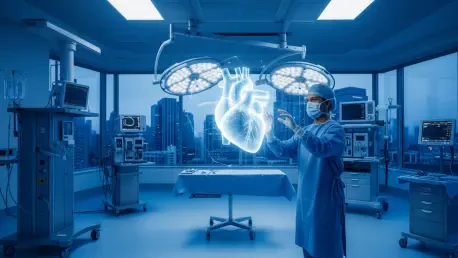

Modern medical infrastructure is currently undergoing a fundamental transition where traditional, static databases are being replaced by living health systems that integrate artificial intelligence and real-time biometric data into every clinical decision. This transformation moves the global healthcare industry away from reactive clinical support and toward a dynamic, predictive environment where data does not just document the past but continuously informs and improves the delivery of patient care in the present. Instead of simply maintaining a ledger of symptoms and treatments, contemporary Healthcare Information Management Systems now function as intelligent layers capable of simulating thousands of potential patient outcomes to suggest proactive interventions. This shift represents a departure from the historical reliance on intermittent check-ups, favoring instead a model of constant monitoring and automated insight generation. By embedding advanced algorithms into the core of medical workflows, providers are creating a ecosystem that is inherently more responsive and capable of handling complexity.
Enhancing Surgical Precision through Digital Twins
One of the most transformative developments within this new paradigm is the widespread implementation of digital twins, which are sophisticated virtual replicas of individual patients updated in real time with biological and physiological data. These models allow surgical teams to navigate a risk-free virtual space, testing complex procedures and various surgical approaches before ever making an incision on a living person. By integrating genomic profiles, historical health data, and live sensor readings, these digital replicas offer a level of granularity that was previously impossible to achieve in traditional pre-operative planning sessions. This transition from a trial-and-error methodology to high-fidelity precision simulation ensures that every treatment decision is grounded in a personalized evidence base. Surgeons no longer have to rely solely on generalized medical literature but can instead observe how a specific patient’s unique anatomy might respond to a particular intervention, which greatly improves safety and recovery times.
Implementing Anticipatory Models for Early Detection
Healthcare is evolving into an anticipatory model where the primary goal is to identify and mitigate physiological threats years before physical symptoms ever manifest in the patient. By leveraging artificial intelligence to analyze subtle genetic patterns and lifestyle data harvested from wearable devices, these systems can trigger medical interventions based on predictive algorithms rather than patient discomfort or obvious signs of illness. This early-warning mechanism allows medical professionals to act much earlier in the disease cycle, fundamentally altering the traditional timeline of medical treatment from reactive to preventive. Such a system requires a massive shift in how data is perceived, moving it from a passive record to an active diagnostic tool that searches for anomalies in the background of daily life. As these algorithms become more refined, the medical community is finding that many chronic conditions can be managed or even reversed if the initial intervention occurs in the sub-clinical phase.
Decentralizing Care through Wall-less Hospital Networks
The concept of the wall-less hospital is becoming a concrete reality through the deployment of the Internet of Medical Things and high-speed edge computing architectures. In this decentralized framework, medical care is no longer strictly confined to the physical boundaries of a specific facility but instead follows the patient through their home, workplace, and community. Wearable sensors and sophisticated home diagnostic tools allow for the continuous streaming of critical health metrics to medical professionals, turning healthcare into a background process that is always active yet minimally intrusive. Data is often processed locally at the edge of the network to ensure immediate response times for life-critical events, such as cardiac anomalies or sudden drops in oxygen saturation. This democratization of access ensures that patients in remote or underserved areas receive the same level of intensive monitoring as those in major metropolitan centers, effectively erasing geographical barriers.
Redefining Roles within the Reimagined Workforce
The integration of robotics and generative AI provides a dual layer of support that is currently reshaping the internal operations of modern hospitals and clinics. While autonomous robotic systems handle the physical logistics of nursing assistance, precision surgery, and medication delivery, generative AI manages the heavy cognitive workloads associated with clinical documentation. These advanced AI systems are capable of synthesizing vast amounts of patient data into coherent clinical narratives and personalized treatment plans, which allows human practitioners to focus more on direct patient interaction. Beyond internal documentation, this technology serves as a vital communication bridge, translating dense and often confusing medical jargon into accessible language that empowers patients to take a more active role in their own wellness journeys. This shift ensures that the human element of medicine remains central even as the underlying processes become increasingly automated.
Establishing Human Oversight in Autonomous Governance
As these systems become more autonomous, the industry has recognized the critical need for robust ethical governance that prioritizes human judgment in life-critical scenarios. The “human-in-the-loop” approach ensures that while AI can provide incredibly accurate suggestions and data analysis, the final authority for medical decisions remains with trained professionals. This governance model is designed to prevent algorithmic bias and ensure that the nuances of human empathy and ethics are never sacrificed for computational efficiency. Maintaining this balance is essential for preserving patient trust, as it guarantees that clinical decisions are grounded in professional accountability rather than opaque machine logic. Furthermore, ethical frameworks are being developed to manage the privacy of “life data,” ensuring that the vast streams of information generated by patient monitoring are used exclusively for health optimization and are protected against unauthorized commercial exploitation.
Securing the Medical Ecosystem against Cyber Threats
The transition toward these intelligent, always-on health systems necessitated a fundamental shift in how cybersecurity was approached by the medical industry and regulatory bodies. Organizations realized that the modern hospital network functioned as a permanent battlefield where AI-driven defenders had to block increasingly sophisticated cyberattacks targeting everything from databases to life-saving implants. Security protocols were completely overhauled to protect the integrity of patient data and the operational continuity of connected medical devices. Medical leaders successfully moved beyond the initial implementation hurdles, establishing a framework where technology served as a transparent partner in human health rather than a liability. Looking back, the industry prioritized the creation of resilient, self-healing networks that could detect intrusions in milliseconds. These actions ensured that the future of healthcare remained focused on wellness, providing a secure foundation for the next generation of medical innovation.