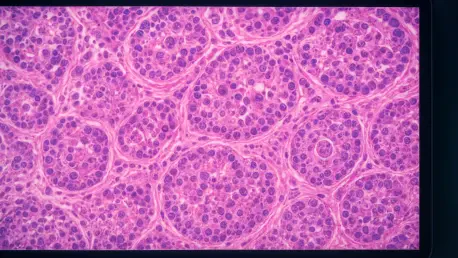

Dirichlet-guided allocation allows researchers to simulate the messy reality of multi-institutional collaboration where data is distributed non-uniformly. This mathematical framework has become essential in 2026 as the medical community grapples with the inherent tension between the need for massive datasets and the absolute necessity of patient privacy. In the specialized field of oncology, particularly concerning the identification of invasive ductal carcinoma, the traditional model of centralizing histopathology images is increasingly viewed as an outdated risk. Hospitals and diagnostic centers are now governed by stringent digital sovereignty laws that treat patient tissue samples and their digital counterparts as high-security assets. Consequently, the development of artificial intelligence has transitioned from a race to collect data into a race to refine distributed learning techniques. These techniques allow algorithms to travel to the data, learning from local servers without requiring a single byte of raw medical imagery to leave the hospital’s secure internal network. By overcoming the logistical and ethical hurdles of data sharing, these modern frameworks enable a global intelligence network that respects regional boundaries and individual privacy rights simultaneously.
Core Architectures: Distributed Systems in Oncology
The current landscape of privacy-preserving machine learning is anchored by Federated Averaging, which functions as a coordinated orchestration of local intelligence. In this system, a central server maintains a global version of the diagnostic model while individual hospitals perform the heavy lifting of training on their private histopathology datasets. Instead of uploading sensitive images, these institutions only share mathematical gradients—abstract summaries of what the local AI has learned about identifying cancerous cells. The central server then performs a weighted average of these updates and distributes the improved global model back to every participating node. This cycle ensures that a small clinic in a rural area can benefit from the sophisticated patterns recognized at a major urban research hospital. However, the reliance on a central server introduces a critical bottleneck and a potential single point of failure. If the central coordinator experiences a security breach or technical failure, the entire training pipeline grinds to a halt, prompting researchers to investigate even more resilient and decentralized alternatives for long-term clinical deployment.
To address the vulnerabilities of centralized coordination, Gossip Learning has emerged as a robust, peer-to-peer alternative that mimics the organic spread of information within a social network. In a gossip-based framework, there is no central authority; instead, hospitals communicate directly with one another, swapping model parameters in a randomized, periodic fashion. This decentralized approach ensures that the learning process is highly resistant to network disruptions, as the collective intelligence of the system is distributed across all participating nodes rather than held in a single repository. Building upon this, the Hybrid Gossip-FedAvg model integrates the stability of periodic global synchronization with the rapid, localized knowledge sharing of peer-to-peer systems. This hybrid configuration allows for a more nuanced distribution of information, where neighboring institutions can refine their models through frequent “gossip” while still benefiting from occasional alignment with a broader global standard. This dual-layered strategy effectively mitigates the risk of model drift, where individual nodes might otherwise become too specialized to their local data, losing the ability to generalize across different patient populations and imaging hardware.
Rigorous Methodology: Real-World Clinical Simulations
Ensuring that an AI model performs reliably in a clinical setting requires more than just high-quality images; it demands a rigorous approach to data management that prevents artificial inflation of accuracy. One of the most significant advancements in current research is the strict adherence to patient-disjoint data splitting. In many early iterations of medical AI, patches of tissue from the same patient were often found in both the training and testing sets, leading to models that essentially “recognized” the specific staining or cellular texture of an individual rather than the universal markers of malignancy. By ensuring that no patient’s data is ever split across these boundaries, researchers guarantee that the AI is learning to identify the morphological features of invasive ductal carcinoma that persist across different biological backgrounds. This focus on generalization is what allows a model trained on one continent to maintain its diagnostic efficacy when deployed in a completely different demographic, providing a level of reliability that is mandatory for modern pathological analysis and clinical decision support.
The simulation of statistical heterogeneity further bridges the gap between laboratory results and real-world hospital environments. Medical facilities are rarely uniform; they utilize different slide scanners, employ varied tissue preparation protocols, and serve populations with diverse genetic predispositions. To account for these variations, researchers use the Dirichlet-guided allocation to create non-IID (Independent and Identically Distributed) datasets across simulated network nodes. This means some hospitals might have an abundance of healthy tissue samples while others have a high concentration of aggressive cancer subtypes. By testing AI architectures under these unbalanced conditions, scientists can evaluate how well a distributed system handles the “noise” and bias inherent in multi-institutional collaboration. This methodology has proven that hybrid systems are particularly adept at smoothing out these inconsistencies, as the localized sharing of models allows nodes with sparse data to learn from the more comprehensive datasets available at larger institutions without compromising the privacy of the underlying patient records.
Performance Metrics: Evaluating Accuracy and Trust
The evaluation of distributed learning models in 2026 goes far beyond simple accuracy percentages, focusing instead on a holistic view of diagnostic performance and statistical reliability. The Area Under the Receiver Operating Characteristic curve remains a primary benchmark, where Hybrid Gossip-FedAvg models have demonstrated the ability to match or even exceed the performance of traditional centralized systems. This is a landmark achievement, as it proves that privacy-preserving methods do not require a sacrifice in clinical efficacy. Furthermore, the use of Precision-Recall curves has become standard for addressing the class imbalance typical of pathology, where healthy tissue patches often vastly outnumber cancerous ones. High scores in these metrics indicate that the distributed models are exceptionally sensitive to the subtle indicators of early-stage malignancy, reducing the likelihood of false negatives that could delay life-saving treatment. This high level of discrimination is vital for building the next generation of screening tools that can assist pathologists in managing increasing workloads without increasing the risk of error.
Beyond the ability to detect cancer, the calibration of these models is essential for their integration into the medical workflow. Calibration refers to the relationship between a model’s predicted probability and the actual likelihood of the disease being present; a well-calibrated model that reports a 90 percent confidence level should be correct exactly 90 percent of the time. Research has shown that Federated Averaging often yields the best calibration scores, providing physicians with a trustworthy measure of uncertainty. This reliability is measured using the Brier score, which penalizes both incorrect predictions and overconfident errors. In a clinical environment, a model that understands its own limitations is often more valuable than one that is simply “correct” on average, as it allows doctors to identify cases that require additional human review or further diagnostic testing. By prioritizing these nuanced reliability metrics, the medical AI field is moving toward a future where automated systems are seen as sophisticated advisors rather than opaque “black box” tools, fostering a deeper level of trust between technology and the healthcare professionals who utilize it.
Clinical Impact: Practical Implementation and Scalability
The practical application of decentralized AI frameworks is fundamentally changing how the global medical community approaches rare and aggressive forms of cancer. In the past, a hospital encountering a rare pathological subtype might not have enough local data to train a specialized model, and privacy restrictions prevented them from easily combining their data with other international sites. Distributed learning resolves this by allowing institutions to contribute to a shared “knowledge pool” without the data ever changing hands. This has led to the creation of highly specialized diagnostic tools for rare conditions that were previously under-researched due to data fragmentation. Additionally, the decentralized nature of gossip-based systems provides a level of technological equity, enabling smaller medical centers in regions with less stable internet infrastructure to participate in global research. These nodes can synchronize with the network whenever they are online, contributing their unique data and receiving the latest model updates, which ensures that medical AI development is inclusive of diverse global populations.
The transition toward these privacy-preserving architectures was characterized by a fundamental shift in the philosophy of medical data management and institutional cooperation. Instead of viewing patient information as a siloed asset to be hoarded, the industry recognized the superior value of collaborative intelligence that respected localized control. The successful implementation of these distributed systems in breast cancer detection provided a scalable blueprint that was later adapted for other areas of digital pathology and radiology. By 2026, the integration of these techniques into routine clinical workflows became the expected standard for any AI-driven diagnostic platform. The historical reliance on centralized repositories was replaced by a more resilient, ethical, and efficient ecosystem where the “gossip” of machines facilitated a collective defense against disease. Moving forward, the focus was placed on further optimizing the communication efficiency of these networks and developing even more advanced cryptographic safeguards to protect the model parameters themselves from sophisticated adversarial attacks, ensuring that the progress in oncology continued to be both rapid and secure.