
While the device excels at heart rate monitoring, the current connected GPS functionality shows a notable six-percent discrepancy in distance tracking compared to dedicated hardware. This specific challenge highlights the central tension within the modern fitness technology landscape: the balance between minimalist hardware design and the rigorous demands of high-performance data tracking. As the industry moves further away from the notification-heavy smartwatches that dominated the early 2020s, users are increasingly gravitating toward “invisible” technology that gathers high-fidelity physiological data without interrupting the flow of daily life. The Speediance Strap Pro emerges as a primary contender in this space, offering a sophisticated alternative for individuals who prioritize recovery, sleep, and long-term health trends over digital convenience. By removing the traditional interface entirely, the device positions itself as a specialized tool for those seeking an unadulterated view of their biological state. This philosophy allows for a focus on the raw science of human performance, capturing longitudinal data that reflects a user’s true internal condition without the distraction of a glowing screen or constant haptic feedback alerts.
Premium Materials and Hardware Specifications
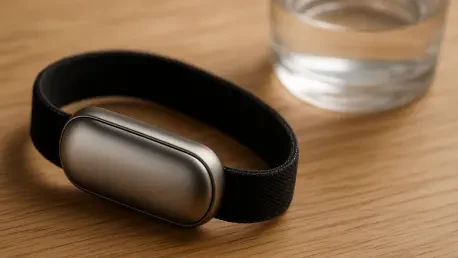
Speediance has fundamentally redefined the expectations for build quality in the screenless wearable category by introducing two distinct tiers of hardware. While both versions utilize a similar internal architecture for health and recovery monitoring, the flagship Strap Pro stands apart due to its construction from a high-grade titanium alloy. This material choice is not merely an aesthetic flourish; it serves a functional purpose by significantly reducing the total weight of the sensor pod to just 21 grams, compared to the 28 grams of the stainless steel base model. This weight difference is remarkably noticeable during high-intensity training or throughout the night, reinforcing the device’s goal of unobtrusive monitoring. The titanium housing provides a premium tactile experience and enhanced durability, ensuring the internal electronics are shielded from the rigors of an active lifestyle while maintaining a profile so slim it rarely snags on clothing.
In addition to the refined exterior, the Pro model integrates specialized internal sensors that are absent in the standard version. Most notably, the inclusion of an Electrodermal Activity (EDA) sensor allows the device to measure subtle changes in skin conductance, which is a reliable indicator of sympathetic nervous system activation. This hardware capability enables a more nuanced understanding of stress responses that go beyond simple heart rate metrics. To accommodate different user preferences and ensure maximum data accuracy, Speediance packages the Pro with both a high-quality wristband and a specialized upper-arm elastic strap. Both accessories are designed to hold the sensor securely against the skin, supported by a 5 ATM water resistance rating that permits continuous wear during swimming and showering. With a battery life reaching up to 14 days, the hardware is engineered to remain on the body for extended periods, minimizing the gaps in data that often occur with more power-hungry alternatives.
Ergonomics and the Philosophy of Minimalism
The aesthetic of the Strap Pro is defined by its absolute commitment to minimalism, featuring a design that is entirely devoid of screens, physical buttons, or external LED indicators. This approach is intended to mitigate the “digital noise” that often accompanies modern fitness trackers, allowing the user to engage with their data on their own terms through a connected mobile application rather than being reactive to constant pings or visual alerts. By mimicking the look and feel of a simple fabric accessory, the device avoids the industrial or overly tech-oriented appearance of traditional smartwatches. This design choice is particularly effective for users who prefer wearing traditional mechanical watches on their other wrist or for those who find the glowing screens of typical wearables to be a distraction during social interactions or while trying to wind down for sleep in the evening.
The ergonomic success of the device is largely dependent on its placement, with the upper-arm configuration emerging as the preferred choice for data integrity. When worn on the bicep or tricep, the sensor maintains a more consistent and flat contact area with the skin than is typically possible on the bony structures of the wrist. This stability is crucial for reducing the “motion artifacts” that frequently corrupt optical sensor data during activities involving significant arm movement, such as weightlifting or sprinting. The elastic bands provided by the manufacturer are constructed from a breathable, sweat-wicking material that remains comfortable even during prolonged endurance sessions. Because the strap can be adjusted for a precise fit without causing localized pressure points, users are able to maintain a secure sensor connection for 24-hour periods without the skin irritation or discomfort that often forces people to remove their wearables.
Revolutionary Core Temperature Monitoring
The most significant technological advancement found within the Speediance Strap Pro is its move away from conventional skin temperature tracking in favor of estimated core body temperature. While the vast majority of consumer-grade wearables measure temperature at the surface of the skin, these readings are notoriously volatile and easily influenced by external factors like ambient room temperature, the thickness of a user’s bedding, or even minor changes in airflow. Speediance addresses this limitation by utilizing a sophisticated heat-flow sensor combined with complex physiological modeling. This allows the device to look past the superficial fluctuations and estimate the actual internal thermal state of the body. This provides a much more stable and scientifically relevant metric for understanding how the body is responding to exercise, illness, and the natural progression of the circadian rhythm throughout a daily cycle.
This focus on internal thermal dynamics translates into a suite of actionable insights that help users optimize their daily routines. The “Peak Window” feature, for instance, identifies the specific hours of the day when a user’s internal body temperature and biological clock are perfectly aligned for high-intensity physical performance. By training during these windows, athletes can leverage their natural physiological peaks to achieve better results and faster recovery times. Additionally, the device monitors “Heat Load” during intense workouts, providing a clear indication of when internal heat buildup is reaching a point where performance may begin to degrade. This is especially valuable for endurance athletes training in warm climates, as it offers a preventative measure against heat exhaustion. By plotting sleep cycles against the body’s thermal nadir, the software also provides precise guidance on the ideal timing for sleep onset to maximize restorative rest.
Comprehensive Health and Stress Metrics
Beyond its innovative thermal sensors, the Strap Pro provides an exhaustive array of standard health indicators that have become essential for modern wellness tracking. The device continuously monitors Heart Rate (HR), Heart Rate Variability (HRV), Blood Oxygen Saturation (SpO2), and Respiratory Rate, synthesizing these complex data points into a daily “Recovery Score.” This score serves as a simplified, high-level guide for the user, indicating whether their body has sufficiently recovered from previous stressors or if a day of lower intensity is required. Because the device captures this data around the clock, the recovery algorithm is able to account for the impact of sleep quality, lifestyle stress, and previous physical exertion, providing a more holistic view of readiness than a single snapshot could offer. This allows users to make data-driven decisions about their training volume and intensity.
The EDA sensor included in the Pro model further enhances this biological profile by adding a layer of psychological and physiological stress detection. By measuring the electrical conductance of the skin, which changes in response to sweat gland activity controlled by the nervous system, the device can pinpoint moments of sympathetic activation that might not be reflected in heart rate alone. This provides a more comprehensive “Stress Score” that helps users identify specific triggers in their daily lives. Furthermore, the Speediance ecosystem offers long-term health metrics such as “Wellness Age” and “Pace-of-Aging” charts. These features compare the user’s physiological data against established biological benchmarks, offering a motivational perspective on how consistent habits are impacting their overall longevity. While these metrics are inherently estimations, they provide a valuable “big picture” view that encourages users to look beyond daily fluctuations and focus on sustainable improvements.
Heart Rate Accuracy and Movement Stability
In practical performance evaluations, the optical heart rate sensor of the Strap Pro has demonstrated a level of precision that rivals dedicated chest-worn heart rate monitors. During a variety of testing scenarios, including steady-state running and high-intensity interval training, the device maintained a close correlation with medical-grade hardware, often staying within one or two beats per minute of the reference standard. This high degree of accuracy is largely a result of the stable fit provided by the upper-arm band, which effectively eliminates the “light leak” and sensor bounce that frequently plague wrist-worn devices during vigorous activity. For athletes who rely on heart rate zones to manage their training intensity, this reliability is a critical factor that makes the Strap Pro a viable tool for serious physiological monitoring during the most demanding workout sessions.
However, the device encounters significant challenges when it comes to tracking movement-based metrics that require external geolocation data. Because the Strap Pro lacks an internal GPS chip to maintain its slim profile and extended battery life, it relies entirely on “Connected GPS” through the user’s smartphone. In empirical tests, this system has shown a consistent tendency to underestimate total distance, sometimes recording discrepancies of up to six percent. This means a ten-kilometer run might be logged as significantly shorter, which subsequently skews pace data and other calculated metrics like VO2 max. For endurance athletes who require millimeter-precise tracking of their routes and speed, this reliance on the smartphone’s GPS module represents a clear trade-off. While the internal physiological data remains top-tier, the current software implementation of external distance tracking suggests that those primarily focused on outdoor running or cycling may still need a dedicated GPS device.
The Software Ecosystem and User Experience
The Speediance mobile application serves as the primary gateway for users to interact with their gathered data, and it features a visual design that is both modern and highly intuitive. The interface is organized to present high-level summaries of recovery, sleep, and activity on the main dashboard, allowing for quick checks throughout the day. For those who wish to conduct a more detailed analysis, the app permits deep dives into historical trends and specific physiological charts, ensuring that the wealth of data collected by the Strap Pro remains accessible without being overwhelming. This balance of simplicity and depth is essential for a screenless wearable, as the software must perform all the heavy lifting of data interpretation that would normally occur on a watch face. The visual presentation is polished, using clear color-coding and graphs to illustrate complex biological relationships.
Despite these aesthetic strengths, the current software environment exhibits some “first-generation” inconsistencies that can occasionally impact the user experience. One of the most notable issues involves the sleep-tracking algorithm, which sometimes miscalculates the exact time a user falls asleep, particularly if they are reading or relaxing in bed before rest. Currently, the application lacks a manual editing feature for sleep windows, meaning that an incorrect detection can lead to an inaccurate recovery score for the following day. Additionally, some users have noted a slight latency when syncing the device to their smartphones, requiring a brief period of waiting for the latest data to populate. While these are predominantly software-related hurdles that can be addressed through future firmware and app updates, they represent current friction points for power users who demand immediate and perfect data synchronization in their daily routine.
Power Management and Daily Maintenance
One of the most practical advantages of the Speediance Strap Pro is its exceptional power efficiency, which supports a lifestyle of continuous, uninterrupted tracking. In real-world usage scenarios that include 24/7 wear and daily exercise logging, the device comfortably exceeds a week of operation on a single charge. This longevity is a significant improvement over many popular smartwatches that require daily or every-other-day charging, which often leads to “data gaps” during the hours the device is sitting on a nightstand. By providing a battery that can last up to 14 days under optimal conditions, Speediance ensures that the user’s biological record remains as complete as possible, which is vital for the accuracy of long-term trends and recovery models. This reliability reinforces the core mission of the device to disappear into the background of the user’s life.
The charging infrastructure for the Strap Pro utilizes a magnetic contact-based cradle that is both compact and simple to operate. While some competitors in the screenless space have experimented with slide-on battery packs that allow for charging while the device is still being worn, Speediance requires the sensor to be removed for power replenishment. However, given the infrequency of charging sessions, this requirement is rarely seen as a major obstacle to data continuity. Most users find that a quick thirty-minute charge while they are performing tasks where they would normally remove a watch—such as heavy cleaning or applying topical products—is more than sufficient to keep the device powered for another week. The emphasis remains on a seamless user experience, where the physical maintenance of the hardware is a minimal part of the overall ownership experience, allowing the focus to remain squarely on the health insights.
The Benefit of a No-Subscription Model
A defining characteristic of the Speediance business model is its rejection of the mandatory subscription fees that have become pervasive in the health technology industry. In an environment where many leading wearable brands require a monthly payment simply to access the data the user has already paid to collect, Speediance adopts a traditional “hardware-first” philosophy. Once the Strap Pro is purchased, the user retains permanent access to all their core health, sleep, and recovery metrics without any hidden costs or paywalls. This approach resonates strongly with consumers who value data ownership and who are wary of the “service-as-a-product” model that can lead to significant long-term costs. It positions the Strap Pro as a transparent investment in one’s personal health infrastructure that does not penalize the user for long-term ownership.
While the company does offer an optional premium tier known as “Wellness Go,” which provides access to personalized coaching and advanced training programs, the fundamental utility of the device is not compromised if a user chooses not to subscribe. The base application remains a powerful tool for physiological monitoring, offering the same high-fidelity charts and recovery scores to all owners. This makes the Strap Pro a much more cost-effective choice over a multi-year period compared to subscription-based alternatives that essentially become non-functional if the monthly fee is cancelled. By decoupling the hardware’s primary functions from a recurring revenue stream, Speediance fosters a relationship of trust with its users, ensuring that the primary value of the device—the biological data itself—is always available to the person it belongs to.
Strategic Insights: Final Assessment and Future Directions
The Speediance Strap Pro established a significant benchmark for screenless health technology through its combination of premium materials and scientific innovation. During the evaluation period, the device demonstrated that titanium construction and a focus on core temperature estimation could provide a more meaningful user experience than traditional notification-based trackers. Speediance prioritized the integrity of physiological data, particularly heart rate accuracy on the upper arm, which proved to be a reliable foundation for its recovery and readiness models. While the software platform initially struggled with certain aspects of sleep editing and GPS synchronization, the hardware itself remained a robust and dependable piece of engineering that fulfilled its promise of a minimalist lifestyle. This focus on internal biological metrics over external digital distractions signaled a clear shift in how high-performance users approached their personal wellness data.
Moving forward, users who seek to maximize the utility of the Strap Pro should have prioritized wearing the device on the upper arm during physical activity to ensure the highest possible heart rate precision. For those specifically focused on endurance sports like marathons or long-distance cycling, the developer suggested pairing the device with a dedicated GPS-enabled smartphone to compensate for the current limitations in connected distance tracking. As firmware updates continued to refine the sleep detection algorithms and introduced manual data correction, the platform was expected to become an even more indispensable tool for recovery management. The decision to maintain a subscription-free model provided a compelling long-term value proposition that encouraged deeper engagement with the hardware. Ultimately, the Strap Pro offered a sophisticated, science-driven path for individuals who wanted to own their health data without the burden of constant digital interruption.