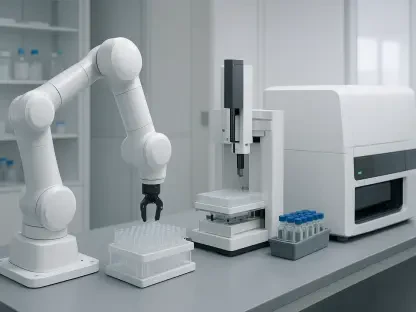
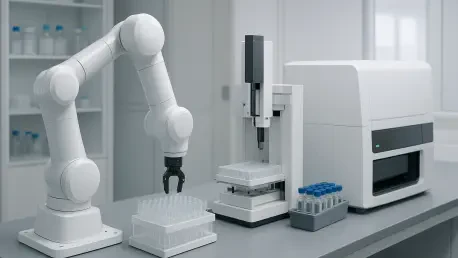
The ability to synthesize over twenty different complex natural products without human intervention marks a significant shift in the future of laboratory operations. For decades, the pharmaceutical industry has grappled with a frustrating disparity between the speed of computational drug discovery

Developing highly selective inhibitors for underexplored cyclin-dependent kinases represents a new frontier in treating malignancies that have become resistant to traditional therapy. The Vall d’Hebron Institute of Oncology (VHIO) has positioned itself at the vanguard of this transformative era,

As women age past menopause, the internal environment of the ovaries shifts toward increased inflammation and fibrosis, potentially influencing cancer risk. This biological discovery is part of a broader trend in 2026 where clinical assumptions are being rigorously re-evaluated to improve patient

Techniques like micronization and nanosizing are being deployed to exponentially increase the surface area of lipophilic compounds to improve their dissolution behavior. This technical evolution sits at the heart of a prestigious special issue announced by the Journal of Pharmaceutical

Financial incentives ranging from consulting fees to travel expenses are consistently associated with medical decisions that deviate from evidence-based standards. A landmark systematic review published in the Cochrane Database of Systematic Reviews has provided an exhaustive analysis of how

Hantai Pharma utilizes an operations center in Hangzhou to navigate the complex logistics and financial nuances of international pharmaceutical trade across multiple time zones. This strategic positioning has allowed Shaoxing Hantai Pharmaceutical Co., Ltd. to transition from a regional Chinese
1 2 3 4 5 6 7 8 9 10 11 12 13 14 15 16 17 18 19 20 21 22 23 24 25 26 27 28 29 30 31 32 33 34 35 36 37 38 39