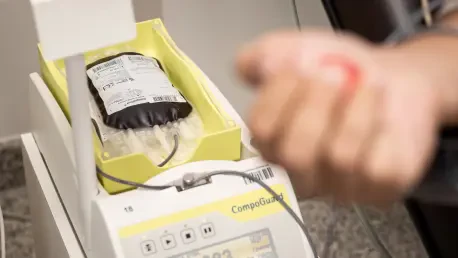

The clinical environment of a modern operating room is a high-stakes theater where maintaining a patient’s core body temperature serves as a foundational pillar of successful surgical outcomes and recovery. Even a minor deviation from normothermia can trigger a cascade of physiological distress, potentially leading to impaired blood coagulation and prolonged hospital stays. Blood warmer devices have emerged as indispensable tools, providing a controlled method for heating intravenous fluids before they enter the patient’s circulatory system. By neutralizing the cooling effect of refrigerated fluids, these systems protect the metabolic balance of patients undergoing complex procedures or recovering from traumatic injury. This safeguard is no longer viewed as a peripheral convenience but as a critical line of defense in perioperative care. As medical science deepens its understanding of thermal management, the demand for sophisticated warming solutions continues to escalate across the global healthcare landscape.
Economic Landscape and Regional Dominance
Market Growth Projections: Analyzing Global Financial Trends
The financial trajectory of the blood warming technology sector indicates a period of unprecedented expansion, with global valuations expected to climb from $1.85 billion in 2025 to $3.71 billion by 2035. This growth represents a consistent compound annual growth rate of 7.20%, signaling a reinvestment in critical care infrastructure across both developed and developing regions. This economic surge is driven by the increasing complexity of modern medical interventions which require precise temperature control to ensure patient stability. Furthermore, the rising investment in specialized surgical centers and the modernization of emergency response units have created a sustained appetite for high-performance hardware. As healthcare systems strive to improve efficiency and reduce the costs associated with post-operative complications, the integration of these devices has become a priority. The transition toward automated fluid management systems is reshaping the investment priorities of hospital networks globally.
Regional Leadership: The North American Market Share
North America continues to hold a commanding position in the global market, with the United States alone accounting for over 80% of the regional revenue share. This dominance is sustained by a robust network of research institutions, a high volume of specialized surgical procedures, and an established regulatory framework that mandates strict adherence to patient safety protocols. The presence of major medical technology corporations within American borders fosters a culture of rapid innovation and efficient distribution. Consequently, American hospitals are often the first to adopt cutting-edge blood warming solutions, setting a benchmark for international clinical standards. The aggressive integration of automated thermal management systems in U.S. trauma centers provides a blueprint for market expansion in other territories. While other regions are seeing growth, the infrastructure and high healthcare expenditure in the United States ensure its continued leadership in development and procurement for the global market.
Core Drivers of Global Industry Expansion
Clinical Safety Standards: Prioritizing Thermal Regulation
A fundamental shift in clinical philosophy is currently accelerating the adoption of blood warming devices as a mandatory standard in perioperative medicine. Medical societies and regulatory bodies have moved away from viewing temperature management as an optional luxury, instead classifying normothermia as a primary metric for surgical quality. Contemporary guidelines now emphasize the prevention of inadvertent hypothermia through the early and consistent application of warmed fluids during anesthesia and emergency resuscitation. This focus on safety is supported by an extensive body of clinical evidence linking proper thermal regulation to better patient outcomes and lower mortality rates. As hospitals increasingly utilize data-driven metrics to evaluate their performance, the presence of advanced warming equipment has become a key indicator of a facility’s commitment to patient welfare. This transition within the medical community ensures that the demand for reliable blood warmers will remain strong.
Surgical Volume Trends: Trauma Care and Aging Populations
The rising global volume of surgical procedures, spurred by an aging population and an increase in traumatic injury cases, acts as a primary catalyst for market expansion. As the demographic shift toward an older population continues, the prevalence of chronic conditions requiring invasive interventions grows, necessitating more robust perioperative support systems. Older patients are particularly susceptible to the negative effects of temperature drops, making blood warming devices essential for their safety during long operations. Additionally, the increasing incidence of road accidents and other traumatic events worldwide creates a constant demand for rapid infusion and warming technology in emergency departments. These high-pressure environments require devices that can handle large volumes of fluids at high flow rates without compromising temperature accuracy. The synergy between rising medical needs and the availability of specialized warming tools ensures that the market will continue to scale in response to global need.
Leading Industry Innovators and Competitive Strategy
Strategic Roles: Belmont and ICU Medical Developments
The competitive landscape of the blood warming industry is defined by the strategic maneuvers and technological breakthroughs of a few key industry leaders. Belmont Medical Technologies has established itself as a premier provider of rapid infusion systems, focusing on the specialized needs of trauma centers where speed is critical during massive transfusions. Their focus on high-speed fluid delivery coupled with precise temperature control has made them a standard in life-saving medical environments. Meanwhile, ICU Medical has bolstered its market presence through the strategic acquisition of Smiths Medical, a move that brought the renowned “Level 1” product line into its expansive portfolio. This consolidation allows ICU Medical to offer a comprehensive suite of critical care solutions, leveraging the legacy of established brands to capture a larger share of hospital procurement budgets. These companies are not merely selling hardware; they are providing integrated systems that enhance overall efficiency.
Brand Synergy: Stryker and 3M Workflow Integration
Other influential entities such as Stryker Corporation and 3M leverage their extensive distribution networks to ensure that warming technologies become deeply integrated into the surgical workflow. Stryker focuses on developing tools that support the entire perioperative continuum, ensuring that patients remain at stable temperatures from the moment they enter the operating room until they reached recovery. Simultaneously, 3M provides a diverse range of patient warming products designed to maintain normothermia across various clinical settings. These companies utilize their significant brand power to educate healthcare providers on the long-term benefits of thermal management. Furthermore, Becton, Dickinson and Company uses its massive footprint in the transfusion market to uphold high safety standards in temperature regulation. This collaborative focus on workflow integration and clinical education ensured that warming technology was actively used in every surgical scenario, further driving the global expansion.
Future Evolution: Technological Innovation and Outcomes
The technological trajectory of the industry moved toward the creation of automated, energy-efficient, and highly portable devices that redefined clinical capabilities. Smart hardware equipped with sophisticated sensors emerged, automatically adjusting heat levels and flow rates based on real-time patient data. These advancements were particularly beneficial for field medicine and military applications where point-of-injury care required equipment to be both lightweight and extremely precise. As the decade progressed, the medical community successfully integrated these thermal regulation tools into unified ecosystems that operated in harmony within the surgical suite. Stakeholders prioritized these intelligent systems to reduce the cognitive burden on medical staff during high-pressure emergency situations. By establishing these advanced protocols, healthcare facilities effectively reduced the incidence of perioperative complications and improved recovery statistics. Ultimately, the sector achieved a milestone by standardizing normothermia as an essential component of care.