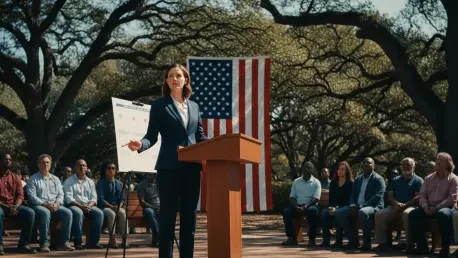

The familiar white coats and administrative offices of the nation’s top health departments are increasingly being traded for the high-stakes pressure of campaign buses and town hall debates across the American landscape. This movement signifies a departure from the traditional role of a health official as a quiet, data-driven advisor to a public figure who must defend policy choices in the crucible of electoral politics. It is a transition born of necessity, as the boundary between scientific consensus and political ideology has effectively dissolved over the last several years. Former administrators are no longer content to wait for invitations to testimony; instead, they are seeking the power to draft the laws themselves.
The Shift: From Clinical Advisory to the Campaign Trail
The migration of health officials from behind-the-scenes roles to the foreground of statewide elective office marks a fundamental change in how expertise is utilized in government. Historically, medical professionals served at the pleasure of elected officials, providing the technical data required to inform legislative decisions without engaging in the partisan fray. However, the recent era of health crises has demonstrated that policy implementation is just as important as the data itself. Consequently, these leaders are now attempting to bridge the gap between clinical reality and political execution by running for positions such as governor and senator.
The politicization of science has effectively transformed medical expertise into a central campaign asset for some and a target for others. Candidates find that their past roles as health directors or federal secretaries allow them to claim a unique brand of “crises competence” that traditional politicians may lack. In an environment where voters are increasingly concerned about the stability of the healthcare system, a background in managing massive public health bureaucracies can be framed as the ultimate qualification for executive leadership. This shift suggests that the era of the technocrat-politician is beginning to take root in the American consciousness.
Navigating the polarized sentiments of the electorate remains the primary hurdle for these aspiring leaders. They must frame their specialized knowledge as a defense of public welfare rather than an imposition of bureaucratic control. While some voters see their medical background as a promise of steady leadership, others view it through a lens of skepticism toward government authority. The success of these campaigns often depends on whether a candidate can convince a fractured public that their scientific training is a tool for problem-solving that transcends the typical partisan gridlock found in state capitals.
The New Political Frontline: Medicine in the Ballot Box
Countering Federal Disruption: The Rise of Scientific Advocacy
The current political climate has seen a significant mobilization of medical professionals in response to federal shifts toward reduced research funding and growing vaccine skepticism. The appointment of figures with historically critical views of public health infrastructure has acted as a catalyst for this movement. In response, organizations dedicated to scientific advocacy, such as 3.14 Action, have intensified their efforts to recruit what they term “scientist-politicians.” These groups argue that having individuals with technical backgrounds in legislative seats provides a necessary firewall against the perceived dismantling of essential health protections.
This advocacy is more than just a reaction to budget cuts; it is a fundamental debate about the role of evidence-based policy in modern governance. Candidates in this space often highlight the danger of allowing ideological appointments to dictate the direction of national health agencies. They argue that without a deep understanding of epidemiology and medical science at the highest levels of government, the nation remains vulnerable to future threats. This narrative positions the health expert not just as a candidate, but as a guardian of the institutional integrity that keeps the public safe from both disease and disinformation.
The tension between scientific rigor and political ideology has created a new kind of campaign platform focused on the preservation of established health standards. Candidates often find themselves defending the very existence of public health departments that were once considered non-partisan fixtures of the state. By framing their campaigns as a battle for the soul of scientific inquiry, they attempt to mobilize a base of voters who value expertise. This strategy transforms the election into a referendum on whether the government should prioritize technical proficiency over political loyalty in its administrative appointments.
The Double-Edged Sword: Pandemic-Era Prominence
The visibility gained during the global health crisis of the early 2020s remains a defining feature for many of these candidates. For some, the daily briefings and public announcements provided an unprecedented level of name recognition that would normally take years of campaigning to achieve. This prominence allows them to enter races with a built-in audience and a reputation for being a calm presence during times of high stress. However, this same visibility invites intense scrutiny from those who viewed the measures taken during the crisis as an overreach of executive power.
Appealing to a fractured electorate requires these candidates to carefully curate their pandemic-era records. A segment of the population remembers them as steady leaders who followed the best available data to save lives, while another segment associates them with the economic and social disruptions of lockdowns. Partisan investigations and the use of labels like “Dr. Lockdown” are frequently employed by opponents to paint these candidates as out-of-touch bureaucrats who prioritized theory over the practical needs of small businesses and families. Managing this baggage is a central challenge for any health official seeking higher office.
The real-world impacts of these perceptions are visible in the way campaigns are structured. Candidates often have to spend significant resources explaining the rationale behind past decisions while simultaneously trying to move the conversation toward future goals. This creates a defensive posture that can be difficult to maintain over a long election cycle. The ability to pivot from defending a past record to proposing a forward-looking vision is the true test of their political viability. If they fail to bridge this divide, their pandemic-era prominence may become a permanent ceiling on their electoral potential.
Divergent Profiles: Comparing State and Federal Campaign Strategies
High-profile candidates such as Xavier Becerra and Amy Acton provide contrasting examples of how health-related records are leveraged in different political environments. In California, Becerra has focused on his administrative experience as a “healthcare governor,” emphasizing his work protecting federal health programs and managing massive government agencies. In contrast, Acton’s experience in Ohio was defined by her role as a state health director during a period of intense public focus. Both candidates have had to balance their professional credentials against the specific political liabilities that come with being a public face of government health policy.
The difference between running on a broad administrative platform and addressing ground-level community crises is significant. Some candidates find success by highlighting their work on localized issues, such as environmental health hazards or local clinic funding, which feels more tangible to the average voter. This approach helps to humanize the candidate and distances them from the more abstract controversies of national health mandates. By focusing on local victories, they can demonstrate that their medical expertise has practical, everyday benefits that improve the lives of their constituents.
Candidates also struggle with the distinction between their professional degrees and the administrative skills required for high office. While a medical degree provides authority, it does not always translate to a perceived ability to handle trade, infrastructure, or criminal justice. Successful health-focused candidates often work to broaden their portfolios, showing that their background in complex systems makes them uniquely qualified to handle the multifaceted responsibilities of a governor or senator. They must prove that they are more than just a “health candidate” if they hope to win over a diverse general electorate.
Rebranding Expertise: From Crisis Management to Economic Stability
A strategic shift is occurring as health-focused candidates move away from pandemic reminiscence and toward “kitchen-table” issues like medical debt and rising insurance premiums. This pivot acknowledges that while public health is important, the financial burden of healthcare is a more immediate concern for many voters. By focusing on the cost of prescriptions and the accessibility of coverage, candidates can frame their expertise as a tool for economic stability. This strategy helps to neutralize the “bureaucrat” label by aligning their goals with the financial anxieties of the average family.
Progressive candidates have been particularly effective at using their public health backgrounds to advocate for systemic reforms like Medicare for All. They argue that their experience within the system has shown them the flaws that only a total overhaul can fix. This approach resonates with a base that is eager for bold change and allows the candidate to stand out as a visionary rather than just a manager. By connecting health outcomes to broader social and economic factors, they expand the definition of public health to include issues of equity and justice.
The focus on the broader economy is also a way for these candidates to challenge the assumption that they are one-dimensional. They are increasingly discussing how health policy impacts trade, labor productivity, and state budgets. This integrated approach shows that they understand the interconnected nature of modern governance. By demonstrating a command over diverse topics like tariffs and industrial policy, they attempt to convince voters that a scientific mind is exactly what is needed to navigate the complexities of the global economy.
Integrating Technical Competence with Electoral Appeal
To succeed, health-focused candidates must frame their scientific expertise as a tool for effective, non-partisan governance rather than a means of social control. This involves using data not as a weapon to shut down debate, but as a foundation for finding common-sense solutions that appeal across party lines. Recommendations for these candidates often include focusing on transparency and clear communication, ensuring that the public understands the “why” behind every policy proposal. This transparency builds the trust necessary to lead a skeptical population through complex legislative changes.
Bridging the gap between technical data and daily financial anxiety requires a focus on the tangible benefits of well-run health programs. Candidates find success when they can show how a specific policy will lower a voter’s monthly bills or provide more choices for their family’s care. Highlighting the success of established programs like the Affordable Care Act, while also acknowledging the need for cost-driven innovation, allows them to maintain a balanced position. They must be seen as defenders of what works and reformers of what does not, using their expertise to cut through the inefficiency of the current system.
The most effective strategies involve positioning the candidate as a problem-solver who is unencumbered by traditional political debts. Because many of these individuals come from outside the standard political pipeline, they can claim a level of independence that appeals to moderate and independent voters. They frame their decision-making process as objective and results-oriented, a stark contrast to the perceived dysfunction of career politicians. By emphasizing their commitment to facts and outcomes, they offer a vision of government that is as efficient and reliable as the medical systems they once managed.
Redefining the Role of Expertise in Modern Governance
The movement of public health experts into the elective arena represented a significant shift in the American political landscape. These individuals attempted to prove that the skills required to manage a clinic or a health department were the same skills needed to lead a state or serve in the Senate. Their campaigns acted as a referendum on the role of science and facts in the democratic process, testing whether a skeptical public was ready for a new generation of “doctor-legislators.” This trend challenged the traditional boundaries between technical knowledge and political leadership, forcing a national conversation on what truly constitutes “qualification” for high office.
As these candidates navigated the challenges of name recognition and partisan scrutiny, they provided a blueprint for how expertise could be integrated into modern governance. The success of these leaders depended on their ability to translate complex data into a vision of safety and economic stability that resonated with a fractured electorate. They worked to overcome the “double-edged sword” of their pandemic visibility by broadening their platforms to include issues that touched the daily lives of every citizen. Their presence on the ballot suggested that the public health crises of the past had fundamentally altered the priorities of the voting public.
Ultimately, the influence of these health experts on policy making was dictated by their ability to win the trust of those they sought to lead. The movement highlighted the ongoing struggle to balance technical proficiency with the demands of representative democracy. Whether they were seen as defenders of the public welfare or as symbols of government overreach, their candidacies paved the way for a deeper discussion about the value of scientific integrity in the halls of power. The transition from clinical advisory to the campaign trail was a bold experiment that reshaped the expectations for future leaders in an increasingly complex world.