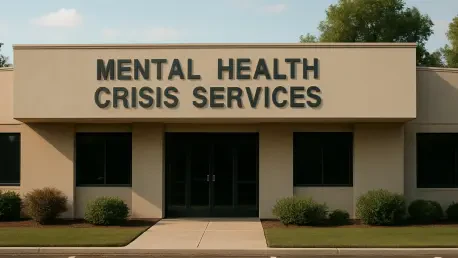

The stability of the last line of defense for the county’s most vulnerable citizens depends on a funding model that reflects the true cost of care. In Dane County, the primary nonprofit responsible for state-mandated crisis intervention, Journey Mental Health Center, is navigating a fiscal landscape that threatens its very existence. As the community moves through the 2026 fiscal cycle, the organization anticipates a significant shortfall that stems from a systemic flaw in how public service contracts are structured. This imbalance places the entirety of the financial risk on the service provider, leaving the county’s emergency mental health network on the brink of a collapse. While the demand for acute psychiatric support continues to rise across the region, the funding mechanisms remain tethered to outdated and overly optimistic projections. This mismatch creates a cycle where the nonprofit is essentially forced to sign agreements that are mathematically destined to result in a deficit.
The Mechanics: Understanding a Broken Funding Model
The core of the financial dispute lies in the specific breakdown of the county’s funding streams, which are split into guaranteed and contingent categories. Currently, approximately 75% of the budget is non-contingent, provided via local tax levies and federal grants. However, the remaining portion is entirely dependent on Medicaid reimbursements, based on revenue targets that are set by the county administration rather than the provider. Historical data indicates that these projections have been consistently inaccurate, often exceeding actual collections by 24% to 34% over the last several years. For the current cycle, the county forecasted $3.9 million in Medicaid revenue, yet the organization is on track to receive significantly less. This discrepancy creates a massive gap that the nonprofit must bridge using its own limited reserves or by securing external third-party funding. Such a model effectively forces the service provider to act as a financial buffer.
County officials have historically defended this contingent model by claiming it serves as an incentive for nonprofits to maximize their billing practices and pursue federal reimbursements aggressively. From the perspective of the behavioral health division, guaranteeing all funding regardless of actual collections could potentially shift an unnecessary burden onto the local tax levy. Yet, this logic is increasingly viewed as an administrative fiction by mental health advocates. The CEO of Journey Mental Health Center, Sarah Valencia, points out that the organization has no control over Medicaid eligibility rules or the reimbursement rates established by state and federal governments. To the provider, this “incentive” functions more like a deliberate underfunding mechanism that ignores the reality of clinical care. Instead of encouraging efficiency, the model creates a permanent state of fiscal instability that complicates long-term planning and makes it nearly impossible to maintain a break-even status.
Local Services: The Impact of a National Mental Health Crisis
The local funding crisis is occurring at a time when the broader mental health landscape is under extreme pressure, with self-reported wellness scores hitting record lows across the country. In Dane County, the statistics are equally sobering, as the workload for crisis responders has reached unprecedented levels. Last year, Journey managed over 35,000 crisis calls, which translates to an average of 100 emergency interventions every single day. These services are vital for keeping individuals with severe mental illnesses integrated into the community and out of more expensive environments like the county jail or emergency hospital wards. The provider serves as a critical safety net that prevents the total overwhelm of the local law enforcement and healthcare systems. However, the ability to maintain this pace of intervention is being eroded by the expiration of pandemic-era resources and a general retrenchment of federal support for suicide prevention and management.
Several external factors are currently exacerbating the local fiscal stress, most notably the “COVID cliff” where emergency funding that previously supported mental health infrastructure has finally expired. This loss of financial support has already led to the closure of various respite homes and the termination of emergency crisis line partnerships in several parts of Wisconsin. Furthermore, the environment for Medicaid-based revenue has become increasingly hostile as enrollment in Dane County has dropped by 11% since the start of 2024. Policy changes, including new work requirements for certain insured populations, are expected to further shrink the pool of billable clients. This makes the county’s high revenue projections even harder to achieve in the current policy environment. As the number of insured patients decreases, the financial pressure on the primary provider increases, creating a perfect storm where rising demand meets a rapidly shrinking pool of accessible funding.
The Human Toll: The Real Cost of Fiscal Bureaucracy
Beyond the technical debates over budget spreadsheets lies the human impact on the 11,000 residents who rely on these services for their daily well-being. Several of the organization’s primary crisis programs have already exhausted their non-contingent funding for the current calendar year, yet the doors must remain open to fulfill state-mandated obligations. Because the center serves all patients regardless of their insurance status—with roughly 8% of the clientele being entirely uninsured—the financial burden of treating the most vulnerable falls squarely on the nonprofit. This situation creates a perverse incentive where the provider is penalized for fulfilling its mission of universal access. When the focus shifts from clinical excellence to basic fiscal survival, the quality of care for patients suffering from acute psychiatric episodes is inevitably placed at risk. The strain on resources makes it difficult to maintain the necessary staffing levels required for immediate mobile response teams.
Maintaining response times for the 24/7 crisis line is perhaps the most visible indicator of a healthy mental health system, yet this metric is currently under threat. A mental health professional who is stretched thin by understaffing and high call volumes cannot provide the same level of intensive stabilization that a well-funded team can. This creates a ripple effect throughout the entire public safety network. If the crisis line is under-resourced, more individuals end up in the emergency room or in police custody, both of which are far more expensive and less effective ways to handle a mental health emergency. The current trajectory suggests that without a fundamental shift in how these services are valued, the county’s last line of defense will continue to fray. The transition from a community-based care model to one dominated by bureaucratic survival risks leaving thousands of individuals without the support they need during their most vulnerable moments, undermining years of progress.
The Path Forward: Seeking Sustainable Reform
There is currently a significant divide among local leaders regarding the best path forward to resolve this structural deficit. Some members of the County Board have introduced budget amendments to provide a one-time infusion of $400,000 to cover the projected losses for the current fiscal year. While this financial support is a necessary immediate step to prevent service cuts, advocates argue that it is merely a temporary solution for a systemic wound. A one-time injection of cash does not address the underlying contract language that creates the deficit in the first place, leaving the provider in the same precarious position during the next budget cycle. True reform would require a complete overhaul of the “contingent” funding model to ensure that the risk is shared more equitably between the local government and the nonprofit sector. Without changing the fundamental mechanics of the agreement, the county remains in a state of reactive crisis management rather than proactive planning.
Journey Mental Health Center advocated for a transition toward expense-based contracts, a model where the county assumed the financial risk if Medicaid reimbursements fell short of projections. This shift aimed to provide a stable financial floor, allowing the nonprofit to focus on clinical outcomes rather than debt management. Local authorities were encouraged to view the provider as a vital partner rather than a fiscal subordinate, recognizing that the safety of the community depended on a sustainable partnership. By moving toward a model that reflected actual costs rather than optimistic revenue targets, the county could have secured its crisis infrastructure for the coming years. Ultimately, the resolution of this conflict required a commitment to fiscal reality and a prioritization of psychiatric care over bureaucratic convenience. Implementing these structural changes served as a blueprint for other regions facing similar funding crises, ensuring that the most vulnerable citizens were never left without a safety net.