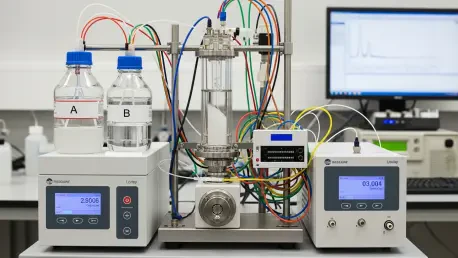

The pharmaceutical landscape has witnessed a profound transformation in analytical methodologies as traditional wet chemistry techniques gradually yielded to the precision and automation offered by advanced ion chromatography systems. While the technology was originally conceptualized in the mid-1970s primarily for environmental monitoring, its journey into the highly regulated world of drug manufacturing was fraught with technical skepticism and significant regulatory hurdles. For decades, analysts relied on labor-intensive titrations and gravimetric methods that, while familiar, lacked the sensitivity and specificity required for modern drug formulations. This shift toward ion chromatography represents more than just a hardware upgrade; it signifies a fundamental change in how the industry approaches ionic impurities and counterion analysis. Today, the technique stands as a non-negotiable requirement for ensuring the safety and efficacy of complex therapeutics, bridging the gap between old-school reliability and contemporary high-throughput demands.
Overcoming the Legacy of Technical Fragmentation
One of the primary reasons for the slow adoption of ion chromatography in pharmaceutical laboratories was the historical divergence between two competing detection technologies that complicated method standardization. On one side stood suppressed conductivity detection, which utilized a specialized membrane or chemical system to reduce background noise from the eluent, thereby providing exceptional sensitivity for trace-level analysis. However, early suppressors were notorious for their mechanical fragility and the requirement for complex regenerant solutions, making them difficult to maintain in a high-pressure production environment. Conversely, non-suppressed systems offered a more robust and simpler hardware configuration but lacked the detection limits necessary for detecting minute impurities. This technological schism forced pharmaceutical scientists to choose between high-performance sensitivity and operational reliability, leading to a fragmented landscape where methods developed on one platform were often non-transferable to another, significantly delaying the creation of universal testing standards.
Building on these technical complexities, the lack of standardized column chemistry further exacerbated the difficulty of implementing ion chromatography within the rigid framework of validated pharmaceutical protocols. During the late 20th and early 21st centuries, many laboratories viewed the technique as a niche solution reserved only for cases where traditional methods failed completely. The absence of comprehensive guidance from global pharmacopoeias meant that each company had to develop and validate bespoke methods from scratch, a process that was both time-consuming and expensive. This isolationist approach to method development prevented the industry from benefiting from shared knowledge and collective improvements in hardware performance. Furthermore, the inherent variability in polymer-based resins used in early IC columns led to reproducibility issues that frequently frustrated quality control managers. These hurdles collectively created a perception that ion chromatography was too temperamental for the high-stakes environment of commercial drug release, stalling its integration into the mainstream analytical toolkit.
Regulatory Standardization and the Pharmacopoeial Shift
The decisive turning point for the industry arrived when the United States Pharmacopeia and the European Pharmacopoeia formally incorporated ion chromatography into their general chapters and specific monographs. This regulatory endorsement shifted the technique from an elective experimental tool to a standardized requirement for verifying the identity and purity of various active pharmaceutical ingredients. Crucially, these regulatory bodies adopted a technology-neutral stance, focusing on rigorous system suitability requirements and performance benchmarks rather than mandating specific brands or hardware configurations. This flexibility allowed instrument manufacturers to innovate while ensuring that laboratories could achieve reproducible results regardless of their specific equipment. The alignment of international standards provided a clear roadmap for validation, encouraging manufacturers to replace outdated manual tests with automated IC workflows. As a result, the transition toward digitized data and electronic records management became much smoother, aligning with the industry’s broader move toward enhanced data integrity and transparency.
Moreover, the implementation of stringent International Council for Harmonisation guidelines, particularly those concerning elemental impurities and residual solvents, necessitated the higher sensitivity that only modern ion chromatography could provide. As safety thresholds for inorganic anions and cations became more restrictive, the limitations of traditional colorimetric tests became an unacceptable risk for pharmaceutical manufacturers. IC systems offered the unique capability to analyze multiple ions simultaneously in a single injection, drastically reducing the time required for comprehensive impurity profiling. This capability proved essential for the analysis of counterions, which are vital for the stability and solubility of many salt-based drug molecules. By providing a reliable method for quantifying these components, IC helped ensure that the chemical composition of a drug remained consistent across different manufacturing batches. The ability to detect trace-level contaminants, such as halides or organic acids, also became a critical component of cleaning validation protocols, further cementing the role of the technology as a guardian of pharmaceutical quality across the entire production lifecycle.
Future Considerations: Adapting to New Safety Challenges
Looking back at the evolution of the field, it was clear that the adaptability of ion chromatography allowed it to address emerging safety crises that threatened global drug supplies. For instance, the industry faced significant challenges regarding the detection of nitrites and nitrates, which are known precursors to the formation of carcinogenic nitrosamine impurities. Analytical laboratories successfully implemented specialized IC configurations, often combining UV and conductivity detectors, to achieve the sub-part-per-million sensitivity required to mitigate these risks. Additionally, the rise of environmental concerns regarding per- and polyfluoroalkyl substances, commonly known as PFAS, prompted the adoption of combustion ion chromatography. This sophisticated hybrid technique enabled the measurement of total organic fluorine in complex matrices, providing a vital tool for assessing the environmental impact of pharmaceutical manufacturing processes. By expanding into these specialized domains, the technology demonstrated its versatility beyond simple salt analysis, proving that it could evolve alongside the increasingly complex safety requirements of the modern era.
The journey of ion chromatography reached a stage where its integration into the laboratory ecosystem became a blueprint for future analytical transitions. To maximize the benefits of this mature technology, organizations prioritized the training of specialized personnel who understood the nuances of eluent chemistry and column maintenance. It was found that a proactive approach to system suitability, involving the frequent monitoring of pressure profiles and retention time stability, significantly reduced instrument downtime. Laboratories that successfully navigated this transition also invested in high-purity water systems and automated sample preparation modules to eliminate common sources of contamination. Furthermore, the focus shifted toward multi-detector setups that allowed for the simultaneous characterization of both ionic and non-ionic species within a single sample. As analytical demands continued to intensify, the industry realized that the successful application of ion chromatography depended as much on robust standard operating procedures as it did on the hardware itself. This historical shift ultimately established a new standard for precision, ensuring that the next generation of therapeutics would be safer and more consistent than those that came before.