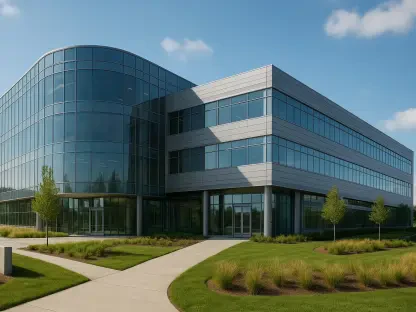

The pharmaceutical industry is currently grappling with a surge in biological products that demand precise environmental controls, rendering traditional distribution methods increasingly obsolete in a rapidly evolving market. DHL Supply Chain has countered this challenge by unveiling a massive, automated hub at Infinity Park Derby, a 194,000-square-foot facility that serves as the new flagship for healthcare operations across the United Kingdom and Ireland. This project represents a pivotal segment of a multi-billion dollar global investment strategy aimed at modernizing life sciences infrastructure to ensure patient safety and supply chain continuity. By establishing this advanced site, the organization is not merely expanding its physical footprint but is actively constructing a more robust delivery network capable of weathering global disruptions. The facility stands as a testament to the necessity of consolidating fragmented logistics into a single, high-tech platform that can prioritize quality and control at every stage.
Advancing Supply Chain Resilience and Scalability
Meeting the Challenges: Why Complex Pharmaceuticals Matter
The global shift toward personalized medicine and complex pharmaceuticals has fundamentally changed the requirements for storage and transport, moving away from bulk shipping to highly specialized handling. These modern medical treatments, which often include gene therapies and sensitive biologics, require a level of precision that legacy warehouses simply cannot provide without significant risk to product efficacy. The Infinity Park Derby hub was designed specifically to address these complexities by offering a resilient environment that maintains high standards of quality assurance throughout the entire distribution lifecycle. By centralizing operations, the facility eliminates the risks associated with fragmented supply chains where temperature excursions or handling errors can occur during transitions between multiple providers. This centralized approach ensures that every package, whether it contains life-saving oncology drugs or routine medical supplies, is managed within a strictly controlled ecosystem that prioritizes the health of the end-user.
Leveraging Technology: The Role of Intelligent Automation
Automation serves as the functional backbone of the new facility, utilizing sophisticated high-density pallet shuttle systems that streamline the movement of products from the moment they arrive until they are dispatched. This technological integration is not a static implementation but rather a flexible framework that allows for the seamless inclusion of Autonomous Mobile Robots as operational needs evolve and new advancements emerge. Such a design choice ensures that the hub remains relevant in an industry where speed and accuracy are paramount for maintaining patient trust and clinical outcomes. Beyond simple efficiency gains, these automated systems allow the warehouse to scale its throughput rapidly during periods of high demand, such as seasonal health crises or new product launches. By reducing the reliance on manual sorting and transit, the facility minimizes the potential for human error and ensures that the diverse needs of modern healthcare patients, who increasingly expect retail-level speed and precision, are met with consistent reliability.
Driving Efficiency Through Specialized Infrastructure
Maintaining Integrity: Advanced Thermal Control Systems
To accommodate the vast diversity of modern medical supplies, the Derby facility features specialized multi-temperature zones that range from ambient and chilled to deep-frozen environments. This sophisticated infrastructure is essential for preserving the integrity of sensitive biologics and high-value medical devices that are susceptible to even minor thermal fluctuations during storage. Strict adherence to regulatory requirements is built into the very architecture of the site, ensuring that every square foot of the warehouse complies with the most rigorous global healthcare standards. By combining this high level of compliance with automated efficiency, the logistics provider can significantly accelerate the movement of essential medications from the manufacturer to the public healthcare system. This reduction in lead times is critical for time-sensitive treatments where delays can directly impact patient recovery rates. Furthermore, the operational efficiency gained through these integrated systems helps to lower the overall cost-to-serve for clients.
Facilitating Access: The Impact of Shared-User Models
One of the most transformative aspects of the Infinity Park Derby site is its innovative shared-user model, which democratizes access to high-end logistics technology for companies of varying sizes. Traditionally, only the largest pharmaceutical corporations could afford to invest in the dedicated, highly specialized warehouses required for complex medical distribution, leaving smaller innovators at a disadvantage. This collaborative framework allows smaller life sciences firms to leverage a world-class infrastructure without the need for massive upfront capital investments in physical real-estate or automation hardware. By tapping into this shared ecosystem, businesses can scale their operations with greater agility, responding to market opportunities or clinical trial results with unprecedented speed. This shift creates a more inclusive industry standard where the focus remains on the quality of the medical innovation rather than the size of the company’s logistics budget. As a result, the market becomes more competitive and diverse for all.
Committing to Sustainability and Regional Growth
Promoting Sustainability: Net-Zero Operational Strategies
Environmental integrity was a primary consideration during the development of the hub, with the project securing a BREEAM Excellent rating to signify its adherence to top-tier sustainability standards. The facility incorporates a variety of green technologies, including extensive solar energy arrays and dark-store automation that significantly reduces the power consumption required for lighting and climate control. These features are complemented by the installation of electric vehicle charging stations, which support a low-carbon distribution fleet and help to minimize the carbon footprint of the final-mile delivery process. Additionally, the high-density storage design of the warehouse allows for a forty percent increase in inventory capacity compared to traditional layouts of the same size, maximizing land use while minimizing environmental impact. By optimizing space and energy, the site demonstrates that advanced industrial performance does not have to come at the expense of ecological responsibility, setting a new benchmark for the sector.
Securing the Future: Economic Resilience and Insights
The investment in the Midlands successfully provided a substantial boost to the regional economy and reinforced the strategic industrial objectives of the United Kingdom. Government officials recognized the project as a decisive vote of confidence in the national life sciences sector, which led to the creation of numerous high-quality jobs specializing in logistics technology and pharmaceutical management. This initiative proved that integrating advanced automation with strong environmental and social governance was the only viable path forward for global health infrastructure. Moving forward, stakeholders in the medical supply chain should prioritize the adoption of flexible, shared-user facilities to mitigate the rising costs of specialized storage. It became evident that regional hubs must evolve into centers of technological excellence rather than just transit points to ensure long-term resilience. Industry leaders were encouraged to reinvest in green energy transitions to maintain regulatory compliance and operational longevity.