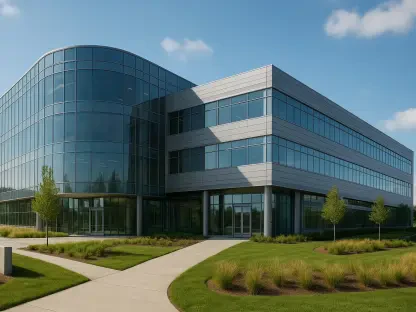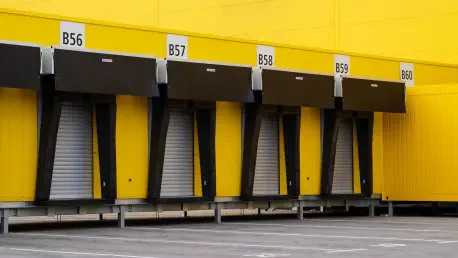

The global healthcare sector relies on a delicate balance of speed and precision where even a minor disruption in the supply chain can have profound consequences for patient care across entire regions. As demand for specialized medical products continues to rise, the necessity for robust, automated infrastructure has become the primary differentiator for logistics providers aiming to maintain market leadership. By establishing a massive 194,000-square-foot facility at Infinity Park Derby, DHL Supply Chain is setting a new standard for how life sciences and healthcare products are managed within the United Kingdom. This flagship “Lighthouse” site serves as the central nervous system for a network that spans the UK and Ireland, integrating cutting-edge robotics with specialized storage solutions. The facility represents more than just a warehouse; it is a critical response to the evolving needs of pharmaceutical companies and medical device manufacturers who require high-density storage and rapid distribution capabilities to serve an aging population.
Strategic Financial Commitment and Regional Economic Impact
Investment Scale: Driving Industrial Modernization
This development is a cornerstone of a substantial £550 million investment strategy focused on expanding UK automation and infrastructure, ensuring that the domestic market remains competitive on a global scale. This local commitment is mirrored by a larger €2 billion global initiative that specifically targets the modernization of healthcare logistics to meet rigorous regulatory demands. By funneling these resources into specialized facilities, the company is effectively future-proofing its operations against labor shortages and fluctuating energy costs. The Derby project serves as a clear signal to the international business community that the UK is a primary destination for advanced industrial growth. Such significant capital expenditure allows for the integration of proprietary software and hardware that smaller competitors cannot easily replicate, creating a barrier to entry while simultaneously raising the service quality for existing clients across the medical sector.
Beyond the immediate financial figures, the investment serves to stabilize the supply chain for essential goods, ranging from life-saving pharmaceuticals to specialized animal health products. The strategic allocation of funds toward automation ensures that the facility can handle high volumes with a lower margin of error than traditional manual sites. This move is part of a broader trend where logistics giants are pivoting toward highly specialized hubs that cater to specific industry verticals rather than general-purpose warehousing. The focus on life sciences is particularly astute, given the high value and sensitive nature of the cargo involved, which mandates a level of investment that aligns with strict global safety standards. By consolidating these operations into a high-tech Lighthouse site, the organization is streamlining its internal processes while providing external stakeholders with a reliable, long-term partner capable of scaling alongside the rapidly growing medical technology sector.
Regional Impact: Job Creation in the East Midlands
The ripple effects of this logistics hub extend far beyond the walls of the warehouse, as the project is slated to generate approximately 120 high-quality jobs within the East Midlands region. These roles are not limited to traditional warehouse labor; instead, they encompass a broad spectrum of technical positions, including automation engineers, data analysts, and specialized logistics managers. This influx of professional opportunities provides a significant boost to the local economy, fostering a workforce that is skilled in the nuances of modern industrial technology and healthcare compliance. The presence of such a high-tech employer encourages local educational institutions to align their curricula with the needs of the advanced logistics sector, creating a sustainable pipeline of talent for years to come. By prioritizing technical expertise, the hub ensures that the regional economy remains resilient and well-positioned to adapt to the ongoing digital transformation of the global supply chain.
Government officials and regional development agencies have highlighted this project as a validation of the East Midlands as a premier destination for modern industrial investment and growth. The project underscores a shift toward higher-value employment in the logistics sector, where employees work alongside sophisticated robotics to manage complex workflows. This collaborative environment between human intelligence and mechanical precision is the hallmark of the contemporary industrial landscape, setting a precedent for future developments in the area. The local community benefits from the tax revenues and secondary economic activity generated by a workforce of this scale, further reinforcing the status of Infinity Park Derby as a hub for innovation. As these 120 positions are filled, the facility will become a focal point for regional logistics excellence, attracting additional businesses that wish to be part of a high-tech ecosystem. This collective growth strengthens the regional infrastructure and solidifies its reputation as a leader.
Technological Innovation and Scalable Operations
Advanced Robotics: Enhancing Operational Precision
At the heart of the Derby facility lies a sophisticated pallet shuttle system designed to maximize vertical and horizontal space, effectively increasing storage capacity by 40% compared to conventional layouts. This high-density storage solution allows for the housing of a vast array of medical products in a footprint that would otherwise be insufficient, making the operation both spatially and economically efficient. Complementing this system is a fleet of Autonomous Mobile Robots that navigate the warehouse floors to assist with picking and sorting tasks, significantly reducing the time required to process orders. These robots are equipped with advanced sensors and artificial intelligence, allowing them to operate safely alongside human workers while maintaining a constant pace of productivity. The integration of these technologies ensures that the facility can handle the high-velocity requirements of modern healthcare distribution, where the ability to fulfill orders with near-perfect accuracy is a non-negotiable requirement.
Another groundbreaking feature of the site is its dark-store capability, which allows specific automated zones to operate with minimal to no lighting, thereby drastically reducing the total energy consumption of the building. This approach is particularly effective in sections where robots perform repetitive tasks that do not require human visual oversight, aligning operational efficiency with environmental responsibility. The facility is also designed to accommodate both business-to-business and direct-to-consumer fulfillment models, reflecting the growing trend of pharmaceutical companies shipping products directly to patients. This dual-purpose design requires a high level of flexibility in sorting and packing processes, which is achieved through the use of modular automation components. By utilizing these advanced systems, the hub can pivot between large-scale bulk shipments and individual patient-level orders with minimal downtime. This technological agility ensures that the logistics network can meet the diverse needs of hospitals and pharmacies.
Actionable Insights: Lessons from the Lighthouse Hub
The project demonstrated that environmental stewardship must be woven into the very fabric of industrial design, with the facility pursuing a BREEAM Excellent rating through on-site renewable energy generation. A massive array of solar panels covered the roof, providing the electricity required to power the automated systems and climate-control units. This commitment to renewable energy reduced the facility’s reliance on the national grid and provided a buffer against the rising costs of traditional power sources. Additionally, the building featured advanced insulation and low-energy LED systems that further minimized the total power draw. By integrating these green technologies from the ground up, the project proved that large-scale industrial operations could be both highly productive and environmentally responsible. Stakeholders were encouraged to prioritize similar investments in renewable infrastructure to stay ahead of the regulatory curve while meeting the growing demand for sustainable supply chains in the healthcare sector.
The transition toward a zero-emission transport fleet was further supported by the inclusion of comprehensive electric vehicle charging infrastructure on-site. This focus on green transport was essential for reducing the carbon footprint associated with the last mile of healthcare delivery, where efficiency and sustainability had to go hand in hand. The use of energy-efficient automation also contributed to the site’s overall sustainability by reducing the heat generated within the warehouse, which in turn lowered the cooling requirements for temperature-sensitive zones. Every aspect of the facility’s design reflected a holistic approach to environmental management, preparing the operation for future regulations that might impose stricter limits on industrial carbon emissions. This proactive stance ensured long-term viability in an increasingly eco-conscious global market. Decision-makers successfully used this model to streamline their operations while reducing environmental impact, a strategy that remains a benchmark for the logistics industry.