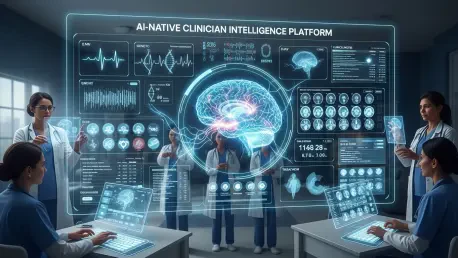

Healthcare providers currently navigate a demanding environment where the administrative burden often outweighs the time available for direct patient engagement, leading to a systemic crisis in clinical efficiency. The transition from a simple transcription tool to a comprehensive clinician intelligence platform marks a fundamental shift in how medical data is captured and utilized across the healthcare continuum. By acting as an AI-native infrastructure layer, this platform addresses the fragmentation that has long defined the relationship between clinical encounters and administrative documentation. Instead of a passive record of a conversation, the technology provides a dynamic reasoning engine that interprets the nuances of provider-patient interactions to fulfill multifaceted operational needs. This evolution allows health systems to unify disparate sectors, including medical delivery, insurance processing, and pharmaceutical research, into a single, cohesive workflow. As these technologies become more integrated, they offer a path toward reducing the cognitive load on clinicians while simultaneously improving the accuracy and depth of the medical record. This strategic shift ensures that the narrative of the patient visit becomes a foundational asset for the entire healthcare ecosystem, rather than a bureaucratic hurdle to be cleared.
Transforming Clinical Conversations into Actionable Data
Contextual Reasoning: Bridging Dialogue and Documentation
At the core of this platform is a sophisticated contextual reasoning engine that goes far beyond the capabilities of basic voice-to-text transcription by analyzing the medical intent behind every spoken word. This engine effectively transforms raw audio from patient visits into highly structured, billable medical notes that are designed to satisfy the specific documentation criteria of insurance payers. By generating these notes at the moment care is delivered, the system eliminates the traditional delay between the patient encounter and the completion of the electronic health record. This real-time processing ensures that the narrative of the visit is captured accurately, reducing the likelihood of clinicians needing to reconstruct details from memory hours or even days later. Consequently, the time spent on manual documentation is drastically reduced, allowing healthcare professionals to focus on the human aspects of their practice rather than the clerical demands of the digital interface. This streamlined approach also mitigates the risk of claim denials by ensuring that all necessary medical evidence is present from the outset, creating a more reliable data stream for both the provider and the administrative staff involved in billing.
The platform further enhances the quality of documentation by incorporating professional standards and coding practices established by the American Health Information Management Association. This collaboration ensures that all AI-generated documentation is fully auditable and meets the rigorous requirements for various payment models, including the industry-wide transition toward value-based care. By maintaining these strict compliance standards, the platform provides a reliable foundation for hospital financial records and quality reporting metrics. This is particularly important as healthcare institutions are increasingly held accountable for the accuracy of their data and the outcomes of their patients. The technology acts as a safeguard, ensuring that the transition from a clinical conversation to a coded record is transparent and reproducible. This level of precision minimizes the risk of audits and financial penalties, allowing health systems to scale their operations with confidence in their administrative infrastructure. As the regulatory landscape continues to evolve, having a compliant and standardized system for data capture remains essential for long-term institutional stability and trust.
Research Integration: Connecting the Clinic to Life Sciences
Strategic collaborations with organizations such as Eli Lilly and Company have further expanded the utility of the platform by bridging the historical gap between standard clinical practice and pharmaceutical research. The AI-driven analysis of patient interactions allows health systems to identify candidates for clinical trials during routine office visits, a process that was previously labor-intensive and prone to oversight. By comparing the clinical context of a conversation with trial eligibility criteria in real time, the platform serves as a powerful recruitment tool that accelerates the development of new treatments. This integration provides patients with earlier access to innovative therapies while helping life sciences companies find appropriate participants more efficiently. Furthermore, this approach transforms the clinic into a data-rich environment where medical evidence is gathered and applied continuously, fostering a more agile research ecosystem. The ability to link daily medical encounters with global research initiatives represents a significant step forward in the pursuit of evidence-based medicine and improved patient outcomes across diverse populations.
The platform also functions as a real-time knowledge repository by integrating authoritative medical content from prestigious sources such as the Journal of the American Medical Association and the New England Journal of Medicine. By embedding this clinical evidence directly into the physician’s digital workflow, the AI ensures that treatment recommendations are informed by the latest scientific research and updated clinical guidelines. This feature is designed to reduce the natural variability in care that occurs across large health systems, providing a standardized baseline of medical excellence for all patients. When a clinician discusses a specific diagnosis or therapy, the system can surface relevant studies or updated protocols that might influence the course of treatment. This immediate access to high-quality information empowers doctors to make more informed decisions without having to pause their practice to conduct manual research. Consequently, the quality of care is elevated as the most recent advancements in medical science are applied at the point of care, directly benefiting patients and improving the overall efficacy of the healthcare delivery system.
Streamlining Healthcare Administration and Financial Systems
Operational Efficiency: Accelerating Approvals and Payments
One of the most significant obstacles to efficient patient care is the complex and often slow process of obtaining prior authorizations from insurance providers. Through partnerships with industry platforms like Availity, the clinician intelligence system aims to modernize this workflow by automating the exchange of information between providers and payers. By leveraging the structured data generated during the clinical encounter, the system can submit authorization requests that are pre-validated against the insurance company’s specific requirements. This innovation has the potential to reduce the time required for treatment approvals from several weeks to just a few minutes, significantly enhancing the speed of care delivery. Furthermore, the platform moves the industry closer to a real-time payment model, where financial calculations and reimbursements are processed almost immediately following the patient visit. This reduction in administrative friction not only improves the financial health of medical institutions but also reduces the stress on patients who no longer have to wait extended periods for necessary medical interventions.
This movement toward instant financial processing is supported by the platform’s ability to maintain a continuous loop of communication between the clinical and financial departments of a health system. By providing a clear and documented path from the patient encounter to the final bill, the system reduces the administrative overhead associated with managing aging accounts and disputed claims. Finance teams can now view the clinical justification for services in real time, allowing for more accurate forecasting and more efficient resource allocation. As the healthcare industry shifts toward models that demand greater transparency and accountability, these tools provide the necessary data infrastructure to support complex reimbursement structures. The automation of these financial workflows allows the organization to focus its human capital on more strategic tasks, such as improving patient access and expanding service lines. Ultimately, the integration of administrative and clinical data creates a more resilient financial foundation for the entire institution, ensuring that high-quality care remains economically sustainable.
Institutional Scale: Smart Rooms and Systemic Growth
With its implementation across more than 300 health systems, the platform is rapidly becoming a standard component of modern medical infrastructure. The expansion into inpatient “smart rooms” highlights the system’s ability to handle the complex, high-volume environment of a hospital, where millions of patient interactions occur annually. Major deployments at institutions like Northwestern Medicine demonstrate how the technology can effectively reduce provider burnout by automating the most time-consuming aspects of documentation and data entry. By turning the physical space of the exam room or hospital ward into an intelligent environment, the platform allows healthcare professionals to return their full attention to the practice of medicine. This shift is critical for maintaining a sustainable workforce in an era where clinical demands continue to increase. As more institutions adopt this technology, the collective data and insights gathered can be used to further refine medical processes and improve the efficiency of hospital operations on a national scale. The focus remains on creating a supportive environment where technology enhances the human element of care.
The scalability of the platform also allows for the dissemination of best practices across an entire medical network, ensuring that every facility operates at the same high standard of clinical and operational excellence. By centralizing the intelligence gathered from millions of interactions, health systems can identify patterns and trends that might otherwise go unnoticed in a fragmented system. This high-level view enables proactive interventions in patient care and more effective management of hospital resources. Furthermore, the use of “smart room” technology facilitates a more collaborative environment where nurses, doctors, and specialists can access the same real-time data to coordinate treatment plans more effectively. This unified approach to care delivery not only improves patient safety but also enhances the overall efficiency of the clinical team. As the technology continues to mature, it will likely serve as the backbone for a new generation of hospital facilities that are designed around the principles of ambient intelligence and data-driven decision-making, providing a more responsive and effective healthcare experience for everyone.
The transition toward an AI-native clinician intelligence platform provided a transformative solution for an industry that was previously constrained by fragmented data and administrative overload. By successfully integrating clinical conversations with financial and research requirements, health systems established a more unified and responsive infrastructure. Organizations that adopted these tools found that they could maintain a higher standard of care while simultaneously improving the work-life balance of their medical staff. The next phase of this evolution involved the continued refinement of these intelligence layers to ensure that every patient visit contributed to a broader understanding of population health and therapeutic efficacy. Leaders were encouraged to move beyond traditional documentation tools and invest in platforms that served as the foundational nervous system of their clinical operations. Ultimately, the successful implementation of this technology proved that the future of medicine resided in the seamless harmony between human expertise and invisible, high-performance computational support. By removing the barriers of manual data entry, the industry was able to refocus its efforts on the core mission of improving patient health and advancing medical science.