
The resurgence of syphilis across the United States has evolved into a formidable public health crisis, with infection rates climbing to levels not observed since the mid-twentieth century. This alarming trend is most visible in the sharp rise of congenital syphilis, where transmission from mother to child during pregnancy has led to significant neonatal complications and mortality. Despite the historical gravity of this situation, current clinical data from 2026 indicates a stabilization in new infections, suggesting that the tide may finally be turning. This shift is largely attributed to a fundamental transformation in how clinical laboratories operate, moving away from reactive testing methods that often identified infections too late. By adopting proactive intervention models that prioritize speed and accuracy, laboratories are aligning their operations with modern health guidelines to close the dangerous gaps in early detection that previously allowed the disease to spread unchecked.
Overcoming the Limitations of Legacy Testing
The Flaws of the Traditional Workflow: A Critical Analysis
The traditional diagnostic approach for syphilis relied for decades on a “forward” or “traditional” algorithm, which prioritized non-treponemal assays such as the Rapid Plasma Reagin (RPR) or Venereal Disease Research Laboratory (VDRL) tests. These tests are designed to detect reagin antibodies—substances produced by the body in response to cellular damage caused by the Treponema pallidum bacterium. While these assays are inexpensive and relatively easy to perform, they are plagued by significant specificity issues because reagin antibodies can be triggered by a wide range of conditions, including autoimmune disorders, recent vaccinations, or even pregnancy. Consequently, laboratories frequently encountered high rates of false positives, which necessitated labor-intensive follow-up testing and often caused unnecessary anxiety for patients. The subjective nature of reading manual RPR results further complicated the process, introducing a margin for human error that modern healthcare systems can no longer afford to tolerate in the face of an epidemic.
Furthermore, the traditional workflow suffers from inherent sensitivity gaps that pose a major risk to public health, particularly during the earliest stages of infection. Non-treponemal tests often yield negative results during the “window period” before the body has mounted a detectable reagin response, or during late latent periods where antibody levels naturally decline. This failure to detect primary syphilis leads to missed opportunities for early intervention, allowing the infection to progress and potentially spread to others. In the context of maternal health, these sensitivity gaps are especially dangerous, as a missed diagnosis can lead to the devastating consequences of congenital syphilis. The ambiguity of equivocal results also frequently results in delayed clinical action, as physicians are forced to wait for repeat testing to confirm a diagnosis. This legacy model, while once the standard of care, has proven insufficient for the high-volume, precision-oriented requirements of modern clinical settings where every hour counts in preventing transmission.
Implementing the Reverse Sequence Model: A New Standard
To mitigate the risks associated with legacy testing, many high-volume clinical laboratories have successfully transitioned to the “reverse sequence algorithm.” This modern workflow flips the traditional process by starting with a treponemal-specific assay that directly detects antibodies against the Treponema pallidum bacterium itself. By using automated immunoassays as the primary screen, laboratories can identify infections with a much higher degree of sensitivity, even in cases where non-treponemal tests would have returned a false negative. Once a treponemal test is confirmed as positive, the sample is automatically reflexed to a non-treponemal test to assess the current activity of the disease and monitor the patient’s response to treatment. This logical progression ensures that the diagnostic process is both thorough and efficient, providing clinicians with a clear picture of the patient’s status without the delays inherent in manual, multi-step traditional testing protocols.
The adoption of the reverse sequence model is increasingly recognized by health authorities as the most effective strategy for managing large patient populations. In 2026, clinical guidelines emphasize that treponemal-first screening is the preferred method for laboratories processing high volumes of samples, as it provides a more reliable foundation for subsequent clinical decisions. This approach is particularly valuable for resolving discordant results—scenarios where the treponemal and non-treponemal tests do not agree. In such cases, the algorithm dictates the use of a second, different treponemal assay to finalize the diagnosis. This rigorous methodology minimizes the likelihood of both false positives and false negatives, ensuring that patients receive accurate diagnoses the first time. By standardizing this workflow, healthcare providers can ensure that their diagnostic strategies are robust enough to handle the complexities of the current public health landscape while maintaining the highest levels of patient safety and care.
Enhancing Precision Through Advanced Diagnostic Tools
High-Sensitivity Immunoassays: The Core of Modern Accuracy
Central to the successful implementation of the reverse sequence algorithm is the deployment of high-sensitivity immunoassays, such as the Roche Elecsys® Syphilis assay. This advanced tool is engineered to detect both IgM and IgG antibodies using a double-antigen sandwich format, which is essential for capturing the earliest signs of infection. By targeting both types of antibodies simultaneously, the assay significantly enhances diagnostic sensitivity during the primary stage of syphilis, when antibody titers are often at their lowest. This capability is a drastic improvement over older technologies that might only target one antibody class or rely on less precise detection methods. The precision of the Elecsys® assay ensures that even asymptomatic carriers are identified, preventing the silent spread of the disease through the population. Such technological advancements are critical for protecting vulnerable groups, including pregnant women and individuals living with co-morbidities.
Beyond its technical sensitivity, the assay offers remarkable specificity, which is vital for reducing the burden of false positives in a clinical setting. Independent clinical evaluations have shown that these modern assays achieve near-perfect performance across diverse patient cohorts, including high-risk populations and those with complex medical histories. This level of reliability allows laboratory directors to have absolute confidence in the results they report to physicians. Moreover, the assay is designed for extreme operational efficiency, delivering definitive results in as little as 18 minutes from a very small sample size. This rapid turnaround time is a game-changer for emergency departments and prenatal clinics, where immediate diagnostic information can dictate the course of urgent medical interventions. By shortening the time from sample collection to diagnosis, high-sensitivity immunoassays empower the medical community to stay one step ahead of the infection, ensuring that treatment begins as soon as possible.
The Role of Automated Laboratory Platforms: Driving Efficiency
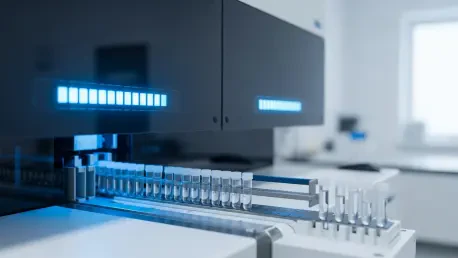
As the volume of syphilis testing continues to rise, the integration of automation has become a prerequisite for modern laboratory success. Advanced immunoassay analyzers, like the cobas® system, provide a comprehensive platform for managing high-throughput testing without compromising the integrity of the results. These systems are designed to handle the entire testing process—from the initial aspiration of the sample to the final generation of the digital report—with minimal human intervention. By automating the reflex logic required by the reverse sequence algorithm, these platforms ensure that every positive treponemal screen is immediately and consistently followed by the necessary confirmatory tests. This built-in logic eliminates the need for manual sorting and re-testing of samples, which drastically reduces the turnaround time and allows laboratory staff to focus on more complex tasks that require professional oversight and specialized clinical judgment.
The implementation of automated platforms also addresses the critical issue of laboratory labor shortages and the potential for human error. In a manual testing environment, the repetitive nature of RPR titers and the subjective interpretation of results can lead to inconsistencies between shifts or different technicians. Automation standardizes every step of the process, ensuring that every sample is treated with the same level of precision and rigor, regardless of when it is processed. Furthermore, these analyzers offer long-term onboard stability for reagents, which optimizes inventory management and reduces waste, making them a cost-effective solution for facilities of all sizes. By providing around-the-clock testing capabilities, automated systems ensure that diagnostic services are always available to meet patient needs, even during peak periods or in high-pressure clinical environments. This operational stability is a cornerstone of the modern diagnostic strategy, providing the scalability needed to combat the syphilis epidemic on a national level.
Measuring the Impact on Public Health
Clinical Success Stories: Real-World Evidence of Progress
The transition to a treponemal-first diagnostic strategy has already produced tangible improvements in clinical outcomes and public health management. A notable case study from a major metropolitan hospital revealed that within the first year of switching to the reverse algorithm, the laboratory identified 57 additional syphilis infections that would have been missed entirely under the traditional workflow. This facility saw its positivity rate more than double, jumping from 2.7 percent to 6.3 percent, simply by utilizing more sensitive primary screening tools. These “hidden” cases, which often represented early-stage or latent infections, were subsequently treated, preventing further transmission and potential long-term complications for the patients. This evidence underscores the fact that the perceived “rise” in syphilis rates may, in some part, be a reflection of our improved ability to find and treat cases that were previously slipping through the cracks of an outdated system.
Beyond the clinical benefits, the move toward automated treponemal-first testing has significantly improved the operational health of many medical institutions. By eliminating the reliance on labor-intensive manual RPRs, laboratories have reported a dramatic reduction in “hands-on” time for their technicians, which translates to lower overhead costs and fewer errors. The reduction in the need for patient redraws—often required when initial manual results are ambiguous—has also enhanced the patient experience and reduced the administrative burden on clinical staff. These efficiencies allow hospitals to reallocate resources toward other critical areas of patient care, creating a more sustainable and responsive healthcare environment. The success of these early adopters provides a compelling roadmap for other facilities looking to modernize their diagnostic capabilities. By demonstrating that high-quality care and operational efficiency can go hand-in-hand, these clinical success stories highlight the transformative power of modern diagnostic technology.
Comprehensive Infectious Disease Screening: Integrated Care Models
In the current public health landscape, syphilis is rarely an isolated concern, as individuals at risk for the infection are frequently also at risk for other blood-borne pathogens such as HIV and Hepatitis C. Recognizing this reality, modern diagnostic strategies have moved toward a model of integrated infectious disease screening. By utilizing automated analyzers that can run multiple assays simultaneously—such as syphilis, HIV Duo, and HCV—laboratories can provide a comprehensive diagnostic profile from a single blood draw. This “one-stop” approach is particularly effective in high-risk clinical settings, where patients may have limited access to follow-up care. Providing a complete set of results during a single visit ensures that no co-infections are missed and that the patient can be fast-tracked into the appropriate treatment pathways for all detected conditions. This holistic view of patient health is essential for breaking the cycle of transmission for multiple diseases at once.
The efficiency of integrated screening also plays a crucial role in reducing the overall burden on the healthcare system. When laboratories can consolidate their infectious disease testing onto a single platform, they reduce the complexity of their workflows and minimize the amount of specialized equipment required. For the patient, this means fewer needles, less time spent in waiting rooms, and a faster path to wellness. For the laboratory, it means streamlined inventory, simplified training for staff, and more consistent reporting of results. This integrated model is a reflection of a broader trend in 2026 toward personalized and comprehensive medicine, where diagnostic data is used not just to identify a single disease, but to understand the full health status of the individual. By leveraging the power of automated, multi-assay platforms, the medical community is creating a more resilient and effective defense against the most pressing infectious disease threats of our time.
Conclusion: Actionable Path Toward Eradication
The shift to a treponemal-first diagnostic strategy represented a critical evolution in the fight against the syphilis epidemic. Laboratories successfully moved away from the limitations of manual, non-specific testing by embracing automated immunoassays that provided greater sensitivity and faster results. These technological advancements allowed for the identification of previously undetected infections, particularly in high-risk populations, while simultaneously improving the operational efficiency of healthcare facilities. The integration of syphilis screening with other infectious disease assays further streamlined patient care, ensuring that diagnostic profiles were comprehensive and actionable. As the industry moved forward, the focus shifted toward the widespread implementation of these automated workflows in smaller community clinics to ensure equitable access to high-quality diagnostics. Healthcare administrators prioritized the training of staff on these new platforms and the continuous monitoring of diagnostic data to refine public health interventions. This proactive framework established a new standard for clinical excellence, positioning the medical community to finally reverse the trend of rising infection rates and secure a healthier future for all patient populations.