
The fragile stability of global health security is currently being tested by a virulent outbreak of the Bundibugyo ebolavirus in the Democratic Republic of Congo, a situation that represents a stark departure from the manageable Zaire-strain epidemics of the recent past. While the international community has spent the last several years refining its response to the Zaire species through the deployment of the Ervebo vaccine and specialized monoclonal antibody treatments, the current crisis in the eastern provinces of Ituri and North Kivu involves a much rarer and more elusive pathogen. This Bundibugyo strain has effectively neutralized the modern medical arsenal, forcing health officials to confront a pathogen for which no approved vaccine or specific antiviral therapy currently exists. The World Health Organization has already designated the event a Public Health Emergency of International Concern, signaling that the biological and logistical complexities of this outbreak have reached a level that threatens not only the immediate region but the broader stability of East Africa and beyond.
The Rapid Expansion of a Borderless Threat
Tracking the Geographic and Statistical Surge
The velocity with which the Bundibugyo ebolavirus has permeated the eastern provinces of the Democratic Republic of Congo is a primary cause for alarm among epidemiological observers and international relief agencies. Within an incredibly narrow timeframe, the number of suspected infections spiked from roughly 250 cases to over 500, with a corresponding surge in fatalities that has left local healthcare facilities struggling to keep pace with the influx of symptomatic patients. This rapid escalation is not merely a matter of rising numbers but also a reflection of the virus’s ability to migrate across vast distances and settle in high-density environments. The pathogen has successfully transitioned from isolated rural clusters into major urban centers such as Goma and Bunia, which serve as critical nodes for commerce and transportation. These cities provide a fertile environment for the virus to amplify, as the sheer density of the population makes traditional containment strategies significantly more difficult to implement effectively before a single case turns into an uncontrollable cluster.
The threat has further matured into a regional crisis as the virus ignored political boundaries and established a presence across the border in Uganda. Reports of imported cases in the capital city of Kampala highlight the inherent vulnerability of a region defined by high-volume transit, porous borders, and deep-seated economic ties between the Democratic Republic of Congo and its neighbors. Traders, laborers, and families frequently move between these nations, often utilizing informal crossing points that bypass health screening protocols. This mobility creates a constant risk of the virus being exported to South Sudan or further into East Africa, potentially turning a localized emergency into a continental security threat. The international response has been forced to shift from a focus on individual patient care to a comprehensive border surveillance strategy, yet the sheer volume of human movement makes it nearly impossible to ensure that every potential contact is identified and isolated before they can inadvertently spread the infection to new jurisdictions.
The Biological Challenge of the Bundibugyo Species
A significant portion of the current anxiety stems from the biological profile of the Bundibugyo strain, which is fundamentally different from the Zaire species that has dominated recent public health discourse. Over the past decade, the global health community invested heavily in the development of the Ervebo vaccine and various therapeutic protocols designed specifically to target the Zaire strain’s unique molecular structure. However, these life-saving tools offer no protection against the Bundibugyo ebolavirus, leaving medical professionals without their most effective defensive layer. This countermeasure deficiency means that the fatality rate for this outbreak, which historically fluctuates between 30% and 50%, cannot be mitigated by the pharmaceutical interventions that the world has come to rely on. Instead, survival for an infected individual is almost entirely dependent on the quality of supportive care, including aggressive rehydration and electrolyte management, which are often in short supply in the conflict-ridden regions of the eastern Congo.
The lack of a vaccine or targeted antiviral treatment also has profound psychological and social implications for the frontline response. In previous Zaire-strain outbreaks, the availability of a vaccine served as a powerful tool for community engagement, offering a tangible reason for people to come forward and cooperate with health authorities. Without this safety net, the primary message from health workers is one of isolation and containment, which can be far more difficult for affected communities to accept. This biological reality places the entire burden of stopping the epidemic on the mechanical aspects of public health: contact tracing, early isolation, and strict infection prevention. If these manual efforts fail or are delayed, the virus has a clear path to continue its expansion through human populations. The situation serves as a grim reminder that despite the massive technological leaps made in vaccine science, the world remains remarkably vulnerable to the rarer branches of the viral family tree that have not yet been the focus of commercial pharmaceutical development.
Logistical Hurdles and Biological Blind Spots
Obstacles to Detection and Early Intervention
The current surge was exacerbated by significant diagnostic complications that occurred during the initial weeks of the outbreak, highlighting a dangerous gap in regional laboratory preparedness. Because the Zaire strain is the most common cause of Ebola epidemics, the initial testing protocols utilized by local health centers were specifically calibrated to detect that species. When patients began presenting with classic hemorrhagic fever symptoms, the initial laboratory results returned false negatives because the tests were not designed to recognize the genetic markers of the Bundibugyo ebolavirus. This diagnostic blind spot led to a false sense of security among medical personnel, who mistakenly believed they were dealing with a different, perhaps less dangerous, illness. By the time samples were sent to the National Institute of Biomedical Research in Kinshasa for advanced genetic sequencing, the virus had already spent weeks circulating undetected through multiple communities, establishing chains of transmission that are now difficult to dismantle.
The delay in identification meant that the “golden window” for early containment was missed, allowing the virus to entrench itself in the social fabric of the Ituri province. Early detection is the cornerstone of any successful Ebola response, as it allows for the immediate isolation of the first patient and the swift monitoring of their close contacts. In this instance, the lack of species-specific testing capabilities at the local level allowed the pathogen to move from a single health worker in Bunia to a wider array of unsuspecting individuals. This failure underscores the need for a more diversified approach to diagnostic infrastructure in high-risk zones. It is no longer sufficient to test for the most likely threat; laboratories must be equipped to screen for the full spectrum of viral possibilities to prevent a repeat of this scenario. The time lost during the diagnostic confusion has directly translated into the current geographic spread, proving that technological limitations in the lab can have catastrophic consequences in the field.
Mining Hubs and the Mechanics of Superspreading
The transmission dynamics of this outbreak have been heavily influenced by the economic landscape of the eastern Democratic Republic of Congo, particularly the mining sector in regions like Mongbwalu. Mining hubs are notoriously difficult environments for epidemic management due to the highly mobile and transient nature of the workforce. Laborers move frequently between remote, informal excavation sites and densely populated urban markets, often living in cramped conditions that facilitate the rapid exchange of bodily fluids. A critical turning point in the current crisis occurred when the body of a deceased health worker was transported to one of these mining centers for traditional burial rites. This event acted as a massive “superspreader” incident, exposing a high number of mobile individuals who then traveled back to their respective homes and work sites across the region. The sheer volume of contacts generated by this single event has made the task of contact tracing an administrative and logistical nightmare for health authorities.
Tracing every individual who may have been exposed at a high-traffic mining site requires a level of coordination and manpower that is currently stretched to its breaking point. Many laborers in these areas operate in the informal economy and may be reluctant to provide their personal information to government officials or international organizations, further complicating the search for potential cases. Additionally, the rugged terrain and lack of infrastructure in the mining districts mean that even when a contact is identified, reaching them to provide monitoring or treatment can take days. This delay allows the virus to stay one step ahead of the response teams. The intersection of economic necessity and viral biology has created a scenario where the very activities that sustain the local population are also the primary drivers of the epidemic’s expansion. Without a way to effectively monitor these mobile populations, the risk of the virus establishing new, hidden centers of infection remains exceptionally high, threatening to prolong the outbreak indefinitely.
Navigating the Complexity of the Response
Managing Insecurity and Community Resistance
The logistical difficulty of the current Ebola response is magnified by the fact that it is taking place in one of the most volatile security environments on the planet. The eastern Democratic Republic of Congo has been plagued by decades of armed conflict, with various militia groups controlling large swaths of territory in Ituri and North Kivu. These groups often restrict the movement of health teams, making it impossible to reach remote villages where the virus may be circulating unchecked. In some instances, medical convoys require armed escorts, which can inadvertently increase tension and fuel rumors among the local population. This persistent insecurity also drives mass population displacement, as families flee violence only to end up in overcrowded camps where sanitation is poor and the risk of viral transmission is heightened. The constant flux of people makes it nearly impossible to maintain a stable epidemiological map of the outbreak.
Furthermore, the response is hampered by a deep-seated mistrust of government and international interventions, a sentiment that is common in regions that have felt abandoned or exploited by outside forces. In many communities, the arrival of health workers in protective gear is met with fear or hostility rather than relief. This mistrust often leads families to hide sick relatives or conduct secret burials for those who have died, bypassing the safe burial protocols that are essential for breaking the chain of infection. When cases are hidden, the virus is allowed to spread within households and neighborhoods until it triggers a massive cluster that can no longer be ignored. Overcoming this cultural and political barrier requires a level of community engagement that is difficult to achieve in the midst of an active conflict. Without the trust of the local population, even the most advanced medical interventions will fail to contain a virus that thrives on human contact and social intimacy.
The Personal Risk to Frontline Medical Personnel
The vulnerability of those working to contain the Bundibugyo strain was recently underscored by the infection and subsequent evacuation of a medical professional to specialized care in Germany. This incident serves as a stark reminder that even with the most rigorous training and high-level personal protective equipment, the risk of infection remains a constant reality for those on the front lines. The absence of a vaccine means that there is no pre-exposure prophylaxis for health workers, leaving them entirely dependent on the perfection of their infection control protocols. A single moment of exhaustion or a minor breach in procedure can lead to a life-threatening infection. This high-risk environment can lead to significant attrition among local and international staff, as the mental and physical toll of working in a “no-fail” environment without a biological safety net becomes overwhelming for many who are dedicated to the cause.
The loss of even a few skilled health workers can have a devastating impact on the overall response, as their expertise in managing Ebola patients and conducting contact tracing is irreplaceable in the short term. Each time a medical professional is infected, it also sends a wave of concern through the community and other healthcare providers, potentially discouraging others from participating in the response effort. The international community has responded by increasing the flow of resources and personnel to the region, yet the fundamental danger remains. To address this, organizations are focusing on “task-shifting” and intensive training for local volunteers, yet the complexity of Bundibugyo care requires a level of clinical precision that is difficult to scale quickly. The safety of the workforce is not just a humanitarian concern; it is a strategic necessity, as a depleted or demoralized medical corps will be unable to maintain the rigorous pace required to finally suppress the epidemic.
Strategies for Containment Without Modern Medicine
Reverting to Traditional Public Health Foundations
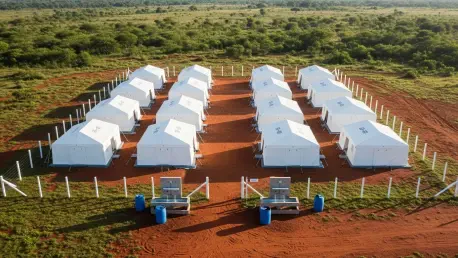
In the absence of a pharmaceutical solution, the strategy for ending the Bundibugyo outbreak has reverted to the foundational pillars of traditional public health that were utilized long before the era of modern vaccines. The primary objective is the rapid isolation of every suspected case in dedicated Ebola Treatment Centers, where patients can receive the supportive care they need while being physically separated from the general population. This process is essential for breaking the chain of transmission, but it requires a massive logistical effort to build, staff, and supply these centers in remote and often dangerous locations. Beyond the physical structures, the focus has shifted toward intensive community surveillance, where local “health scouts” are trained to identify symptoms early and report them to mobile response teams. This grassroots approach is the only way to catch the virus before it has a chance to spread from a household to a wider neighborhood.
Infection prevention and control (IPC) protocols have been elevated to the highest priority, not just within hospitals but throughout the entire community infrastructure. This includes the installation of hand-washing stations at markets, schools, and border crossings, as well as the rigorous disinfection of public transport vehicles and shared spaces. These measures are designed to reduce the “environmental load” of the virus and provide a constant visual reminder to the public about the ongoing threat. While these methods may seem primitive compared to the promise of a vaccine, they have proven effective in past decades when executed with absolute precision. The success of the current response depends on the ability of health authorities to maintain these standards over a period of months, ensuring that no single case is allowed to go unmonitored. It is a labor-intensive, grueling process that requires constant vigilance and a high degree of cooperation from every level of society.
Safe Burials and the Integration of Cultural Sensitivity
One of the most critical aspects of the current containment strategy involves the management of deceased individuals, as the bodies of Ebola victims remain highly infectious long after death. Traditional burial practices in many parts of the Democratic Republic of Congo involve the physical washing and touching of the deceased by family members, a ritual that has historically served as a primary driver of large-scale infection clusters. To counter this, health teams are working to implement Safe and Dignified Burials, a protocol that allows families to honor their loved ones without coming into direct contact with the body. This requires a delicate balance between public health necessity and cultural respect. Teams are now including religious leaders and community elders in the burial process to ensure that spiritual requirements are met, even as the body is handled by professionals in protective gear.
This integration of social science into the medical response has proven to be a vital component in reducing community resistance. When families feel that their traditions are being respected, they are far more likely to cooperate with the teams and report deaths through official channels rather than conducting secret, high-risk funerals. Additionally, the use of transparent body bags and allowing families to view the deceased from a safe distance has helped to dispel rumors and build trust. However, the geographic scale of the outbreak means that these specialized burial teams are often stretched thin, and in some remote areas, traditional practices still prevail, leading to new waves of infection. The battle against the Bundibugyo strain is as much a social struggle as it is a biological one, and the outcome will be determined by whether health authorities can successfully convince the population to temporarily modify their most sacred traditions for the sake of collective survival.
Future Considerations and Regional Stability
The international community concluded that the Bundibugyo outbreak required a fundamental shift in how global health resources were allocated, emphasizing the need for versatile diagnostic platforms that could detect multiple viral strains simultaneously. This transition was prompted by the realization that relying on species-specific tools created dangerous vulnerabilities during the early stages of an epidemic. Health organizations moved to strengthen the laboratory capacity in Kinshasa and Goma, ensuring that advanced genetic sequencing became a standard part of the initial response rather than a secondary measure. These actions were intended to reduce the diagnostic lag that allowed the current crisis to expand so rapidly, providing a more robust early-warning system for future emerging pathogens in the Great Lakes region of Africa.
National governments and regional bodies also recognized that the lack of a Bundibugyo-specific vaccine was a significant policy failure that needed to be addressed through targeted research and development. In the months following the initial emergency, increased funding was directed toward clinical trials for pan-Ebola vaccines that could provide cross-protection against multiple species, including Bundibugyo and Sudan ebolaviruses. This proactive stance was coupled with a renewed focus on regional diplomacy, as the Democratic Republic of Congo and Uganda established more formal protocols for sharing epidemiological data and coordinating border health screenings. These steps were viewed as essential for maintaining regional stability and ensuring that a localized health crisis would not again evolve into a cross-border security event. By prioritizing these structural changes, the global health community sought to turn the lessons of the current outbreak into a more resilient defense against the next inevitable viral threat.