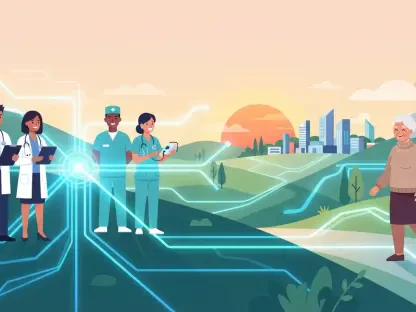

In regions like Nepal and Vietnam, digital health applications and wearable devices are being used to bypass the social stigma surrounding sexual and gender minority health. This innovative approach is a cornerstone of the work conducted at the Shrestha Lab at the University of Connecticut, where researchers are moving beyond the traditional ivory tower of academia to solve real-world problems. Under the leadership of Associate Professor Roman Shrestha, the lab has prioritized direct community engagement over purely theoretical frameworks, ensuring that public health solutions are both practical and culturally sensitive. By focusing on populations that are often overlooked or marginalized—including people who inject drugs and gender minorities—the lab is bridging the critical gap between sophisticated medical technology and the individuals who need it most. This paradigm shift represents a significant evolution in how public health research is conceptualized and executed, prioritizing human dignity and accessibility above all else in modern medical care today.
Decentralizing Care Through Community Integration
Overcoming Barriers: The Low-Impact Medical Model
The lab operates on the fundamental belief that the efficacy of any medical intervention is tied directly to its accessibility. Historically, the healthcare system has relied on a high-barrier model that requires patients to navigate complex bureaucracies, secure reliable transportation, and adhere to rigid scheduling. For individuals facing housing instability or substance use disorders, these requirements are often insurmountable. To address this, the lab has pioneered a low-barrier healthcare model that systematically strips away these traditional hurdles. This approach is not merely about providing treatment but about restructuring the delivery of care to fit the chaotic lives of those who have been systemic exclusions from the medical mainstream. By reducing the physical and logistical distance between the provider and the patient, the lab ensures that life-saving resources reach people who might otherwise never set foot in a traditional hospital or clinic setting for their routine health needs.
Implementation of this low-barrier philosophy is best seen through strategic partnerships that leverage existing community infrastructure. By collaborating with the New Haven Syringe Services Program, the Shrestha Lab has successfully integrated comprehensive health screenings into environments where high-risk individuals already feel safe and supported. This method utilizes the Yale Community Healthcare Van as a mobile clinical hub, effectively turning a familiar neighborhood presence into a high-tech medical facility. Such mobility allows for a dynamic response to the shifting needs of the local population, ensuring that services are available in real-time. By moving medical care into the streets and parks where marginalized groups congregate, the lab is actively dismantling the walls of the traditional clinic. This transformation of space fosters a new level of trust and cooperation, proving that high-quality healthcare does not require a sterile, stationary building to be truly effective in a modern urban landscape.
Implementation Strategies: Transforming Local Health Hubs
Meeting patients where they are involves more than just physical proximity; it requires a deep understanding of the socio-economic factors that influence health outcomes. The Shrestha Lab recognizes that for many, a trip to a doctor’s office represents a risk of judgment, legal consequences, or social rejection. Consequently, the research focuses on developing interventions that are embedded within the social fabric of the community. This involves training peer navigators and local health workers who share the lived experiences of the target population. These individuals act as vital bridges, translating medical advice into culturally relevant language and providing emotional support that a clinician might not be able to offer. By empowering community members to take an active role in health delivery, the lab creates a sustainable ecosystem of care that persists long after a specific research study concludes. This focus is essential for reaching individuals who have long been alienated by mainstream medical institutions.
Furthermore, the lab addresses the emotional and psychological barriers that often prevent individuals from seeking care for sensitive issues. In many marginalized communities, there is a pervasive fear that admitting to substance use or a need for mental health support will lead to stigmatization. The Shrestha Lab combats this by fostering an environment of absolute non-judgment and radical empathy. Every interaction is designed to validate the patient’s experience while providing the necessary medical interventions. This dual approach ensures that patients feel seen and respected, which is often the first step toward long-term health stabilization. By integrating these behavioral health components into general medical services, the lab effectively de-stigmatizes the process of getting help. Whether in the urban centers of Connecticut or the rural landscapes of Southeast Asia, this focus on the human element remains constant, ensuring that patients are treated as more than just clinical statistics.
Bridging Gaps in Mental Health and HIV Prevention
Integrated Screenings: The SAFE-SSP and iRaPID Programs
One of the most pressing challenges identified by the lab is the high rate of mental health crises among individuals who use syringe services. Data collected through various field studies indicated that a staggering percentage of these participants experienced suicidal ideation, yet the vast majority faced insurmountable obstacles when attempting to access psychiatric care. In response, the Shrestha Lab developed the SAFE-SSP initiative, a program specifically designed to weave suicide screening into the daily operations of harm reduction centers. This project recognizes that the staff at syringe services programs are often the only healthcare providers that high-risk individuals trust. By training these frontline workers to conduct brief, evidence-based mental health assessments, the lab creates a safety net that previously did not exist. This integration ensures that mental health is no longer treated as a separate concern but as a core component of harm reduction and general physical wellness today.
The HIV prevention efforts of the lab are centered on the iRaPID program, which introduces a one-stop shop model for Pre-exposure prophylaxis. Traditionally, obtaining PrEP is a fragmented process requiring multiple visits to different specialists, which often deters people who use substances. The iRaPID model empowers nurse practitioners to prescribe PrEP during a single visit at a syringe services program, removing logistical nightmares like lack of transportation or cell service. This approach proves that decentralizing specialized care is the most effective way to combat the HIV epidemic among high-risk groups. By shifting the clinical burden from physicians to mobile practitioners, the lab has dramatically increased medication adherence rates. This streamlined process ensures that preventative care is treated with the same urgency as emergency interventions. It successfully bridges the gap between medical innovation and real-world application, making life-saving drugs truly accessible.
Global Health Equity: Digital Solutions and Sustainable Outreach
Beyond domestic borders, the Shrestha Lab extends its impact globally through projects in Vietnam and Nepal that address HIV-related stigma and suicide prevention. By utilizing digital health tools and wearable technology, the lab provides real-time support in regions where traditional infrastructure is sparse. These digital platforms offer a discreet way for sexual minorities to access health services without fear of social repercussions. This technological intervention is built on a foundation of community trust, as researchers work closely with local groups to ensure cultural relevance. The lab maintains a commitment to dignity and non-judgment, including the perspectives of both patients and local providers in every phase of the research. These global initiatives highlight how modern technology can be harnessed to bypass systemic barriers, ensuring that health equity is a worldwide reality rather than a local ambition. This strategy empowers individuals to take control of their health.
The initiatives established by the Shrestha Lab served as a powerful testament to the necessity of flexible, community-integrated healthcare. By the mid-2020s, the lab had successfully demonstrated that decentralizing medical services was not only feasible but also more effective than traditional centralized models for reaching marginalized populations. To build on this success, healthcare organizations were encouraged to adopt mobile clinical hubs as a permanent standard of care. This transition required a fundamental change in funding structures, favoring decentralized community health over traditional hospital-based systems. Furthermore, the integration of digital health tools proved to be a vital component in bypassing geographical and social barriers. By institutionalizing these peer-led and nurse-driven models, public health leaders ensured that the most vulnerable populations remained at the center of medical innovation. These actions provided a clear pathway toward a more equitable and inclusive healthcare future.