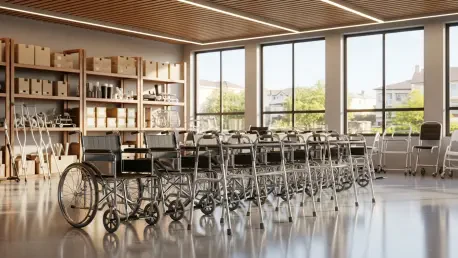

Navigating the sudden onset of a mobility-limiting condition often creates an immediate financial and logistical crisis for families who are unprepared for the high cost of specialized medical hardware. Insurance companies frequently require lengthy approval processes, leaving patients without essential tools like wheelchairs or hospital beds during the most critical stages of their recovery. In Windham, a specialized initiative known as the Medical Loan Closet has emerged to address these systemic delays by offering a comprehensive inventory of mobility aids at no cost to the user. This grassroots approach ensures that no individual is forced to remain sedentary simply because they lack the funds or the coverage to secure a walker or a set of crutches. By removing the financial barriers associated with healthcare equipment, the program facilitates faster rehabilitation and maintains the dignity of residents who wish to remain independent in their own homes. This local model emphasizes that immediate accessibility is just as crucial as the medical treatment itself in fostering successful long-term patient outcomes.
Strategic Logistics of Resource Management
Inventory Management: Ensuring Safety and Quality
The operational success of a local loan closet depends heavily on the continuous cycle of community donations and the meticulous upkeep of the equipment by dedicated volunteers. When a family no longer requires a piece of equipment, such as a specialized lift or a shower chair, they donate it to the facility, where it undergoes a rigorous inspection and sanitation process before being returned to the available stock. This model relies on the inherent trust between the organization and the public, creating a self-sustaining ecosystem where the community directly supports its most vulnerable members. In Windham, the logistical coordination required to manage this inventory involves tracking hundreds of items, ranging from simple canes to sophisticated electronic wheelchairs. Maintaining such a diverse range of tools requires not only physical space but also a robust understanding of the specific medical needs prevalent among the local senior population. Volunteers work tirelessly to ensure that every item meets safety standards before it is issued to a new borrower.
Personal Guidance: Matching Equipment to Patient Needs
Beyond the physical distribution of goods, these organizations serve as a vital information hub for residents who may be overwhelmed by the complexities of modern post-operative care. Staff members and volunteers often possess extensive knowledge about which types of equipment best suit certain domestic environments, helping borrowers select items that will safely navigate tight hallways or steep entryways. This personalized guidance prevents the common issue of families acquiring equipment that ultimately proves unusable in their specific living situation. Furthermore, the accessibility of the Windham facility allows for rapid turnover, meaning that a piece of equipment used by one resident in the morning can be sanitized and prepared for another by the afternoon. This level of efficiency is rarely seen in larger commercial medical supply chains, which often prioritize sales and long-term rentals over immediate community need and the rapid redistribution of resources. This commitment to local service ensures that the specific physical constraints of a home are considered.
Sustainable Growth and Community Integration
Digital Transformation: Improving Accessibility and Tracking
As the demand for mobility assistance continues to rise throughout 2026, many local organizations have begun implementing more advanced inventory management systems to ensure that every donated item is utilized to its maximum potential. These digital platforms allow administrators to monitor the lifespan of each piece of equipment, scheduling regular maintenance checks and identifying when an item has reached the end of its safe operational life. By integrating these technological solutions, the Windham program can provide real-time updates to healthcare providers regarding the availability of specific items, streamlining the discharge process for patients leaving the hospital. This connectivity reduces the burden on social workers and discharge planners, who can confidently direct their patients to a local source for their immediate needs. The transition to a more data-driven approach also helps the organization identify trends in equipment demand to align with community health requirements, ensuring that the most needed items are always available.
Regional Cooperation: Building a Resilient Network
Establishing a robust medical equipment exchange required the Windham community to prioritize local welfare over individual gain, setting a standard for how modern municipalities managed public health crises. It became clear that the most effective way to support aging populations and those recovering from surgery was through the decentralization of resource management. Stakeholders successfully integrated the loan closet into the broader medical referral network, ensuring that every patient received the tools they needed without incurring debt. For other communities looking to replicate this success, the first step involved identifying a dedicated storage space and recruiting a core group of volunteers with administrative and mechanical skills. Future initiatives should focus on securing diverse funding streams to ensure that equipment remains up to date with the latest safety regulations. By fostering these local networks, society moved toward an equitable healthcare model where mobility was treated as a fundamental right rather than a luxury reserved for those with insurance.