
The sudden and aggressive return of measles to the American landscape marks a profound shift in national health security, transforming a disease once considered a relic of history into an urgent and persistent crisis for modern families. This resurgence is not merely a statistical anomaly but represents the dawn of a challenging era for public health, as the number of confirmed cases has climbed to a 35-year high. For decades, the nation relied on a robust firewall of immunity that allowed medical professionals to treat measles as an imported rarity rather than a domestic threat. Today, that firewall is crumbling under the weight of declining vaccination rates, leaving a new generation of children exposed to a virus that is as relentless as it is preventable. The transition from a state of “elimination” to one of active, localized transmission signals a breakdown in the social contract that once prioritized collective protection over individual hesitation.
Medical experts and state health officials are observing a convergence of factors that have allowed this highly contagious pathogen to regain its footing across the United States. While the primary hotspots have emerged in the Intermountain West, the ripple effects are felt nationwide as healthcare systems grapple with the logistics of containing outbreaks in communities where herd immunity has dipped below critical thresholds. This roundup explores the multifaceted nature of the crisis, drawing on insights from pediatricians on the front lines, public health analysts, and sociologists who study the erosion of institutional trust. By examining the clinical severity of the current cases alongside the digital and political currents that fuel vaccine hesitancy, a clearer picture emerges of the high stakes involved in this national health regression. The purpose of this analysis is to synthesize the current medical reality with actionable strategies intended to restore the guardrails of public safety before the progress of the last century is permanently undone.
From “Eliminated” to Endangered: The High Stakes of the Current Resurgence
The United States currently stands at a precarious crossroads, transitioning from a period of relative safety into what many researchers describe as a “bad era” for infectious disease management. For more than twenty years, the nation maintained an “eliminated” status for measles, a designation granted by international health organizations when a country successfully prevents the continuous transmission of the virus for at least twelve months. This status was considered the gold standard of public health achievement, a testament to the efficacy of the MMR vaccine and a rigorous national immunization program. However, recent data indicates that this hard-won victory is slipping away, with the volume of cases recorded in the last year and a half exceeding the cumulative total of the previous quarter-century. This spike is not just a temporary fluctuation but a structural failure of the systems designed to keep the population safe from eradicated threats.
The persistence of outbreaks in states like Utah has challenged the very definition of domestic health security, as transmission has now crossed the critical one-year threshold that defines elimination. When a disease is no longer just an imported concern brought in by international travelers but becomes a self-sustaining local threat, the entire strategy for containment must change. Public health agencies are now forced to shift from reactive monitoring to aggressive, resource-intensive intervention. This resurgence places an immense burden on the immunocompromised, the elderly, and infants who are too young to receive their first dose of the vaccine. The high stakes of this current era are defined by the reality that a single lapse in community immunity can lead to a localized epidemic, threatening to turn regional volatility into a permanent feature of the American medical landscape.
Unpacking the Perfect Storm of Medical, Social, and Political Failures
The return of measles is the result of a “perfect storm” where clinical vulnerability meets a fragmented social and political environment. It is a failure that cannot be attributed to a single cause but rather to a complex web of interconnected issues that have weakened the nation’s defenses. On one side, there is the biological reality of the virus itself, which remains one of the most infectious agents known to science, capable of lingering in the air for hours after an infected person has left a room. On the other side, there is a systemic breakdown in communication and trust, where the voices of medical experts are increasingly drowned out by a chorus of conflicting narratives. This environment has created a vacuum where a preventable illness has found the space to thrive, turning once-protected neighborhoods into zones of high risk.
The failure is also rooted in the way modern society interacts with medical history and institutional authority. As the memory of pre-vaccine eras fades, the perceived risk of the disease has decreased, while the perceived risk of medical intervention has been artificially inflated by digital echo chambers. Furthermore, the politicization of health mandates has transformed a matter of biological safety into a debate over personal liberty, often at the expense of the most vulnerable members of society. This section of the roundup investigates how these medical, social, and political failures have combined to create an environment where a once-vanquished foe can stage a dramatic and dangerous comeback, forcing a reconsideration of how the public and the medical community interact.
The Harrowing Clinical Toll on a New Generation of Vulnerable Children
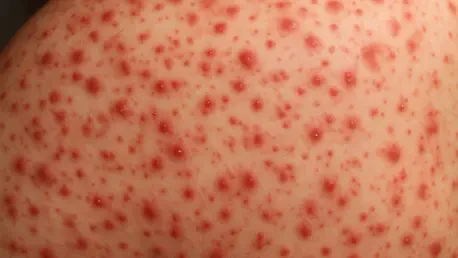
The physical reality of measles in the current outbreak is far more severe than the “mild childhood illness” narrative often found in anecdotal history. Pediatricians working in high-transmission areas report seeing children in states of acute respiratory distress that require immediate and intensive intervention. A common clinical observation in these cases is “tripoding,” a physical stance where a child hunches forward with their mouth open, using their arms to support their weight and maximize their ability to draw breath. This posture, accompanied by a distinctive, hollow “barking cough” and high-pitched stridor, indicates that the virus has caused significant inflammation in the upper and lower airways. For many modern parents, seeing a child struggle for every breath is a terrifying experience that quickly dispels any myths about the virus being a harmless rite of passage.
Beyond the immediate respiratory symptoms, the clinical management of measles in unvaccinated populations requires invasive and often traumatic procedures. Because the virus aggressively suppresses the immune system, children are at high risk for secondary infections that can be life-threatening. Doctors are frequently forced to perform lumbar punctures, also known as spinal taps, and extensive blood panels to rule out conditions like meningitis or sepsis, which present with similar high fevers. These procedures, while necessary for survival, add a layer of physical and emotional trauma to the child’s experience. The long-term consequences are equally concerning, with cases of permanent neurological damage from encephalitis and severe pneumonia leading to hospitalizations that can last for weeks. This visceral level of suffering highlights the brutal nature of the virus and the high cost of allowing it to circulate once again.
Beyond “Anti-Vax” Labels: Why Digital Misinformation and Fading Memories Fuel Hesitancy
Contemporary vaccine hesitancy is often more nuanced than the rigid “anti-vax” labels of the past suggest, as many parents today are driven by a sense of “digital age” paralysis. Rather than being ideologically opposed to medicine, these parents often find themselves overwhelmed by social media algorithms that prioritize fear-based anecdotes over peer-reviewed clinical data. This leads to a state of “wait and see” hesitancy, where the decision to delay immunization is framed as a cautious choice rather than a refusal. However, in the context of a highly contagious virus like measles, delaying protection is a gamble that leaves the child and the community vulnerable. Pediatricians note that when these children are eventually hospitalized, the parents often experience a profound sense of regret and shame, realizing that their attempt to be cautious actually led to the very harm they were trying to avoid.
The problem is compounded by a total loss of generational memory regarding the actual dangers of measles. In the decades following the successful elimination of the virus, the public lost its firsthand connection to the era when thousands were hospitalized annually. Without the visible threat of the disease, the public focus shifted toward the potential side effects of the vaccine, however rare they might be. Parents today often rely on stories from older relatives who remember “nursing kids through it,” but these accounts rarely include the cases that ended in permanent disability or death. This absence of historical context creates a vacuum where misinformation can flourish, as the fear of the intervention replaces the fear of the disease. Bridging this gap requires a renewed effort to educate the public on the historical and clinical reality of the virus, moving beyond labels to address the underlying anxieties of a new generation of parents.
The Impending Loss of National Elimination Status and the Risk of Regional Outbreaks
The United States is currently facing the very real possibility of losing its international status as a country that has eliminated measles. This status is not just a point of national pride but a critical indicator of a country’s ability to maintain a functioning public health infrastructure. To keep this designation, a nation must prove that it has prevented the continuous, year-long transmission of the virus. With ongoing outbreaks in the Intermountain West challenging this benchmark, the Centers for Disease Control and Prevention is nearing a point where it must report to international health authorities that the U.S. no longer meets the criteria. Such a regression would be a historic failure, signaling to the world that the American public health system is no longer capable of containing a disease that was once under complete control.
This loss of status has practical implications for how outbreaks are managed and how resources are allocated. When a disease is considered eliminated, every case is treated as an emergency that triggers a massive, localized response. If measles becomes endemic once again, it may lead to a normalization of the virus, where regional outbreaks are seen as an unavoidable part of life. This creates a dangerous environment for high-risk populations, as the virus can circulate silently in pockets of low vaccination before exploding into a larger epidemic. The risk of regional volatility means that families in highly vaccinated areas can still be affected by the choices made in neighboring communities, as the virus does not respect state lines or municipal boundaries. Maintaining elimination status is therefore essential for preventing a permanent regression in national health security.
Navigating the Politicization of Public Health and the Crisis of Institutional Trust
The resurgence of measles is inextricably linked to the transformation of public health into a partisan issue, often referred to by medical professionals as the “political football” effect. In recent years, the authority of federal health agencies has been undermined by controversial shifts in vaccine recommendations and the perception that political appointees are influencing scientific committees. When career scientists are sidelined or when public health guidance appears to change based on the prevailing political climate, the resulting confusion creates a fertile ground for skepticism. This erosion of trust makes it increasingly difficult for local pediatricians to defend the established immunization schedule, as their advice is often viewed through a political lens rather than a clinical one. The breakdown of this doctor-patient relationship is perhaps the most damaging long-term consequence of the current crisis.
The absence of a unified, non-partisan message from state and federal leadership has left a vacuum that is quickly filled by non-expert influencers and fringe theories. Without strong, consistent support for the science of immunization from across the political spectrum, the burden of proof falls on individual doctors to persuade hesitant parents one by one. This fragmented approach is inefficient and allows misinformation to spread faster than reputable data can counteract it. To address this, there is an urgent need for a restoration of institutional trust, which can only be achieved by decoupling public health from political agendas. When the safety of the population is treated as a fundamental responsibility rather than a point of debate, the medical community can regain the authority needed to protect the nation from preventable illness.
Rebuilding the Guardrails: Actionable Approaches for Physicians and Policy Makers
To reverse the dangerous trend of measles resurgence, the medical community is shifting toward a “compassion-first” communication strategy that seeks to build bridges rather than walls. Instead of excluding or “firing” families who are hesitant about vaccines, many pediatricians are now choosing to maintain these relationships to keep the door open for future dialogue. This approach involves active listening, where doctors acknowledge specific parental fears without immediate judgment and provide transparent information about both the risks of the disease and the potential, albeit minor, side effects of the vaccine. By establishing themselves as honest brokers of information, healthcare providers can slowly dismantle the myths perpetuated by digital misinformation. This strategy prioritizes the long-term goal of community protection over the short-term frustration of dealing with hesitancy.
On a broader scale, policy makers must invest in aggressive public information campaigns that move reputable science out of the confines of medical journals and into the daily lives of citizens. There is a clear need for multi-platform initiatives, funded at the state level, that utilize billboards, sports arenas, and social media feeds to promote the safety and necessity of the MMR vaccine. These campaigns should be designed to reach people where they are, countering the influence of social media algorithms with clear, evidence-based messaging. Additionally, addressing the socioeconomic barriers to healthcare is essential; ensuring that even the uninsured have easy, cost-free access to vaccinations can help close the gaps in herd immunity. By combining personalized clinical outreach with broad, state-sponsored public health initiatives, the nation can begin to rebuild the guardrails that once kept measles at bay.
The Road Ahead: Choosing Science and Compassion to Prevent a Permanent Regression
The comeback of measles served as a stark reminder of the fragility of public health achievements when they were not actively defended by each successive generation. It was determined that the resurgence was not merely a medical issue but a symptom of a broader societal fragmentation that prioritized individual uncertainty over the collective safety of the community. The medical community recognized that the path forward required a dual focus on clinical excellence and empathetic communication. By shifting the focus toward “bridge-building” strategies, physicians were able to maintain connections with hesitant families, ensuring that the most vulnerable children remained within the reach of professional medical guidance. This approach fostered an environment where science was presented not as an ultimatum, but as a shared tool for the protection of all children.
State and federal authorities also identified the need for a more robust and transparent public health infrastructure that remained insulated from the volatility of political cycles. The crisis emphasized that the restoration of institutional trust was a prerequisite for any successful immunization program. Moving forward, the implementation of multi-platform public information campaigns helped move reputable data into the public square, effectively countering the spread of digital misinformation. The collective responsibility of the nation was reaffirmed, recognizing that the defense against preventable illness was a fundamental pillar of a stable and healthy society. Ultimately, the lessons learned from the measles resurgence provided a blueprint for addressing other emerging health threats, ensuring that the progress of modern medicine was never again taken for granted.