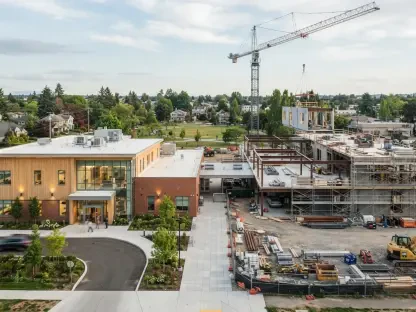

Inflationary pressures are being cited as the primary reason why Pike Construction requires $750,000 in incentives to move forward with the medical center project. Located at 20 North Street on the grounds of a former dining establishment, the proposed 10,000-square-foot facility is intended to transform the local healthcare landscape for the residents of Honeoye Falls. Operated by F.F. Thompson Hospital under the UR Medicine umbrella, this facility seeks to bridge a critical gap by offering the village its first dedicated urgent care services and diagnostics. Recent statistics reveal that twenty-four percent of the local population lacks a primary provider—a rate nearly triple the county average. Residents currently endure long drives to Henrietta for basic medical emergencies, making this development a logical solution to a pressing public health crisis. However, the reliance on public subsidies to fund a project managed by a regional network has ignited a debate over fiscal responsibility and the village’s future.
Fiscal Realities: The Developer’s Requirement for Incentives
The proposed 14-year property tax abatement has emerged as a central point of contention among those who reside in this quiet community with only a single traffic signal. Critics argue that the $750,000 incentive package, which accounts for roughly twenty-one percent of the total project cost, represents an undue burden on a small tax base for a facility designed to serve a much larger regional population. Local attorney Cara Briggs has voiced concerns that the village is being asked to subsidize the expansion of a massive healthcare conglomerate that already possesses significant financial resources. This friction is exacerbated by the logistical realities of such a large medical center, as increased vehicle traffic and noise are expected to alter the character of the neighborhood significantly. While the medical benefit is clear, many residents believe the financial risk should be borne by the developers and the hospital system rather than through public tax breaks that divert funds from local infrastructure.
Community Growth: Balancing Expansion and Residential Needs
Despite these fiscal concerns, the project represents a significant economic shift for the village, which is currently experiencing a period of rapid residential growth. Plans for a separate 412-unit housing subdivision indicate that the population will continue to swell, necessitating the services that the new F.F. Thompson facility aims to provide. By creating twenty-six full-time positions, the medical center offers local employment opportunities that stimulates the local economy beyond the healthcare sector itself. Proponents argue that the medical center serves as a foundational piece of infrastructure that makes the village more attractive to families and retirees alike. The challenge lies in finding a middle ground where the village can welcome professional growth without sacrificing its financial stability or rural charm. Achievement of this goal requires navigating the complex interplay between developer costs and community demand for equitable financing while keeping the 2027 completion date.
Strategic Expansion: The Role of Regional Medical Networks
The expansion into Honeoye Falls is part of a broader trend where large medical networks strategically target underserved suburban and rural pockets to decentralize care. By establishing a presence in these areas, UR Medicine aims to alleviate the mounting pressure on metropolitan emergency departments, where wait times have become increasingly unmanageable. This hub-and-spoke model allows for more efficient patient triage, ensuring that localized care is available for routine treatment. Such a shift is essential as healthcare systems transition toward preventative care and chronic disease management, which require consistent and local access to primary care physicians. While the model is efficient from a corporate perspective, it raises questions about the long-term dependency of small municipalities on regional giants. As these networks consolidate, the influence of local stakeholders often diminishes, leading to a landscape where healthcare decisions are made in distant boardrooms rather than within the village itself.
Future Directions: Sustainable Planning for Village Infrastructure
To address these complex issues, municipal leaders prioritized the development of a framework that balanced corporate incentives with community benefits. This approach included the implementation of rigorous impact assessments to ensure that the infrastructure upgrades were funded primarily by the developer. Furthermore, the local planning board established a community health liaison role to ensure that the facility’s services remained aligned with the specific needs of the village residents. By fostering a transparent negotiation process, the village successfully secured commitments for local hiring and the inclusion of green building standards. Future projects of this nature were guided by a requirement for multi-year fiscal impact reports, providing voters with clarity on how tax abatements would affect long-term school and municipal budgets. This proactive stance allowed the town to integrate modern medical facilities while maintaining a sustainable financial trajectory and creating a model for others.